
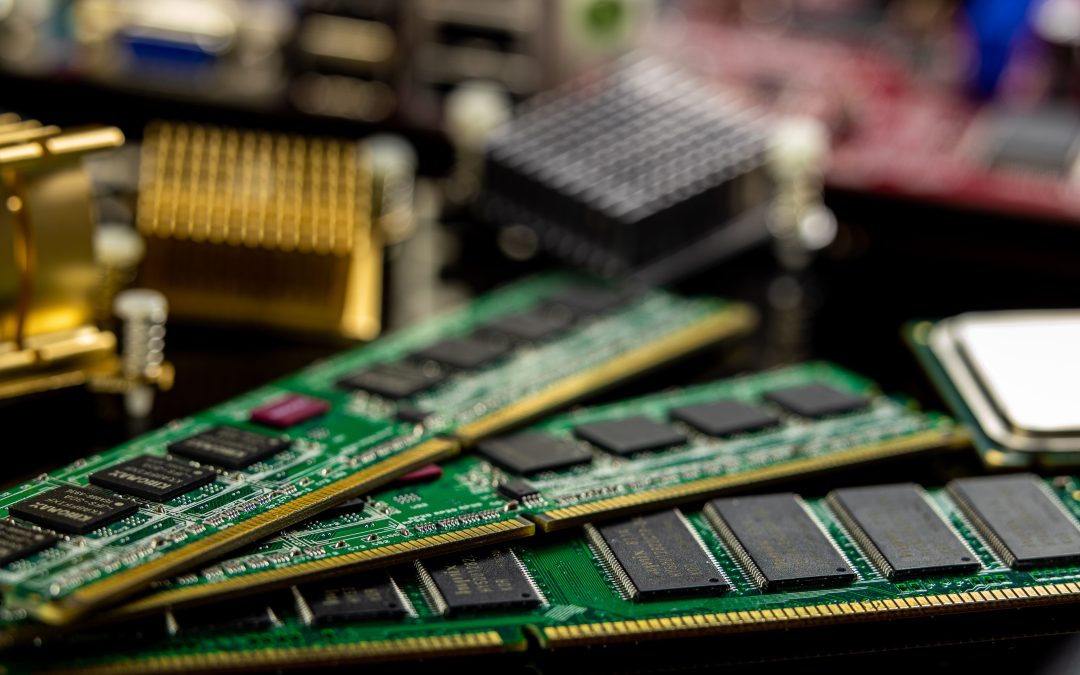
At Web Professionals Global, we are committed to keeping our community of developers, designers, educators, and digital strategists ahead of the curve. By regularly highlighting emerging technology trends, standards updates, and industry shifts, our goal is to empower our members with the foresight needed to adapt their skills and workflows. One of the most significant developing trends impacting our field today isn’t happening on screen—it is taking place in the physical supply chains powering global computing.
For over two decades, web professionals relied on a predictable hardware lifecycle where compute power doubled, memory costs dropped, and end-user devices grew progressively more capable. We designed web applications, interactive learning tools, and digital assets with the confidence that client-side hardware could effortlessly absorb increasing complexity. That era of predictable progression has now collided with an unprecedented bottleneck driven by the enterprise AI boom. As tech giants race to build massive AI infrastructure, the global supply chains for memory chips—specifically RAM and High Bandwidth Memory (HBM)—are undergoing a massive structural reallocation that directly impacts web professionals and digital experiences worldwide.
The Economics of the Silicon Squeeze
To understand why consumer hardware prices are fluctuating and component quality is shifting, one must look closely at the physical realities of semiconductor manufacturing. At the core of the issue is a fundamental component of all modern computing: memory.
Over the past few years, artificial intelligence models have scaled rapidly in parameter size and computational complexity. Training and running modern Large Language Models (LLMs) requires specialized server clusters equipped with thousands of Graphics Processing Units (GPUs) paired with High Bandwidth Memory (HBM). HBM operates by vertically stacking memory dies, achieving data transfer rates up to 50 times faster than standard consumer DDR5 memory modules.
However, producing High Bandwidth Memory comes with a significant trade-off on the manufacturing floor.
- Increased Wafer Requirements: Producing a single gigabyte of enterprise HBM consumes roughly three times the raw silicon wafer capacity of standard consumer DDR5 RAM. As detailed in the SK Hynix Memory Supercycle Outlook, HBM3E and next-generation HBM4 continue to claim a massive share of total global DRAM wafer production to support enterprise AI accelerators.
- Supplier Pivots: Semiconductor foundries reallocate capacity to enterprise HBM to pursue significantly higher profit margins.
- Downstream Squeeze: Standard DDR memory supply tightens worldwide, driving up component Bill of Materials across consumer electronics.
Because every wafer dedicated to AI accelerators reduces the volume of consumer memory that semiconductor foundries can produce, global memory production—heavily concentrated among Samsung, SK Hynix, and Micron—has naturally prioritized high-margin enterprise orders over lower-margin consumer components.
The Ripple Effect on Consumer Hardware
This reallocation reverberates throughout the entire electronics hardware ecosystem:
- Bill of Materials (BOM) Spikes: Memory components that once made up a modest fraction of a mobile device or laptop budget now account for a significant portion of total production costs. According to market analyses published by HiTech Century, memory has rapidly escalated from around 10% of a smartphone’s component cost in previous years to roughly 34%–40% of the bill of materials in recent cycles.
- Hardware Compromises: To avoid raising retail prices beyond consumer budgets, manufacturers are quietly adjusting secondary specifications—opting for smaller camera sensors, lower-capacity batteries, or alternate chassis materials to absorb memory costs.
- The Legacy Hardware Baseline: Industry evaluations in the EnkiAI 2026 Memory Crisis Report highlight how enterprise AI demand has created structural undersupply for consumer hardware, leaving over a billion legacy devices struggling to meet high local memory baselines.
Implications for Web Professionals and Developers
For web developers, UX/UI designers, and digital strategists, these hardware realities introduce critical architectural considerations.
Historically, web development has leaned heavily on client-side rendering, expanding JavaScript frameworks, local storage caching, and complex browser-based computations. However, as hardware constraints tighten for a large segment of global internet users, relying blindly on local client capabilities presents risk.
1. Re-evaluating Client-Side vs. Server-Side Rendering
With hundreds of millions of user devices running on constrained RAM baselines, heavy client-side JavaScript bundles and unoptimized web applications will experience increased latency, tab crashes, and thermal throttling. Web professionals must prioritize optimized server-side rendering (SSR), lightweight progressive enhancement, and disciplined asset budget management.
2. The Rise of Subscription-Based Cloud Computing
As local machines struggle to keep pace with resource-heavy localized AI tools, the computing paradigm is pivoting back toward centralized cloud environments. Enterprise vendors are increasingly delivering advanced capabilities—from real-time video processing to code assistance—via cloud API endpoints and SaaS subscription models rather than local software execution.
3. Accessible Web Design and Performance Literacy
Web standards and performance optimization are no longer optional polish—they are foundational access requirements. Ensuring that web applications run smoothly on mid-range or legacy hardware protects user experience across diverse economic demographics and regions where hardware upgrades may be delayed.
As professionals, we should consider these approaches as soon as possible.
- It is no longer acceptable to assume clients RAM will be sufficient to absorb inefficient JavaScript frameworks. As we have mentioned more than once, there is no need to use bloated JavaScript code when a solid understanding of HTML and CSS can accomplish the same thing. Know which technology to use effectively.
- Specifically, review your code and use “let” and “const” where possible and explicitly clean up timers/ listeners to avoid memory leaks.
- Rely on single parent-node event listeners instead of individual bindings to lower browser overhead.
- On the server side, cache frequent queries instead of fetching the same data again and again.
- Where possible, use compiled runtimes instead of heavier container images.
Navigating the Shift: Strategic Takeaways
| Industry Dimension | Historical Trend | Current Reality (2026+) | Strategic Recommendation |
| Hardware Upgrades | Rapid, low-cost consumer spec jumps | Rising component costs; extended lifecycle | Design web experiences for lower baseline hardware |
| Application Architecture | Heavy client-side JS processing | Server-side rendering & API-driven workflows | Minimize client bundle sizes; audit memory footprints |
| Compute Allocation | Local execution on client machines | Cloud-based SaaS & remote microservices | Optimize API interactions and cloud bandwidth usage |
| Digital Content | High-density asset delivery | Edge-cached, performance-budgeted delivery | Enforce strict asset compression & lazy-loading |
Looking Ahead: The Role of Web Professionals Global
As technological landscapes evolve, education, standards adherence, and professional growth remain vital. The shift toward enterprise AI infrastructure underscores the necessity of foundational web skills: semantic HTML, efficient CSS, optimized JavaScript, robust server management, and thoughtful user-centered design.
Web designers and developers must stay on top of industry trends to continue to build and deliver the best products and services for their clients. By staying informed about hardware trends and infrastructure shifts, web professionals can build resilient, accessible, and performant web solutions that serve all users—regardless of the silicon inside their devices (client and server). Reach out to us today for more information on Web Professionals Global membership and our certifications.
