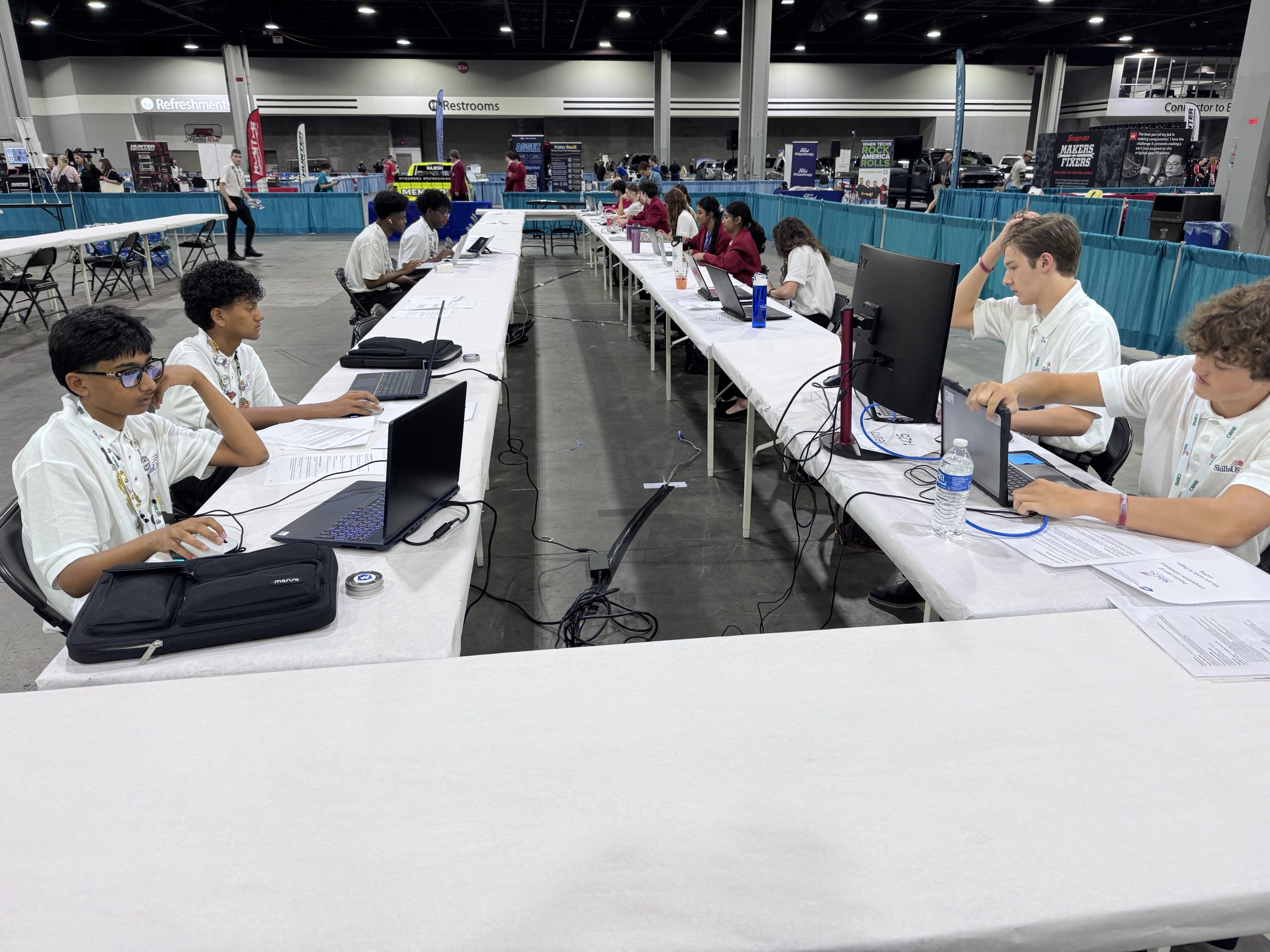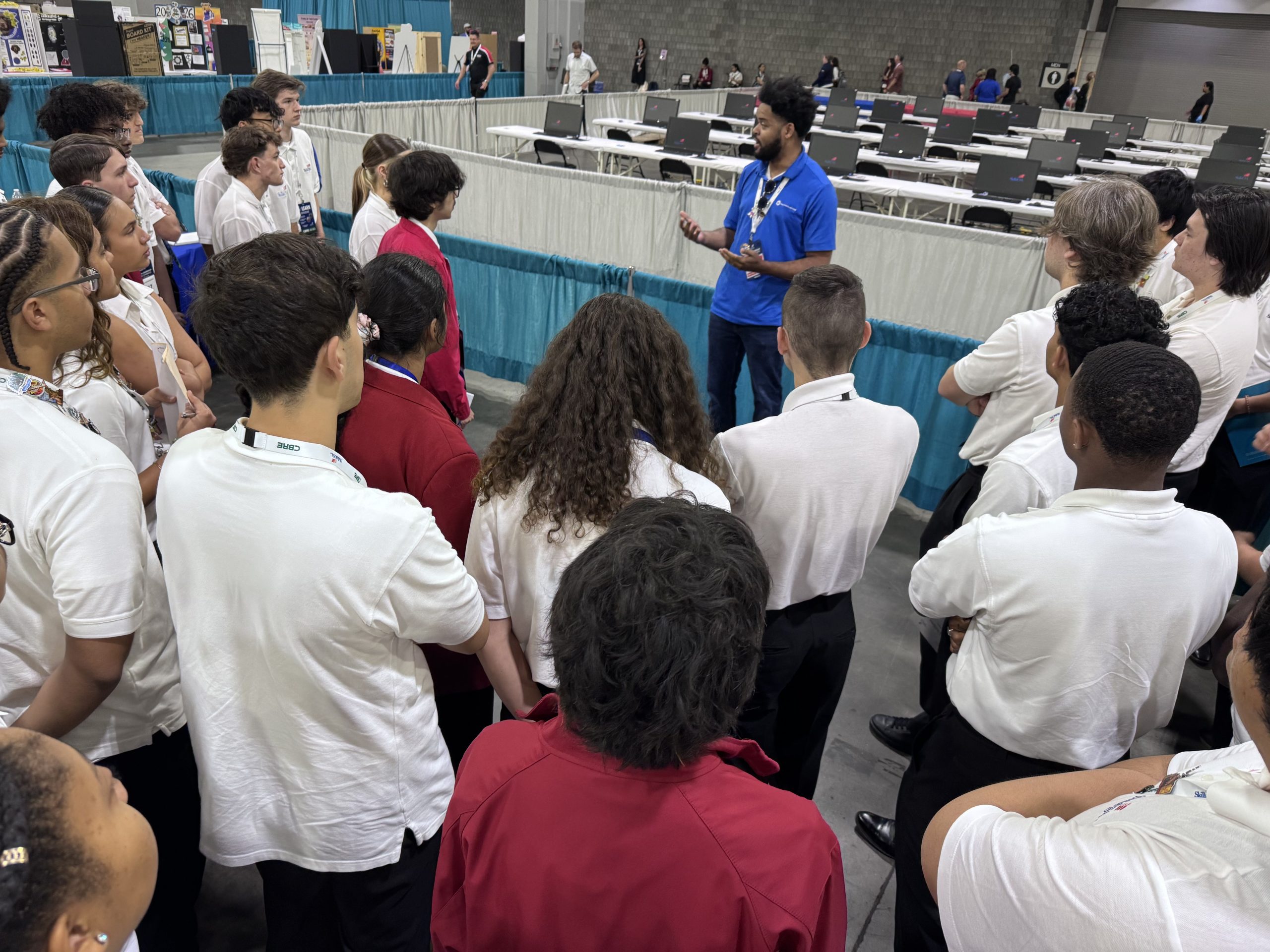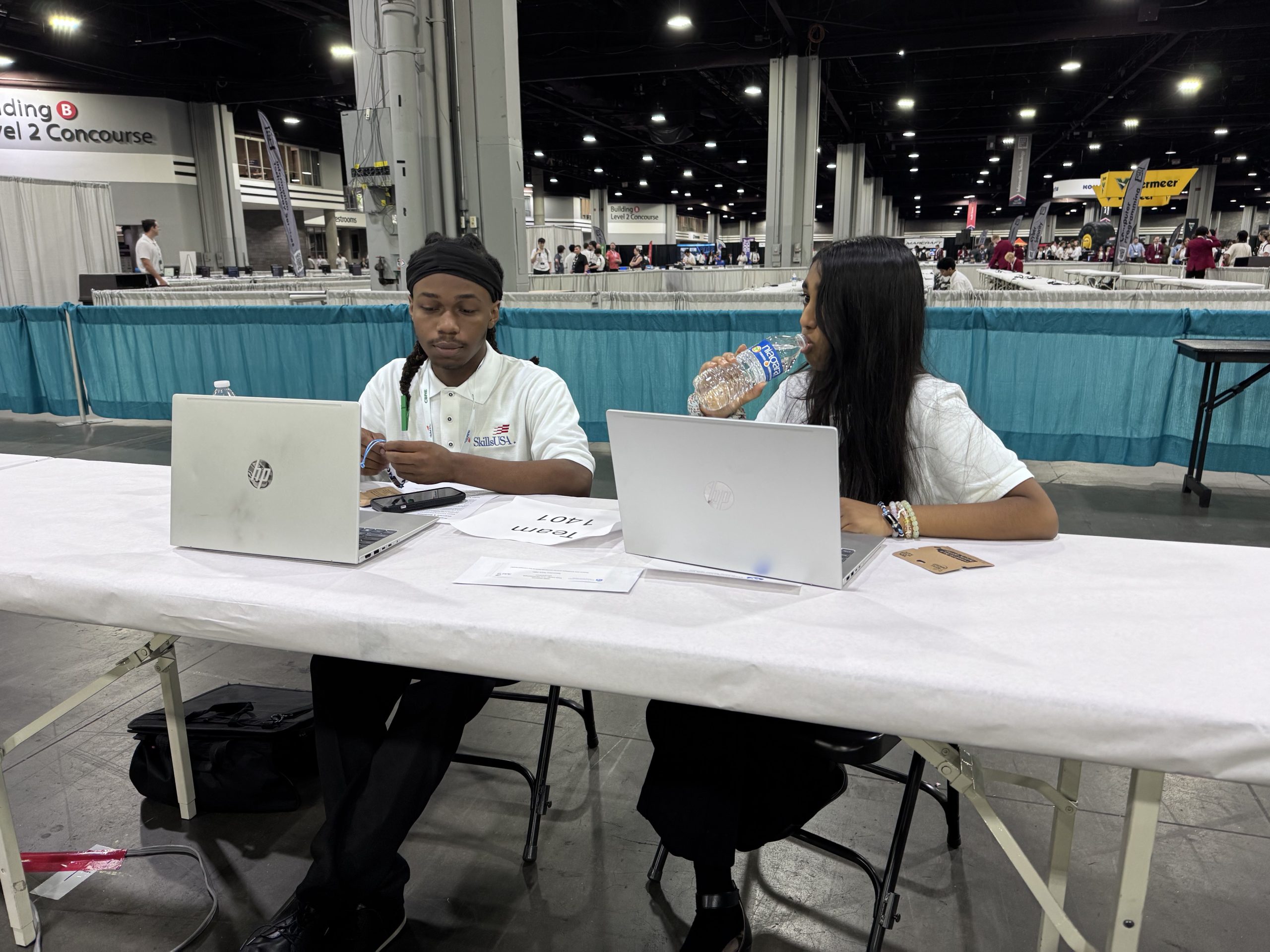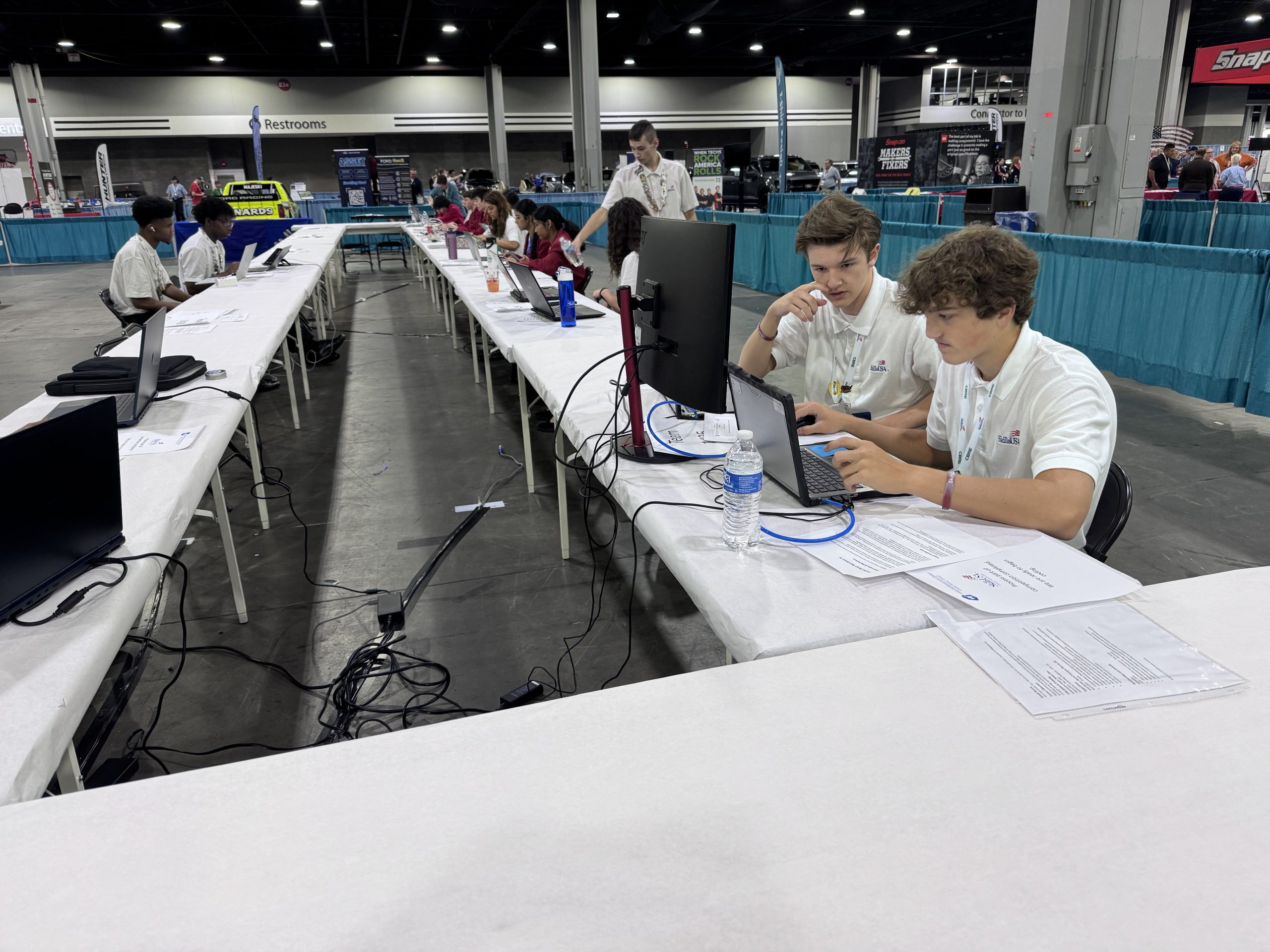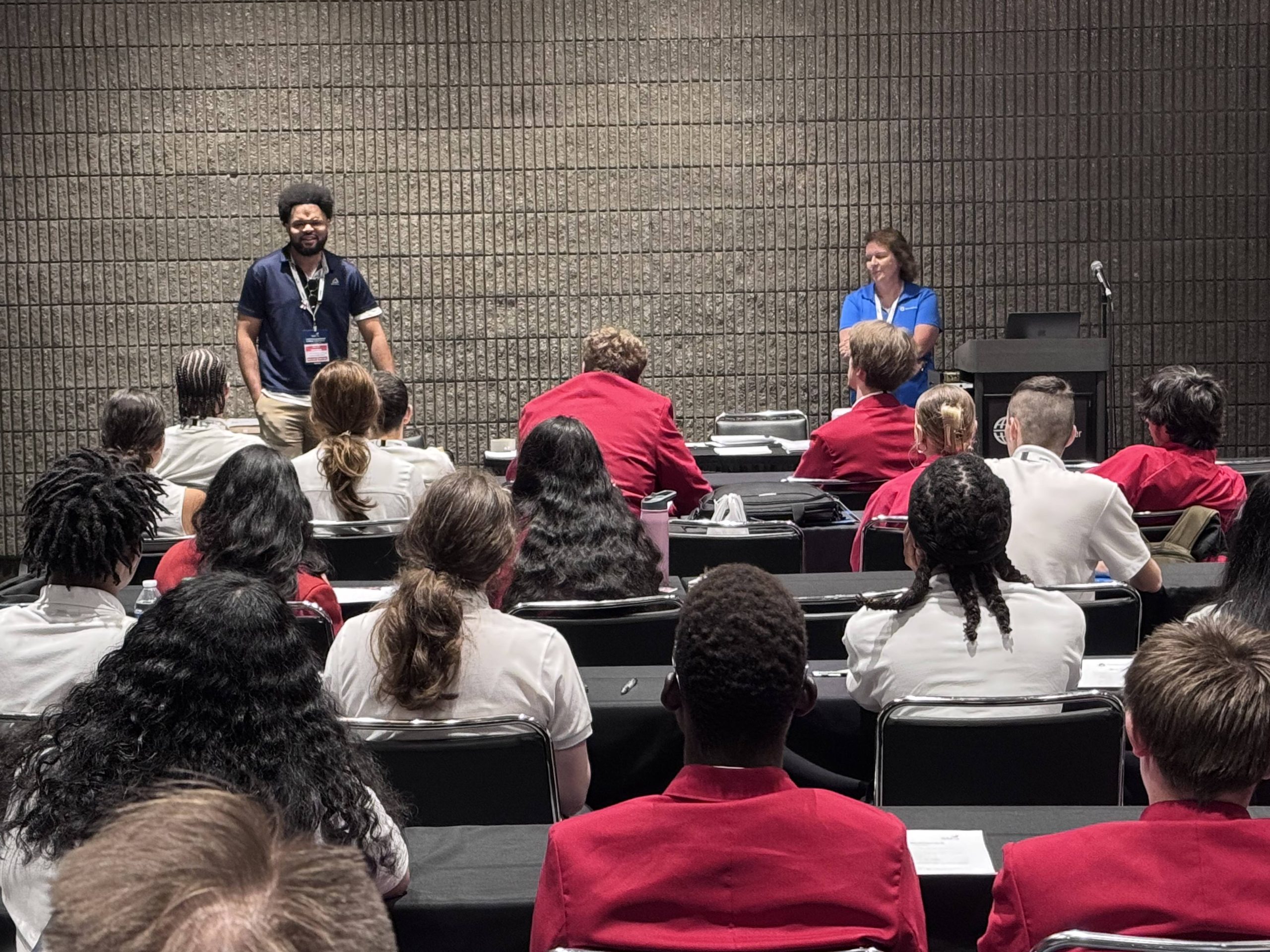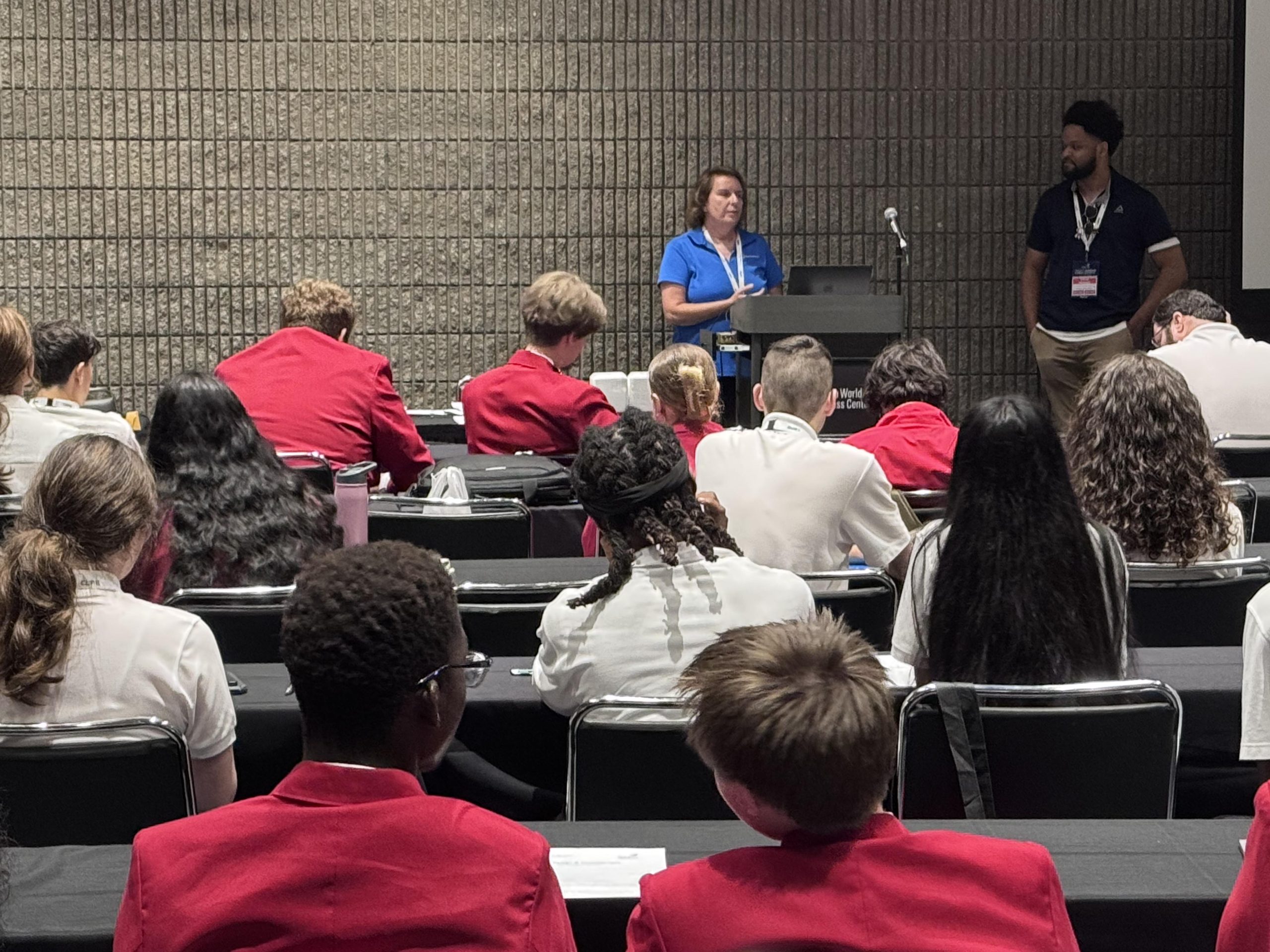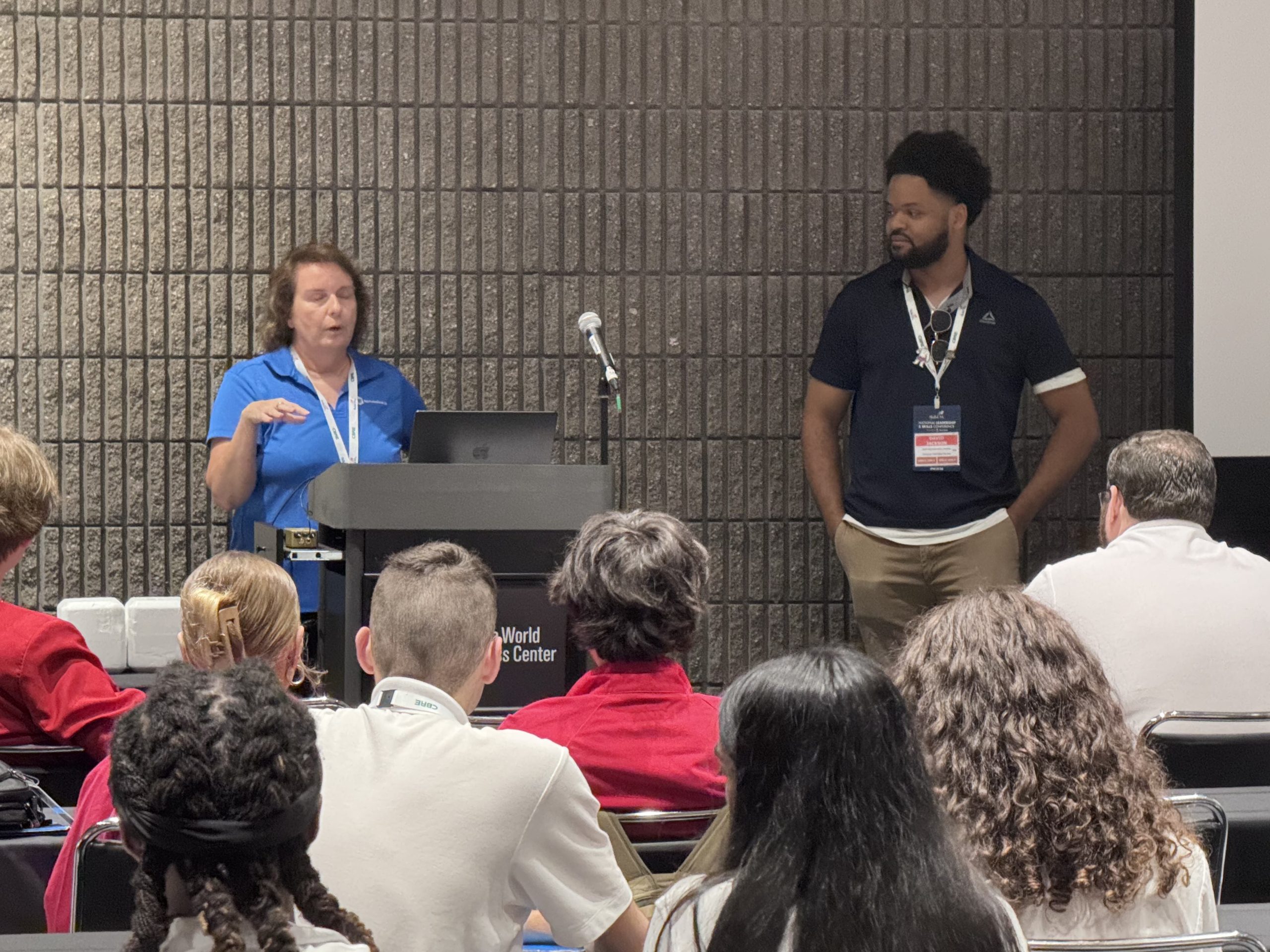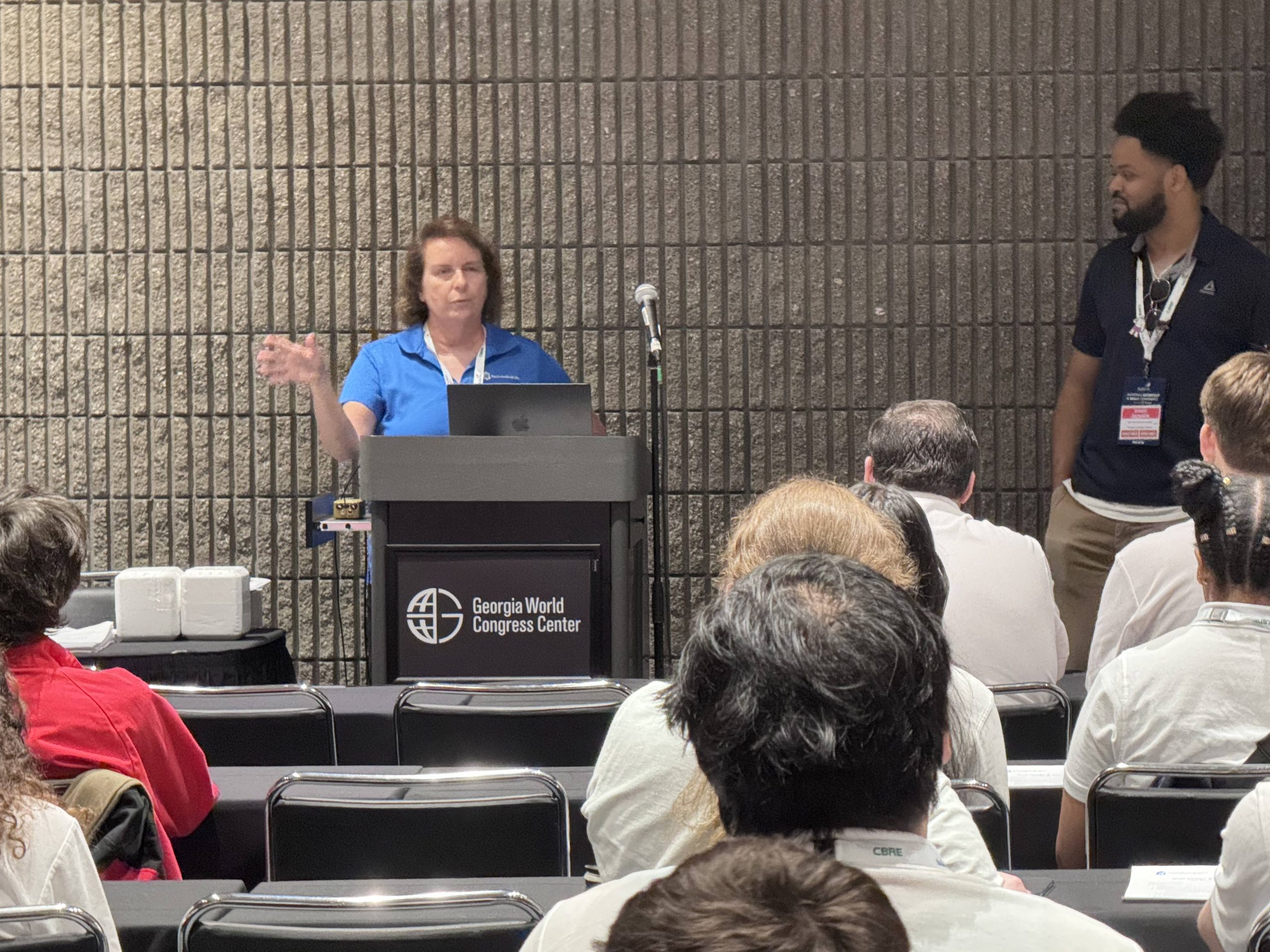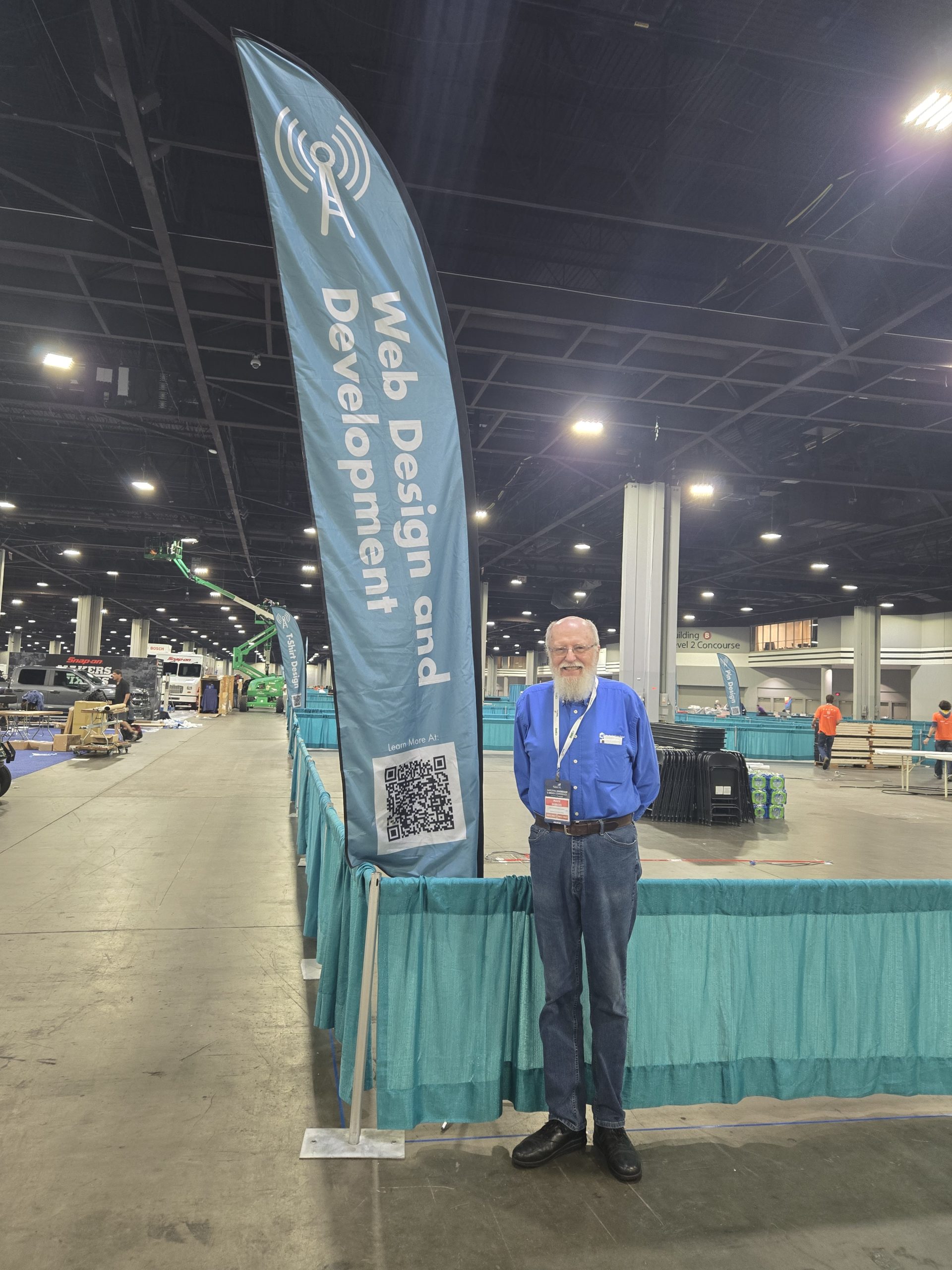
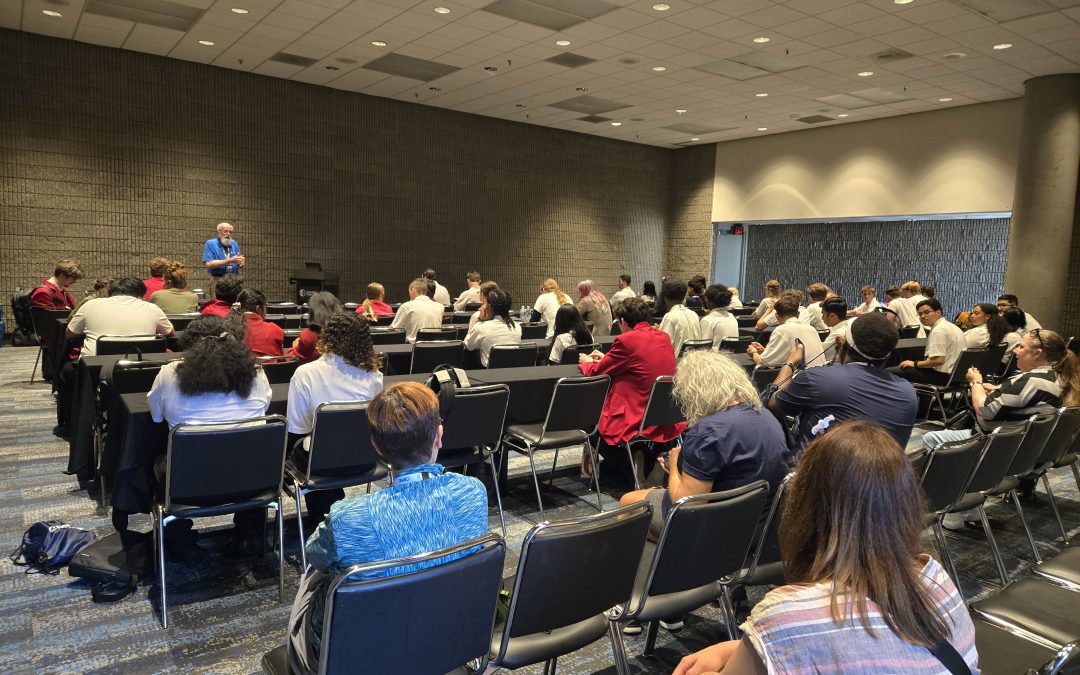
The 2026 SkillsUSA National Leadership & Skills Conference (NLSC) returned to Atlanta, Georgia, from June 1-5, 2026, gathering thousands of the nation’s most talented career and technical education students, dedicated instructors, and forward-thinking industry leaders. For over two decades, Web Professionals Global has proudly organized and run the National Web Design and Development Competition, and the 2026 event set an entirely new benchmark for innovation, technical discipline, and real-world problem-solving.
To earn a spot on the national stage, these elite competitors first had to prove their capabilities at the local level. They navigated local, regional, and grueling state-wide events, utilizing the standardized “competition in a box” toolkit developed by our organization to align state standards with national expectations. To discover how these student teams persevered through their local events, you can read our comprehensive 2026 SkillsUSA State Competitions Recap.
The Evolution of the Competition: Preparation and Training
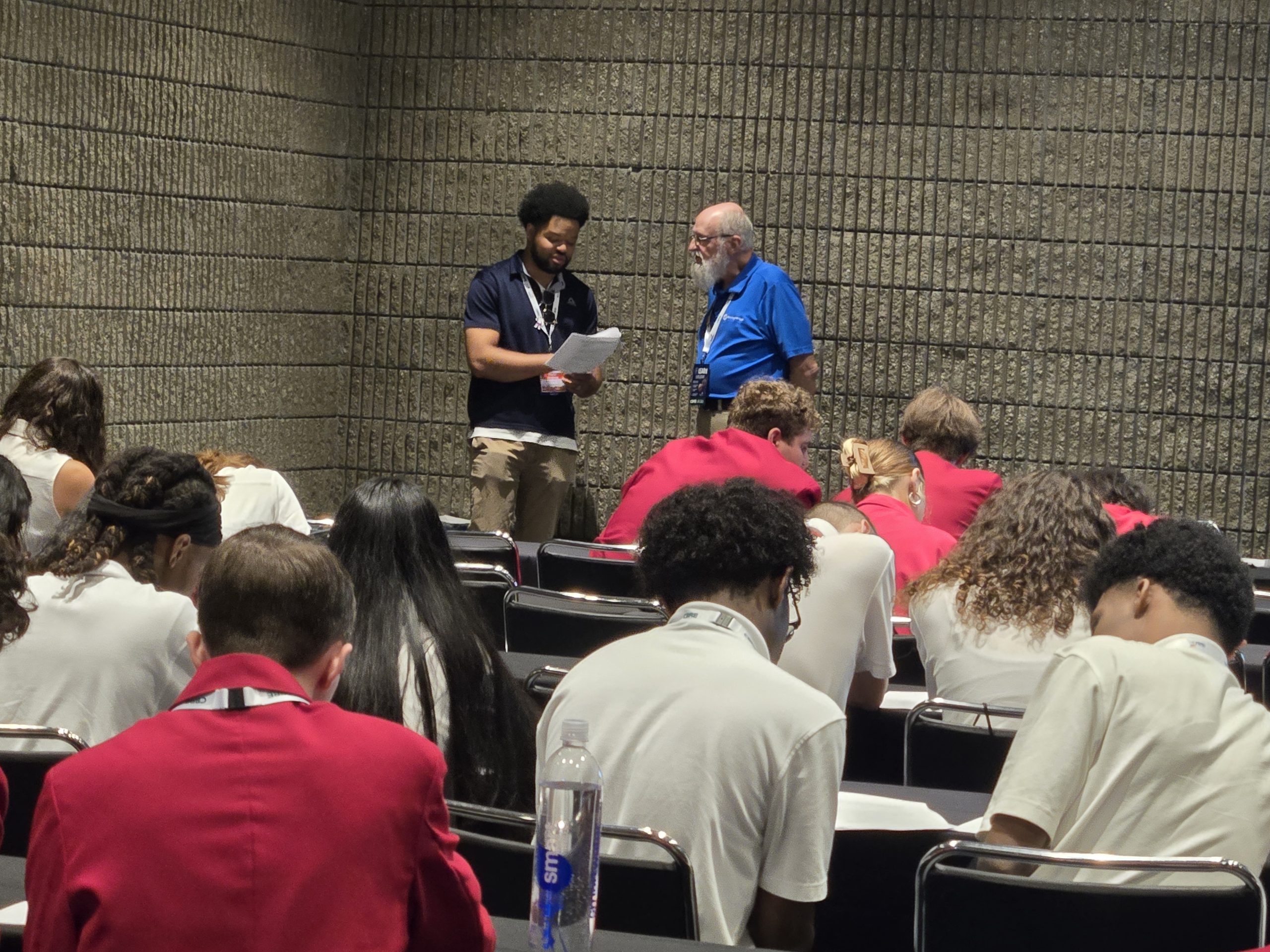
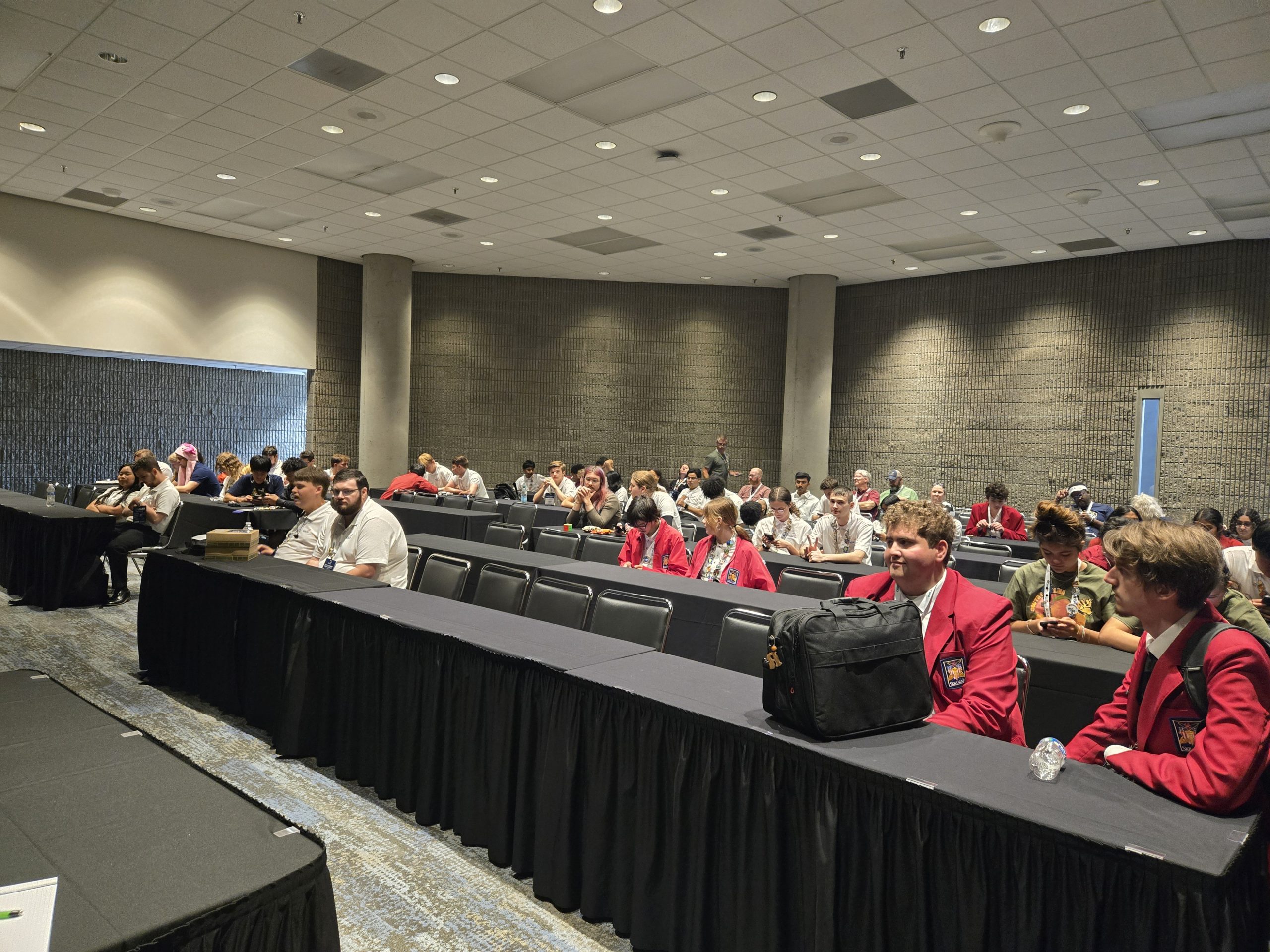
The road to a national medal began well before the official clock started ticking. Upon arriving in Atlanta, high school and college/postsecondary teams of two participated in an intensive orientation and training sequence. Competitors were first required to take a rigorous one-hour online examination designed to verify their core foundational knowledge of modern web technologies. This exam assessed everything from basic syntax to advanced concepts in semantic HTML, responsive CSS layouts, and programmatic logic in JavaScript.
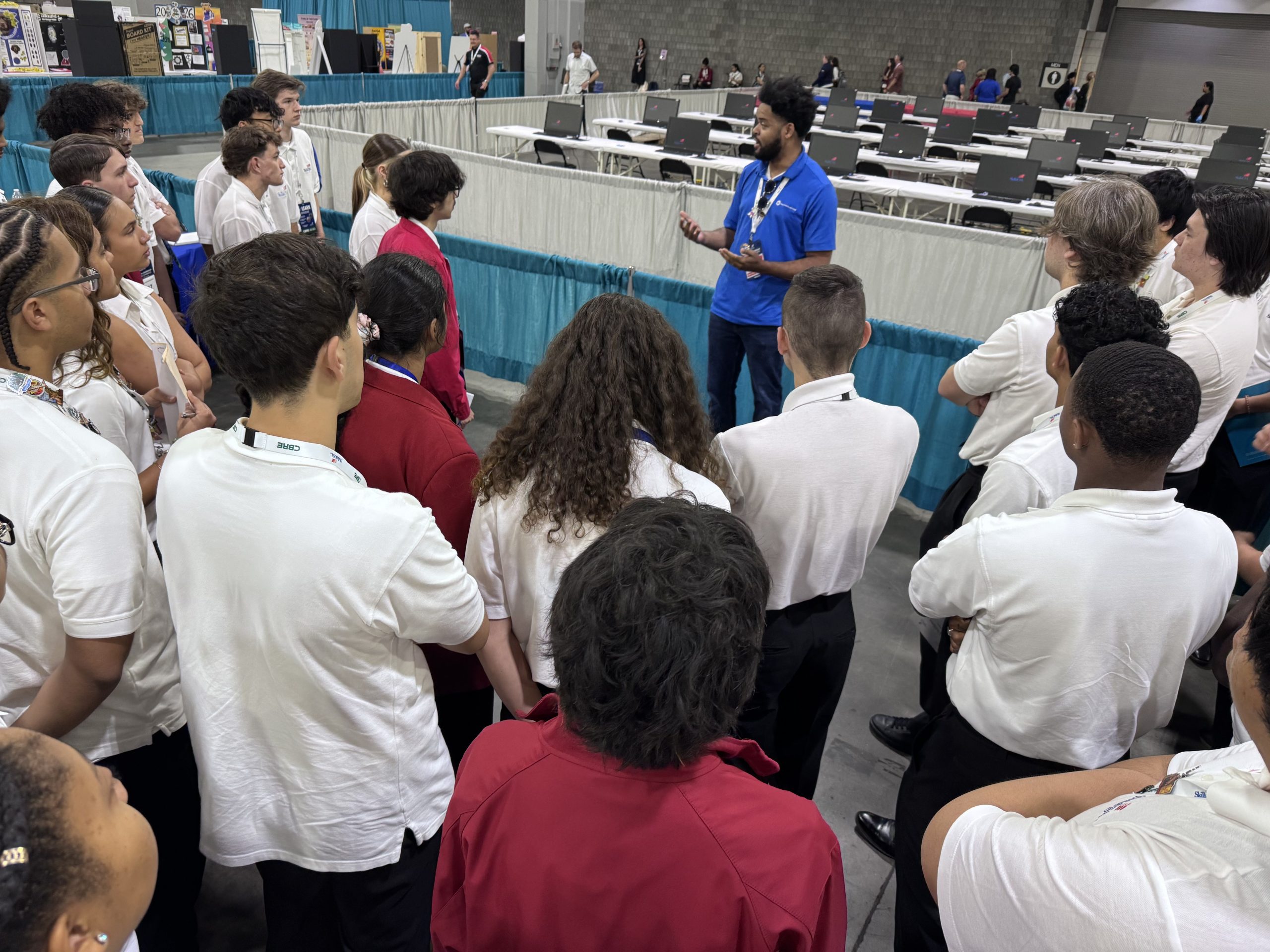
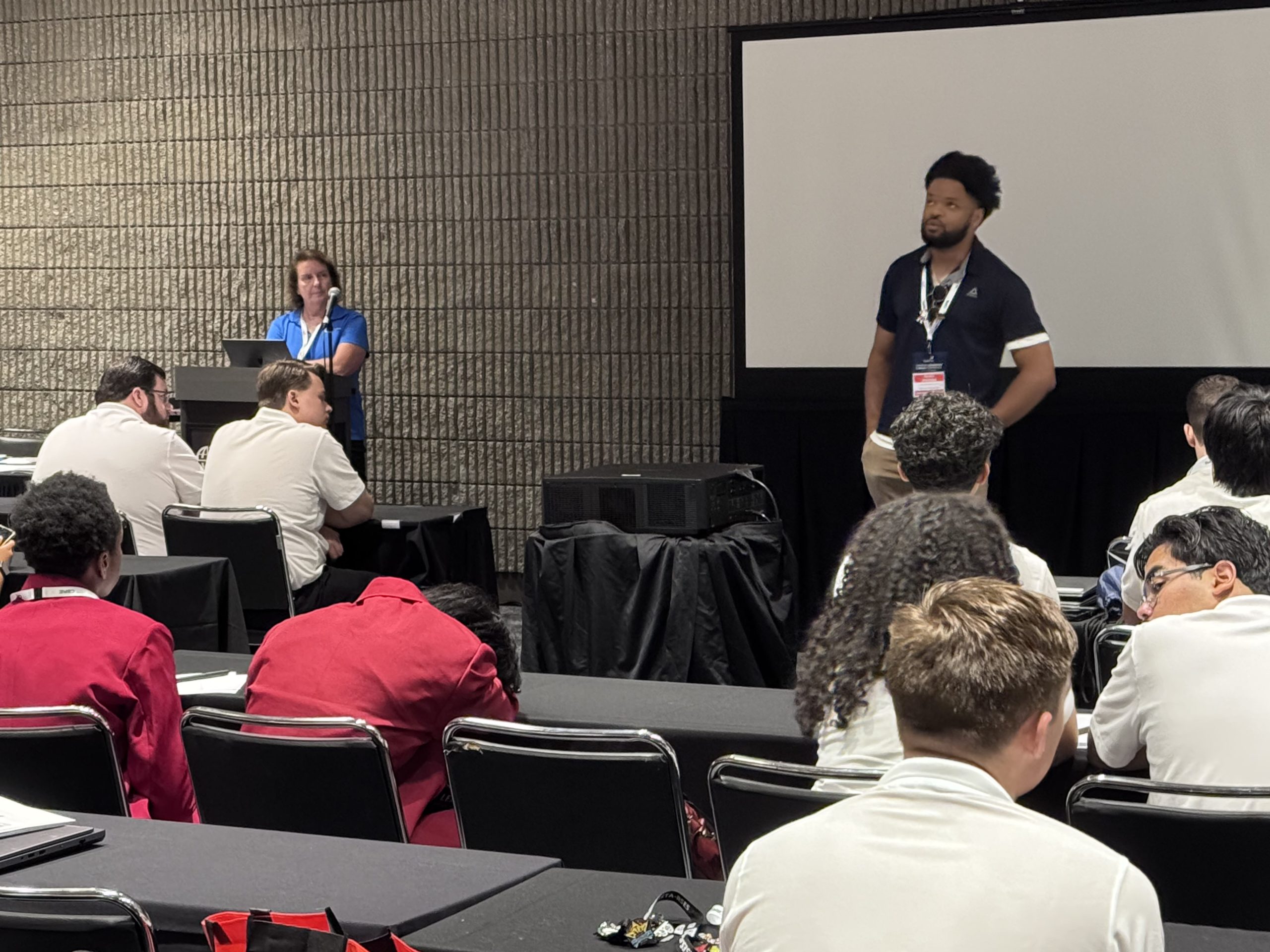
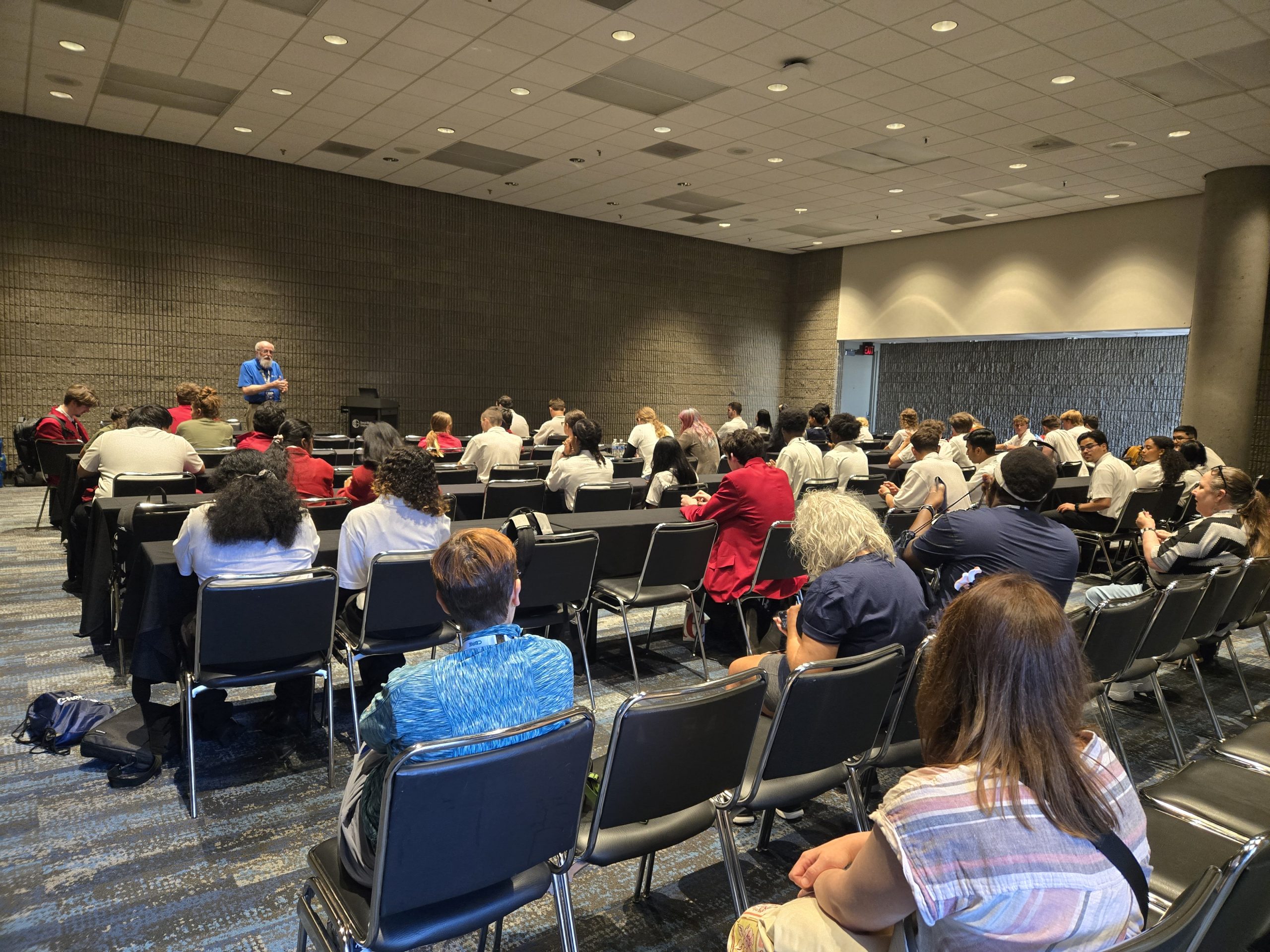
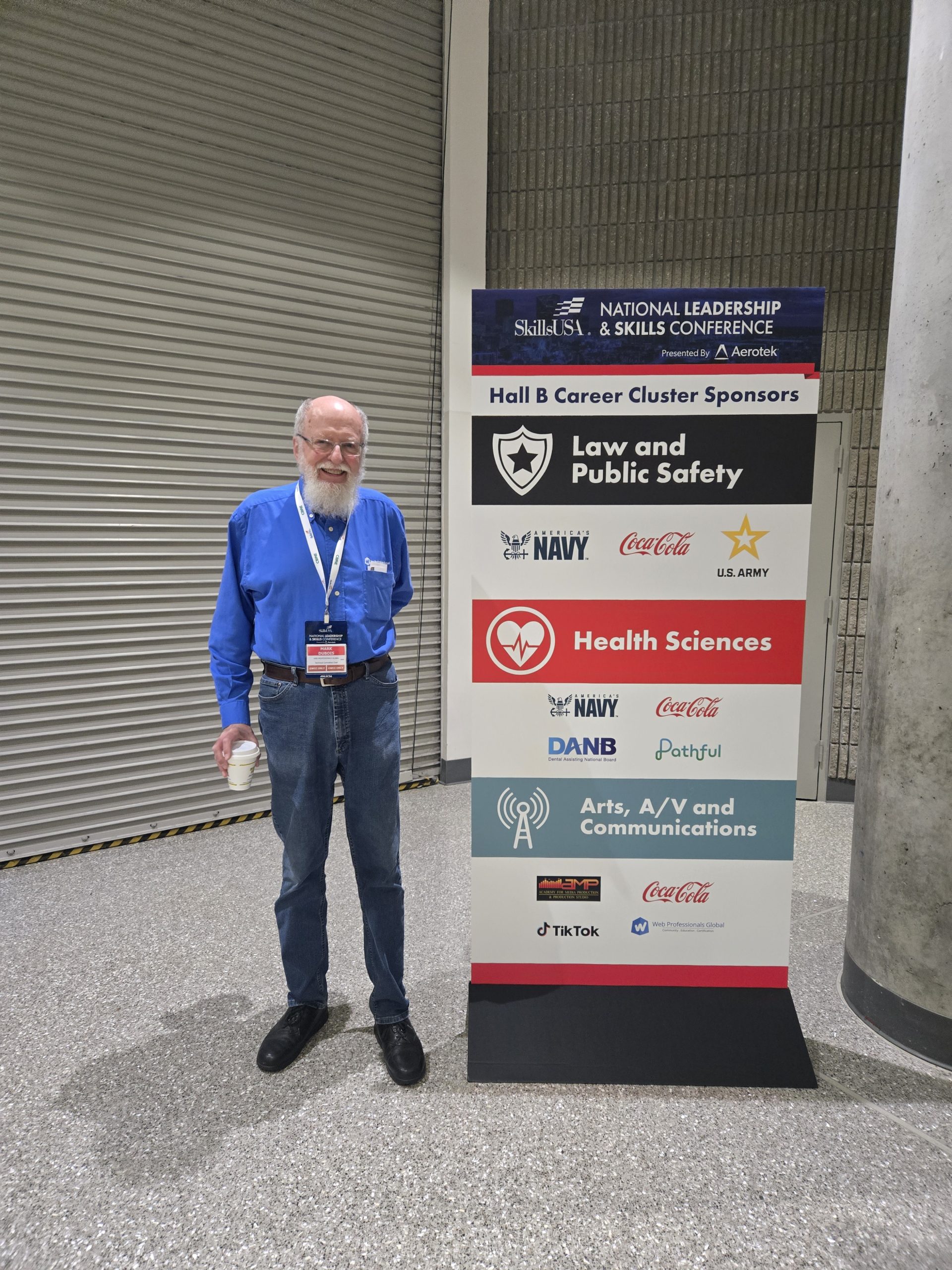
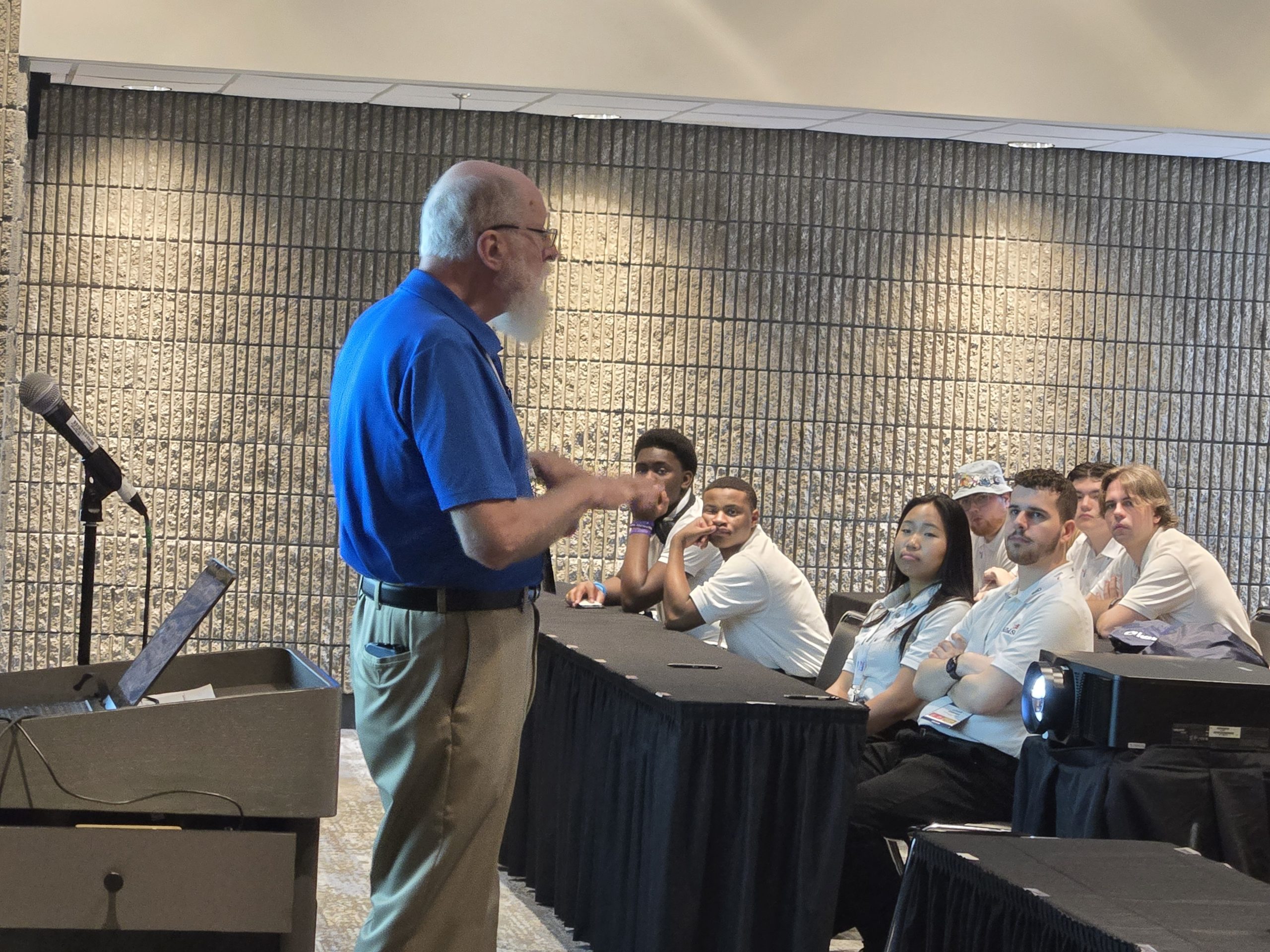
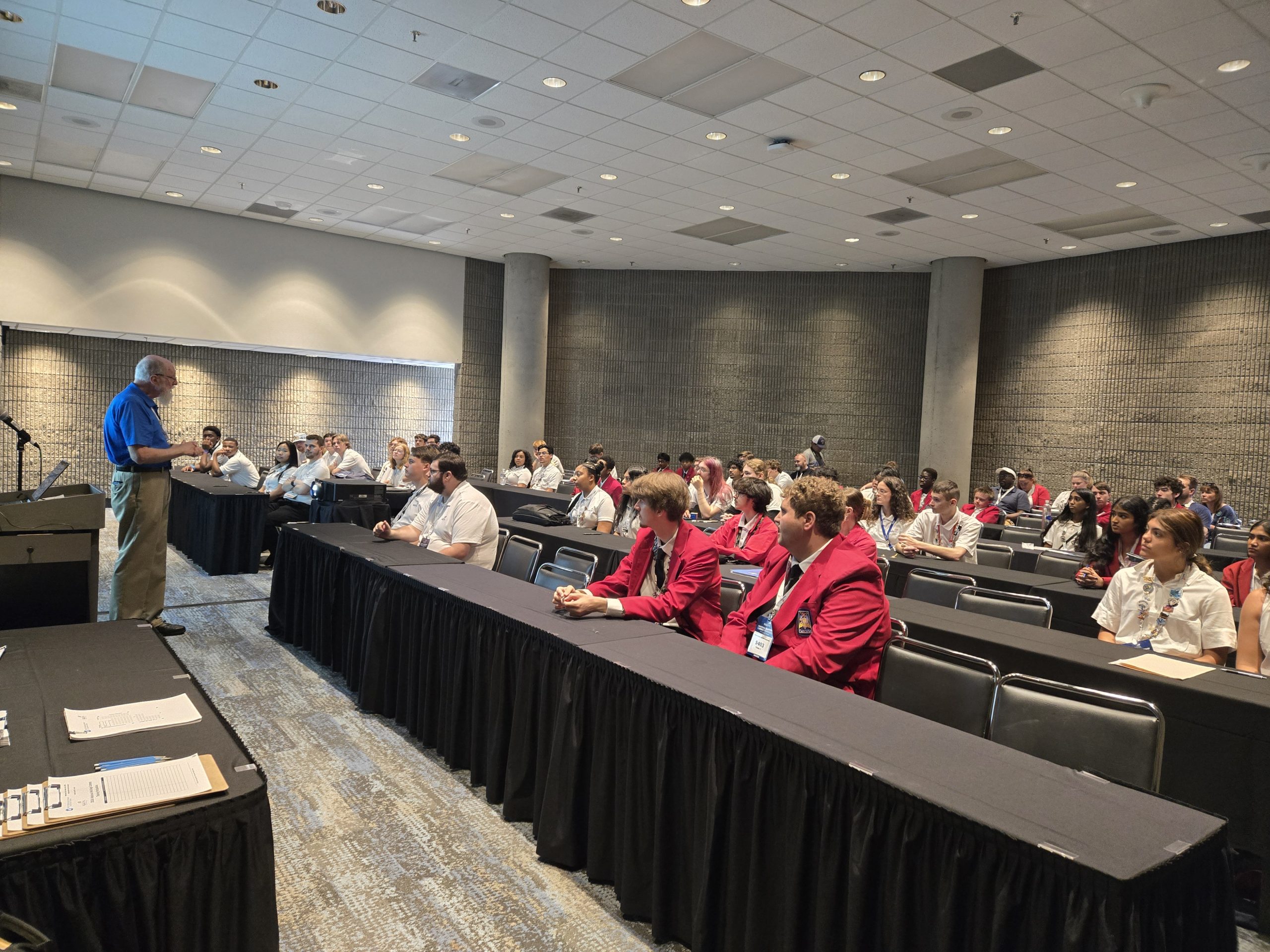
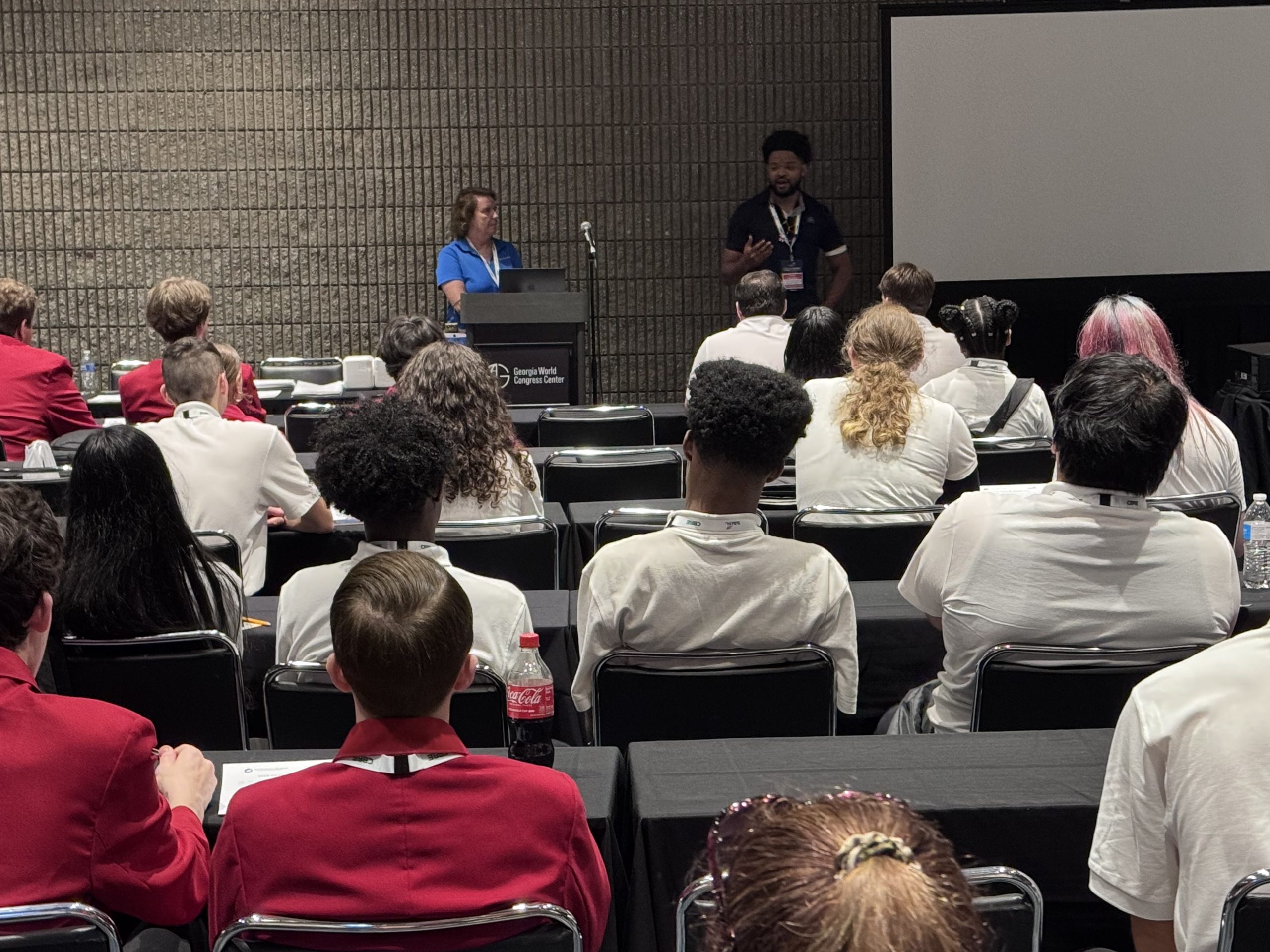
Following the examination, Web Professionals Global hosted a mandatory technical training session, hosted by our Executive Director, Mark DuBois. This session introduced the student teams to our custom, cloud-based Integrated Development Environment (IDE). Our organization provided a fully standardized, web-accessible development environment, ensuring a completely level playing field regardless of whether a team brought a high-end laptop, a Mac, a PC, or a Chromebook. During this orientation, our technical committee also hosted a dynamic industry panel discussion. Industry mentors and practicing web professionals discussed the present and future landscape of the digital economy, exploring workflow optimizations and the evolving role of artificial intelligence in production environments. Continue reading for Mark’s recap of the week.
Week Recap
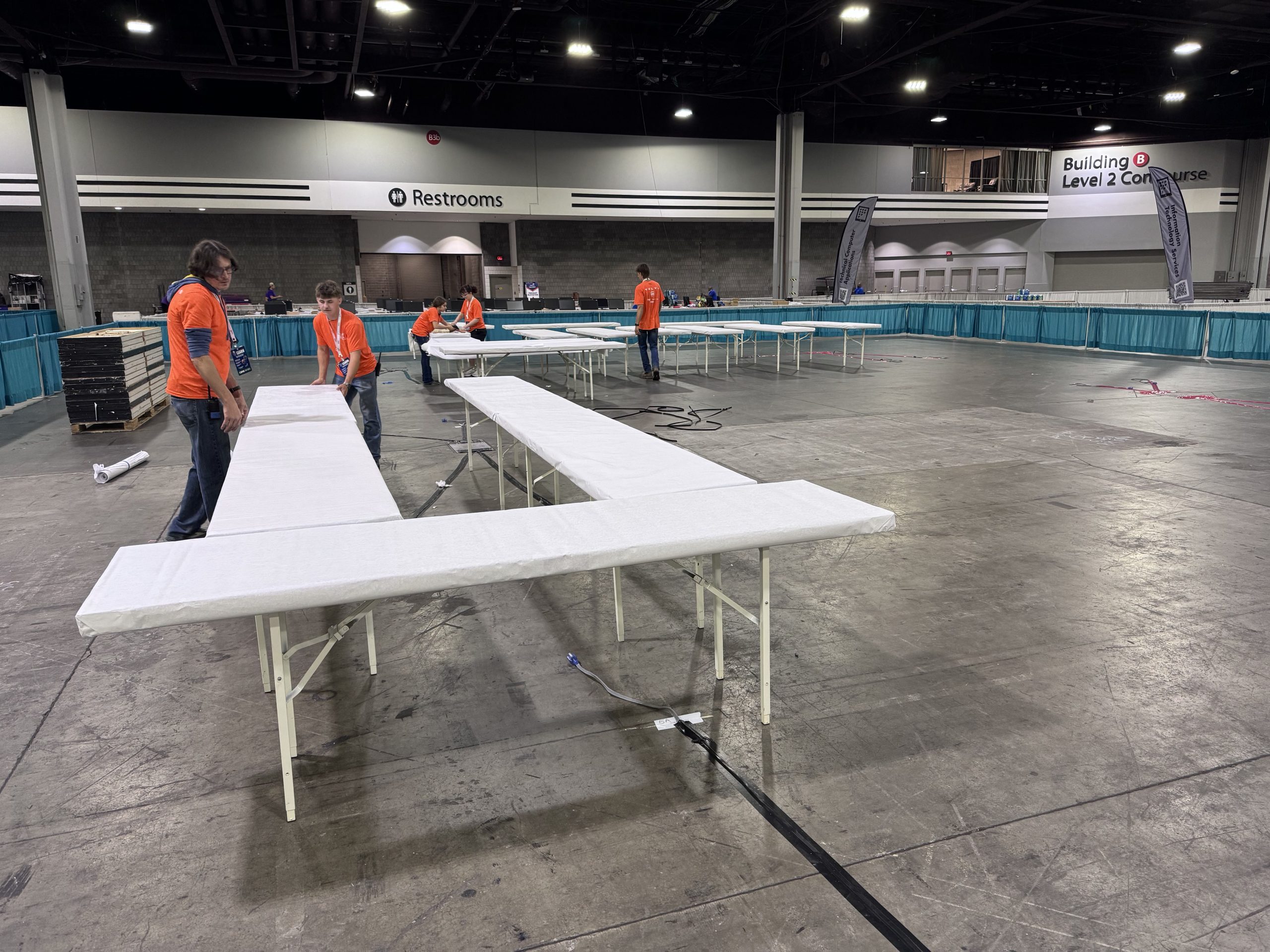
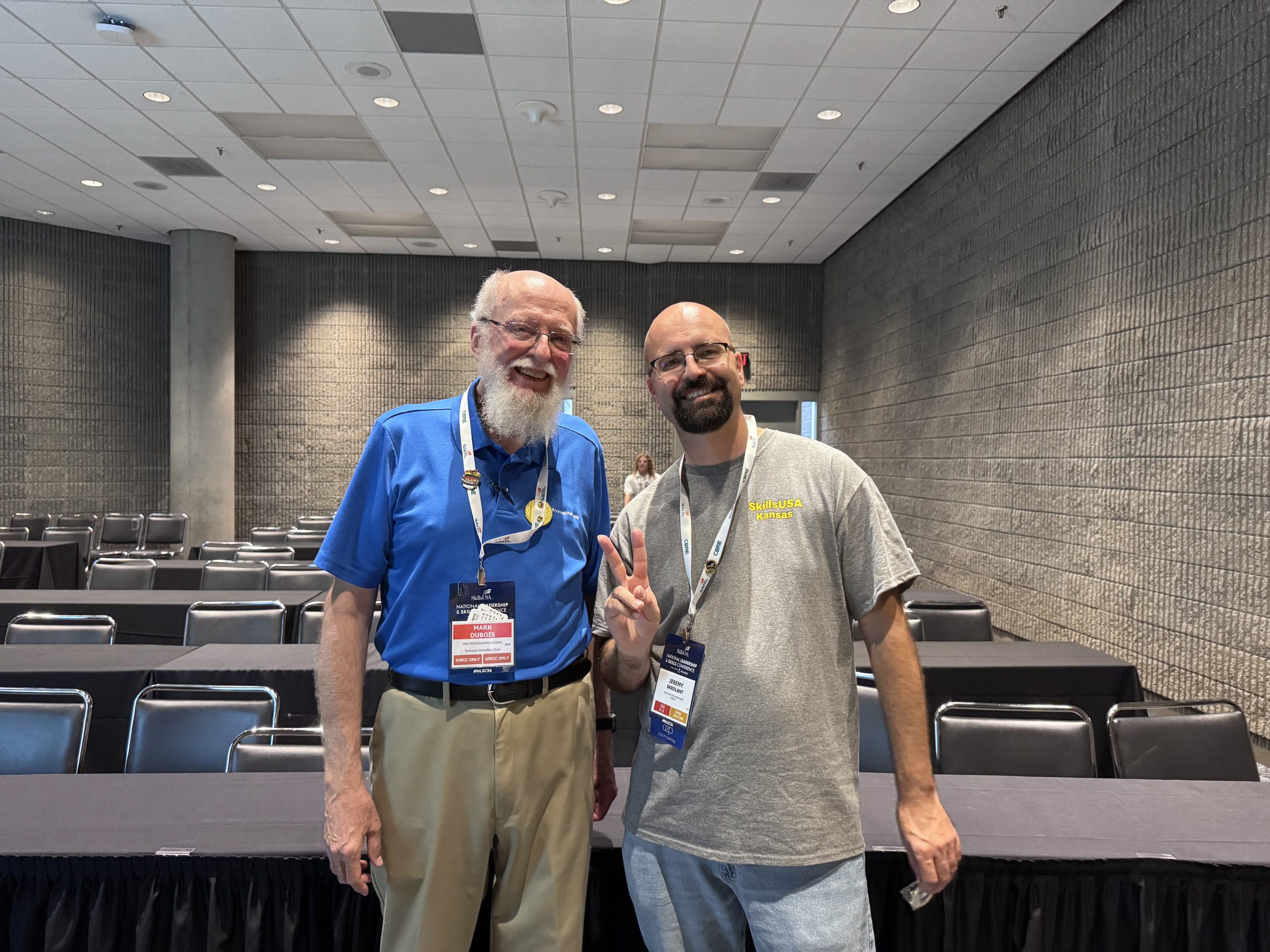
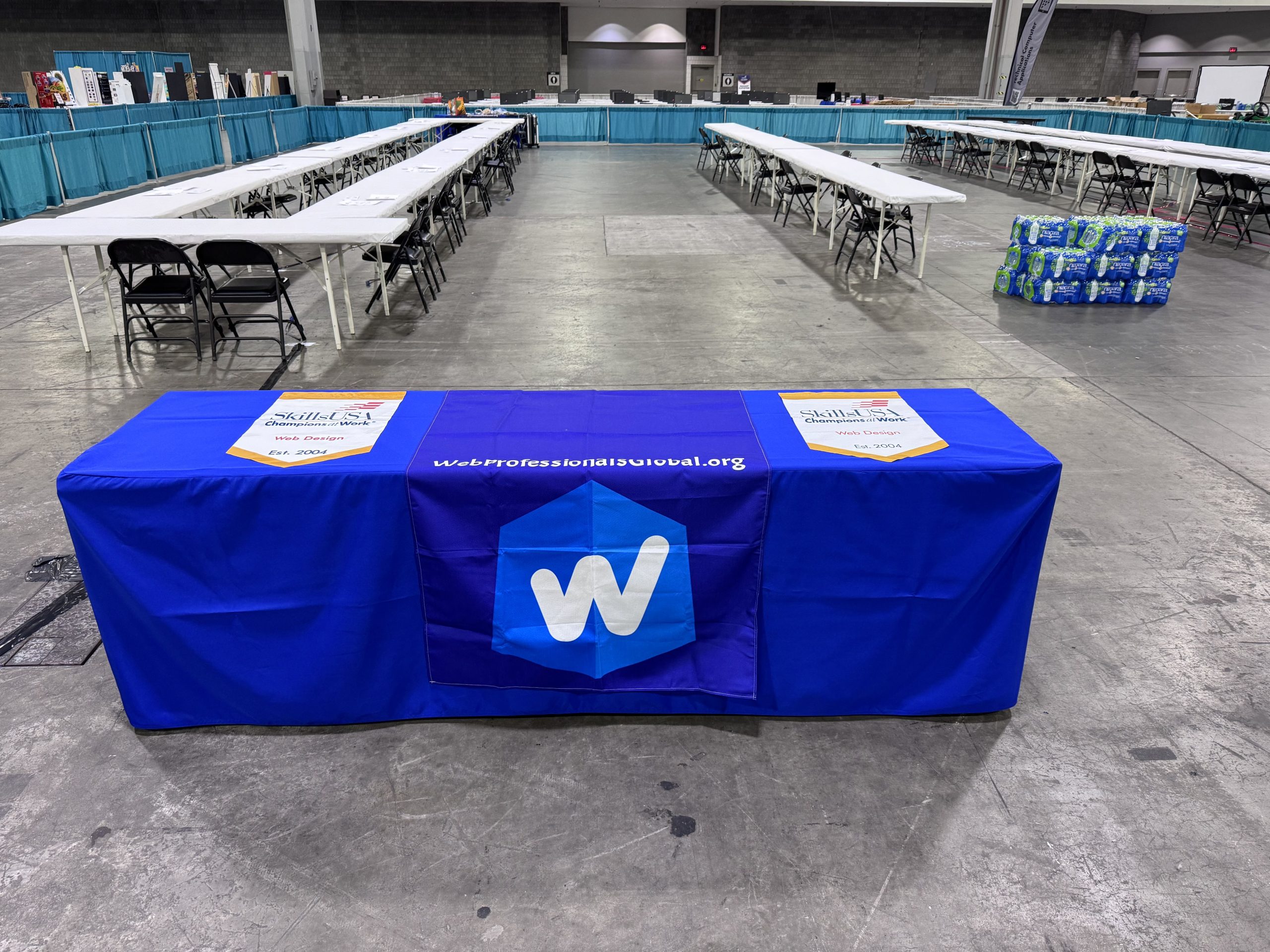
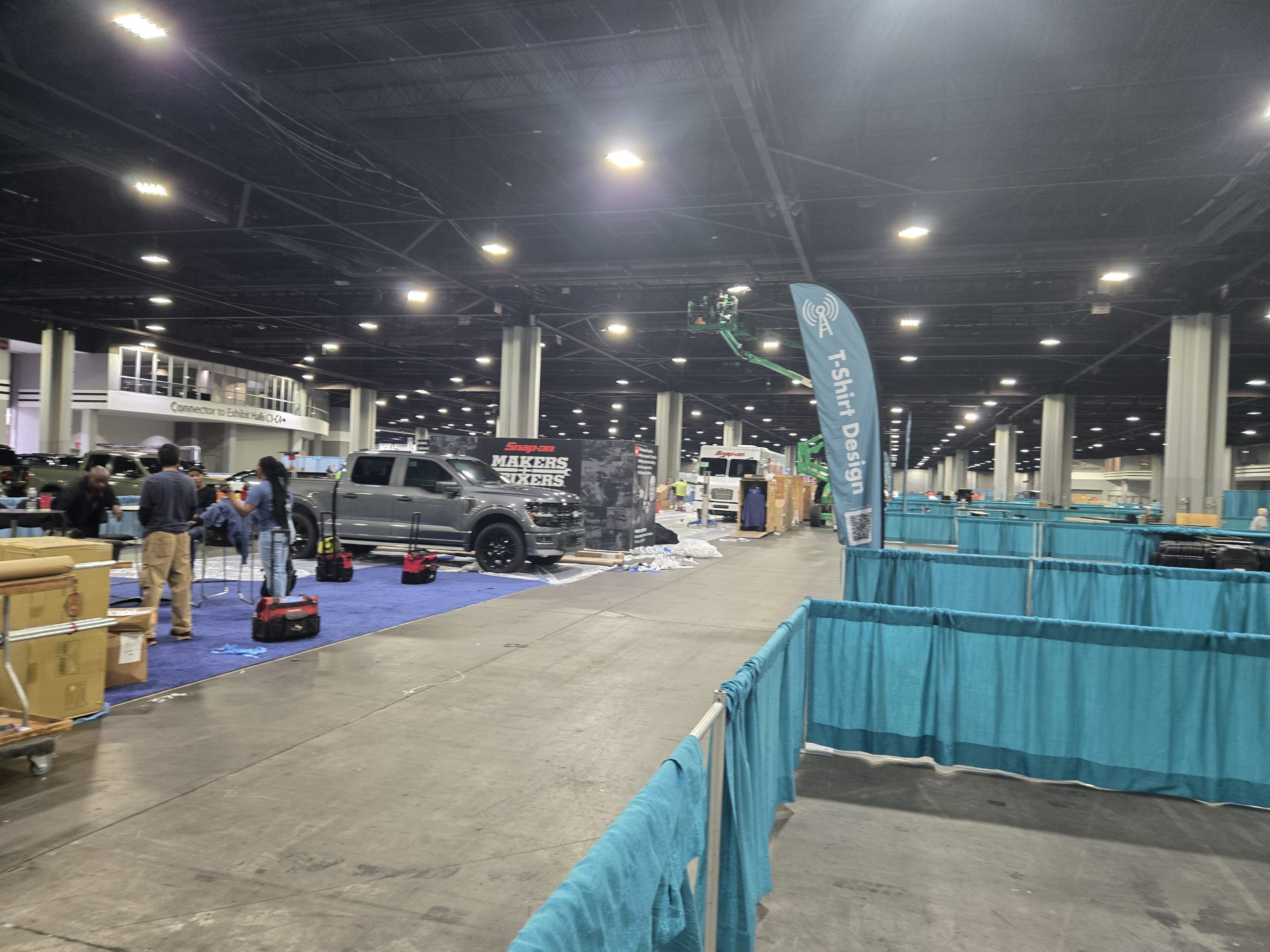
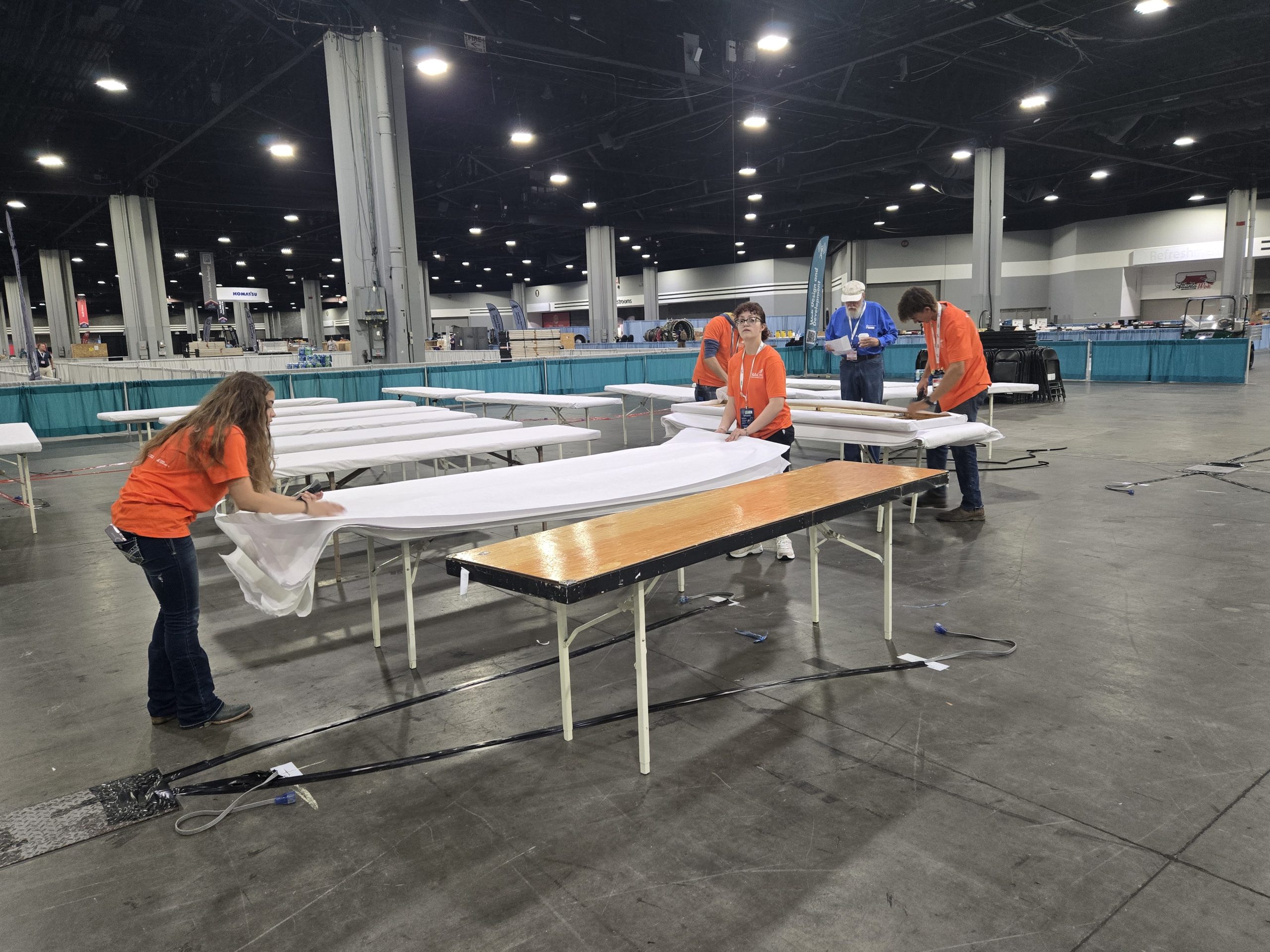
June 1 (Monday) – Mark DuBois and Tammy Finch arrived at the GWCC and worked with SkillsUSA Courtesy Corps to insure the empty environment was set up with tables and chairs for competitors and the rest of the team (which arrived on Tuesday). Mark also participated in the technical chairs meeting Monday afternoon where various procedures and emergency protocols were discussed in detail.
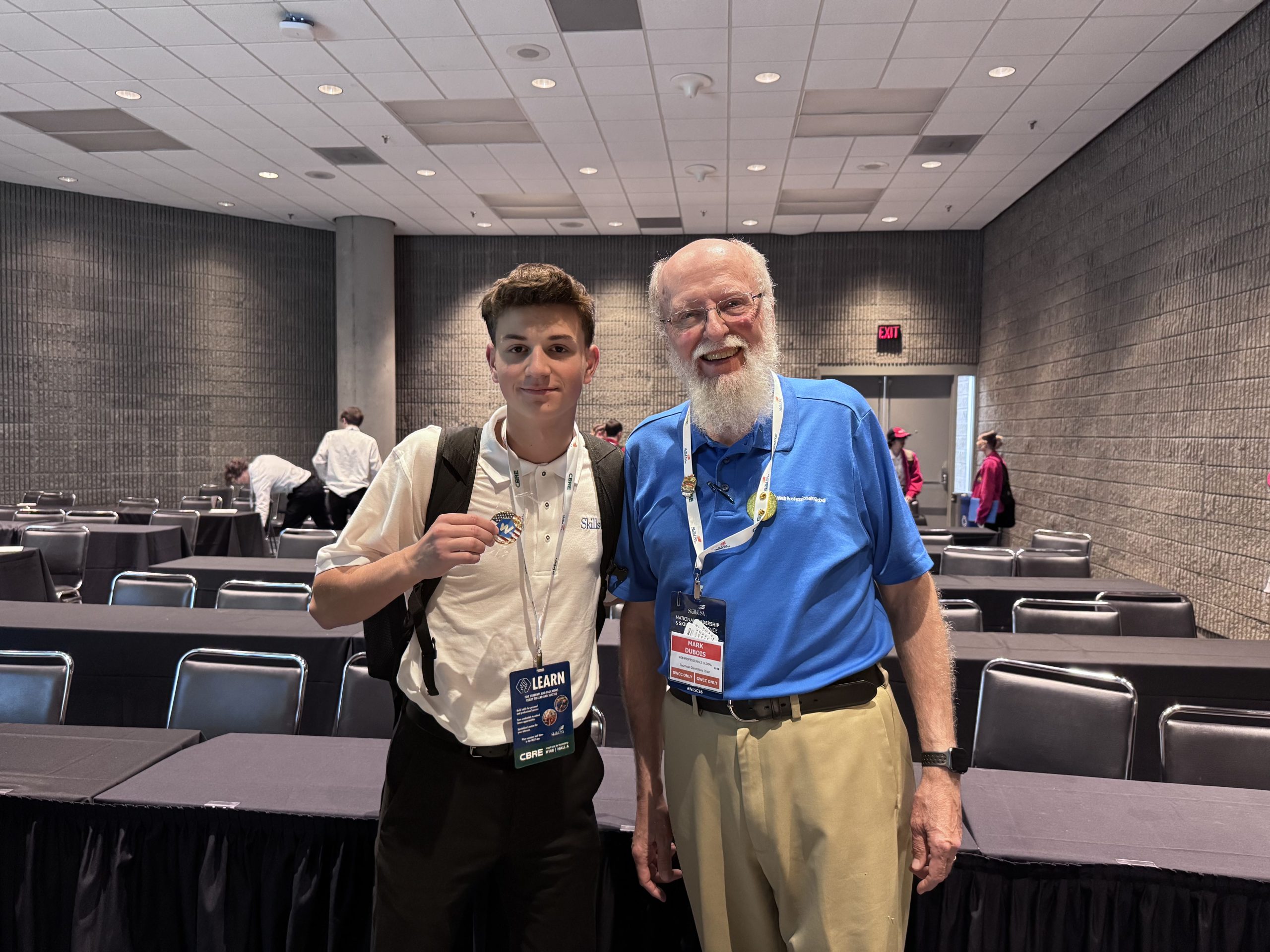
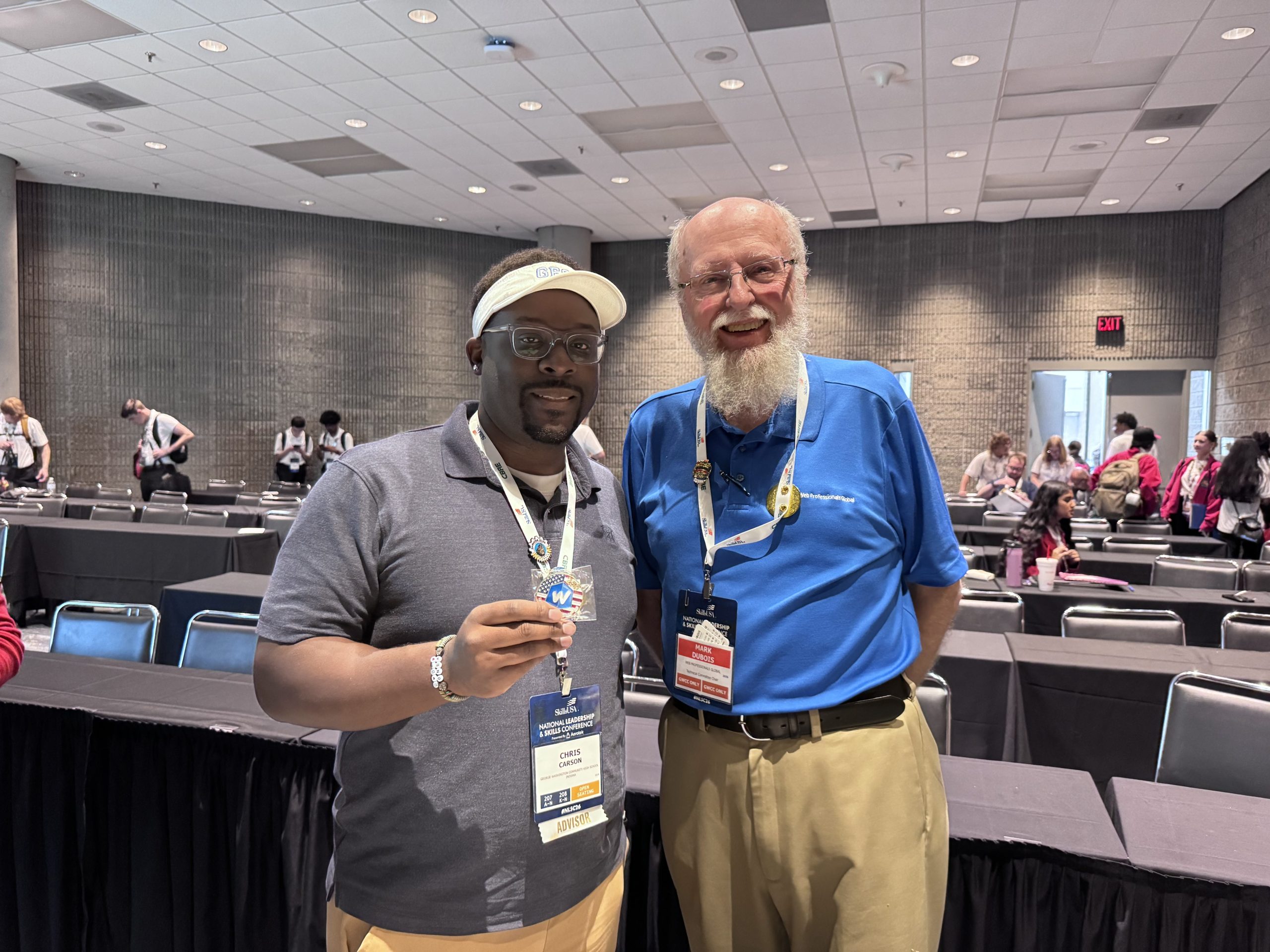
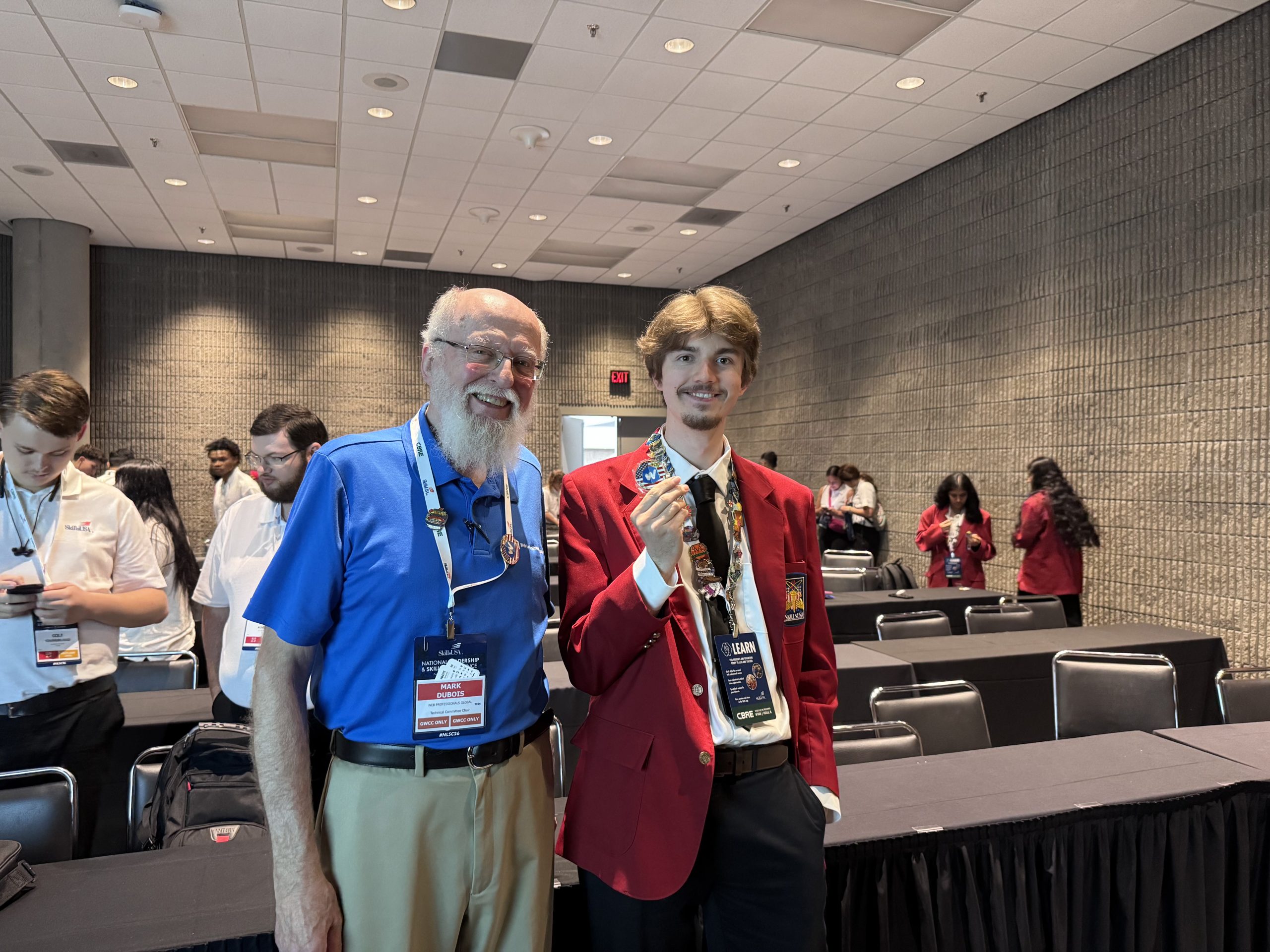
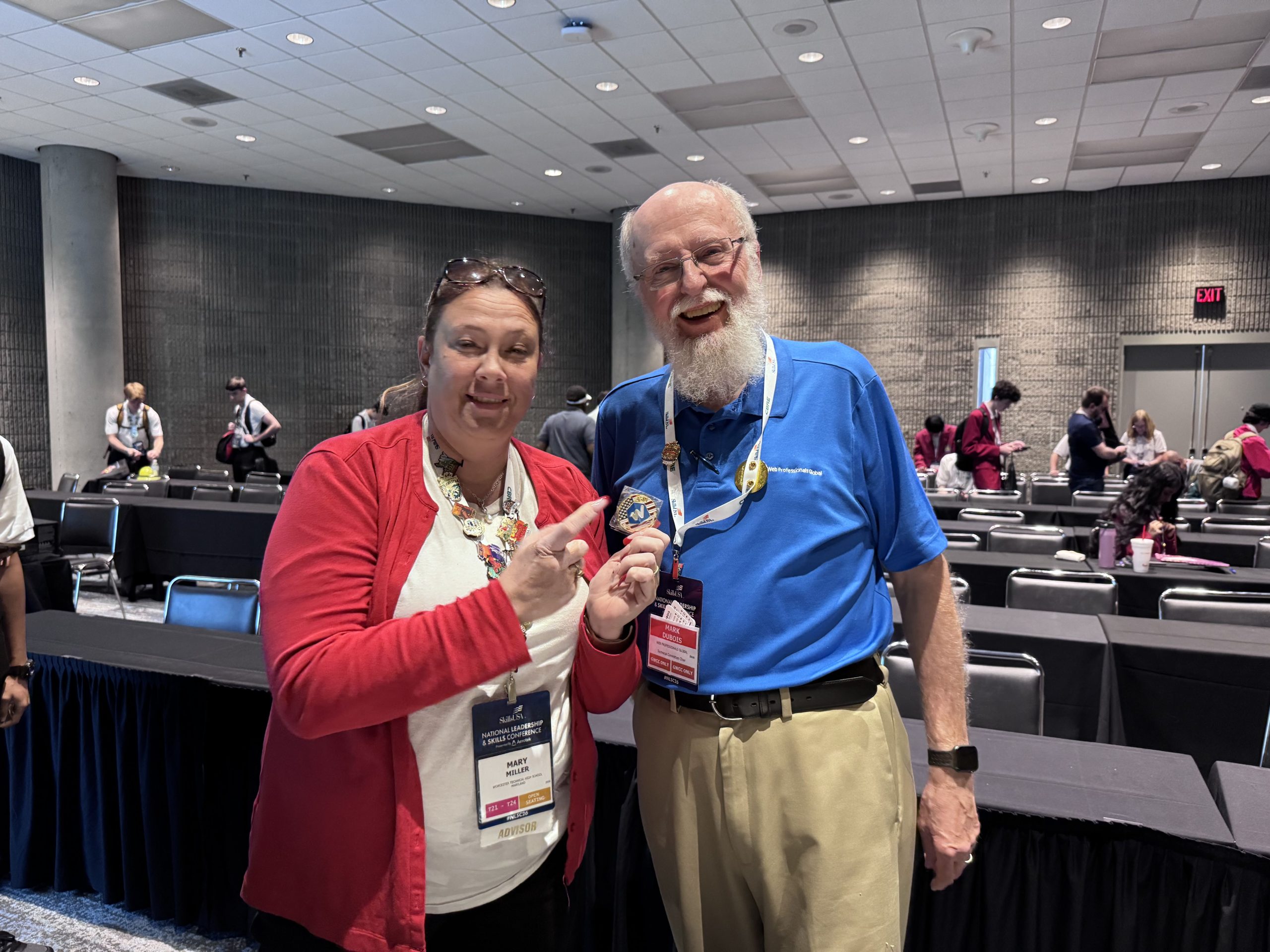
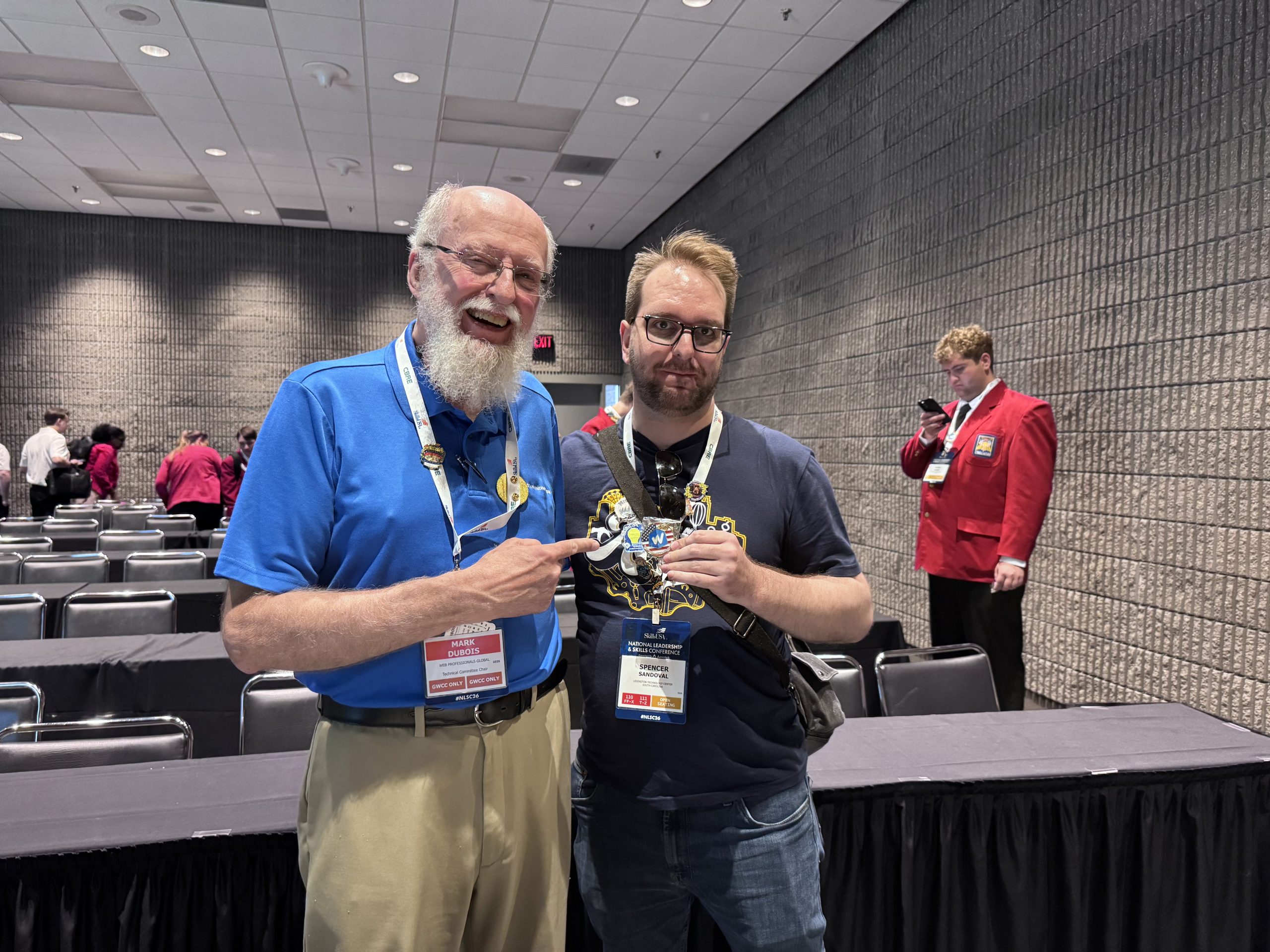
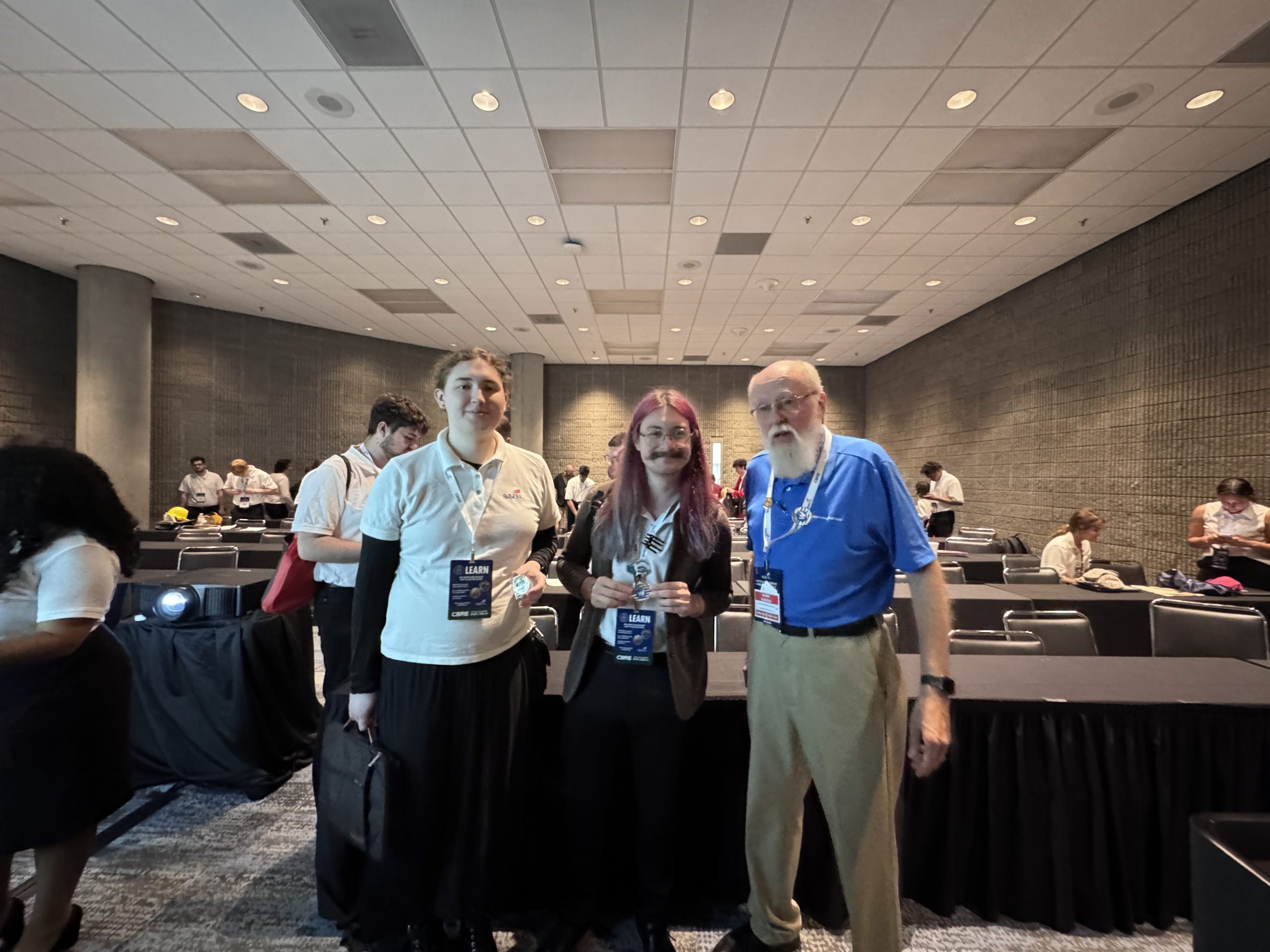
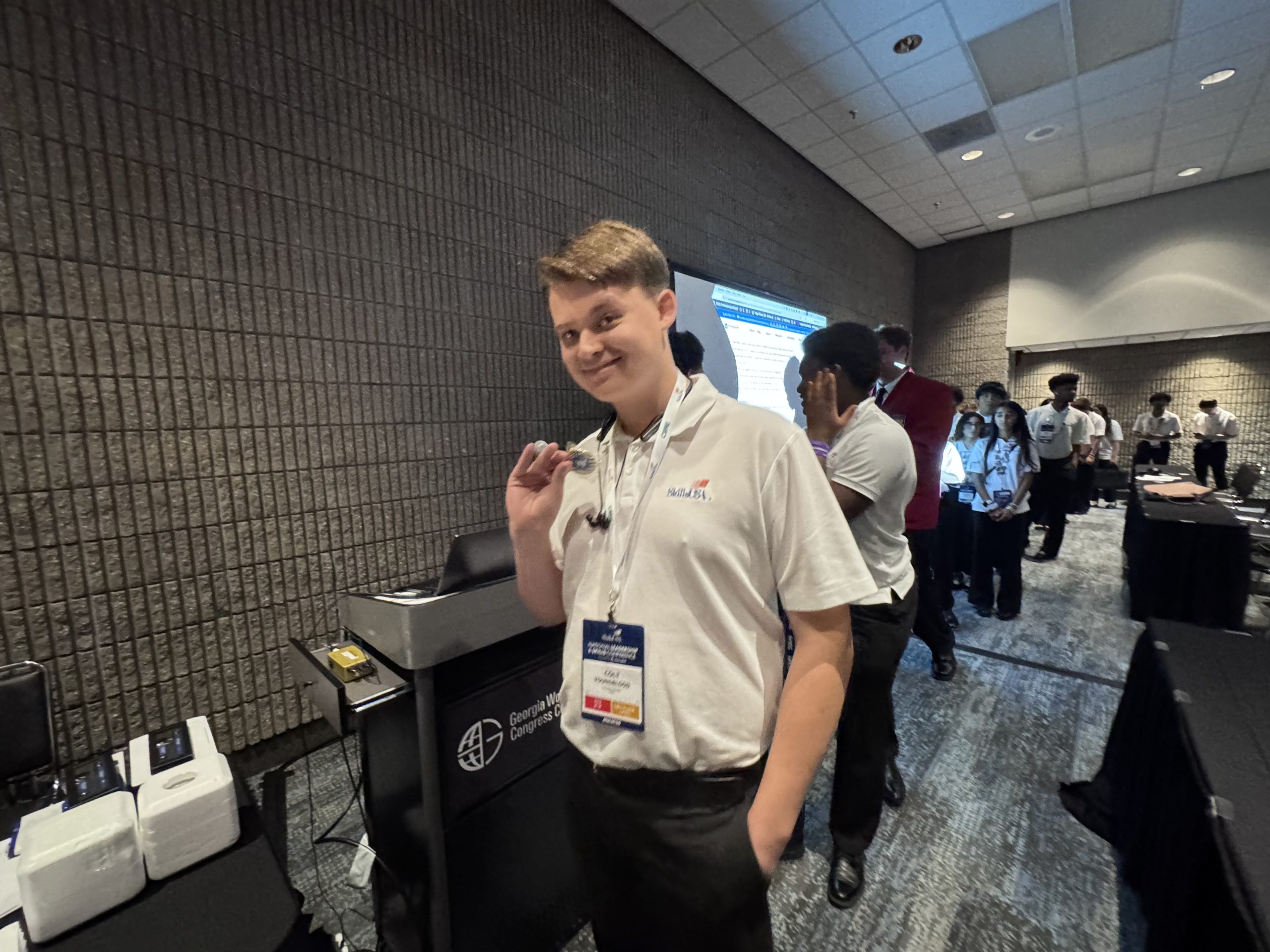
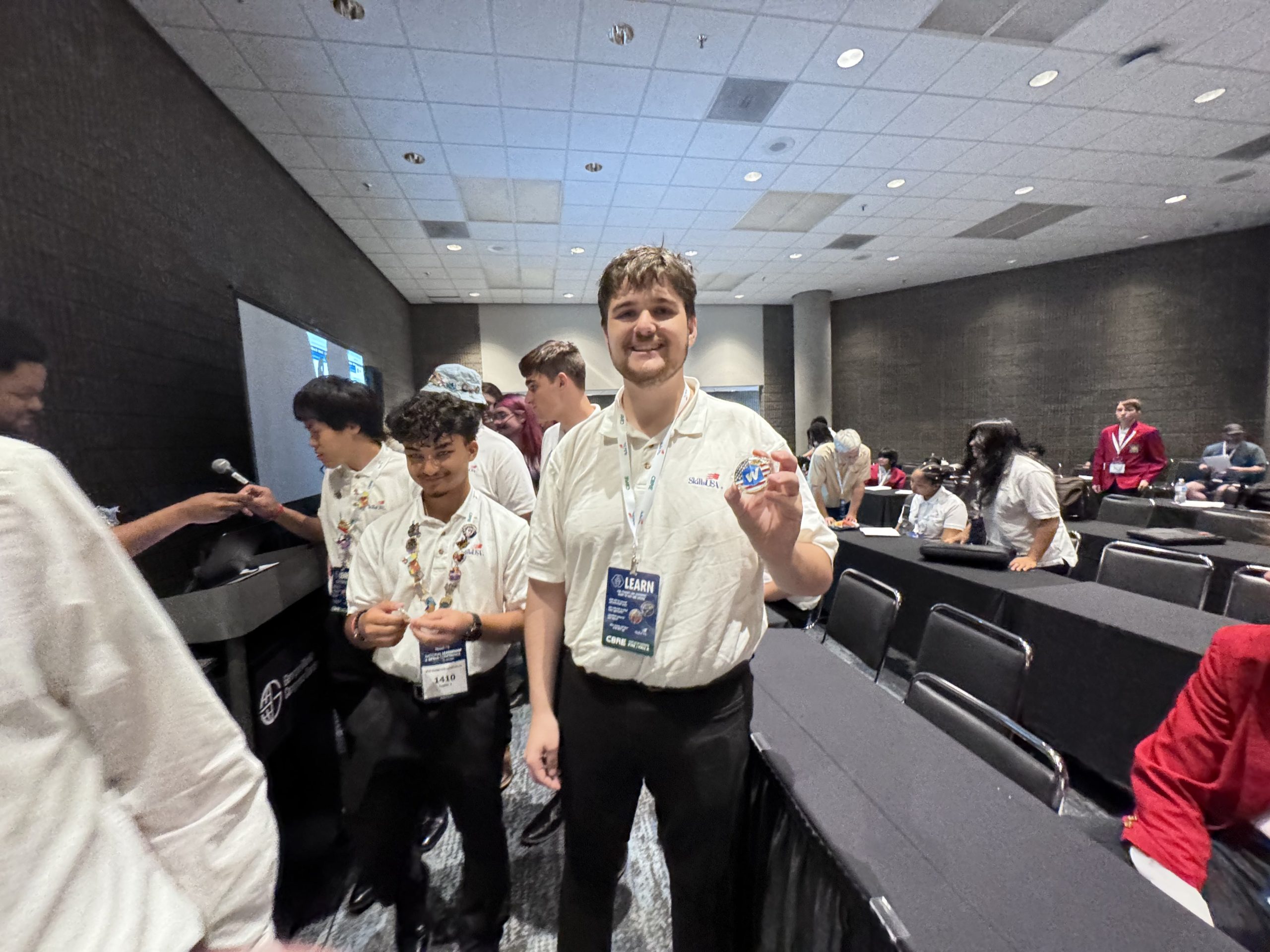
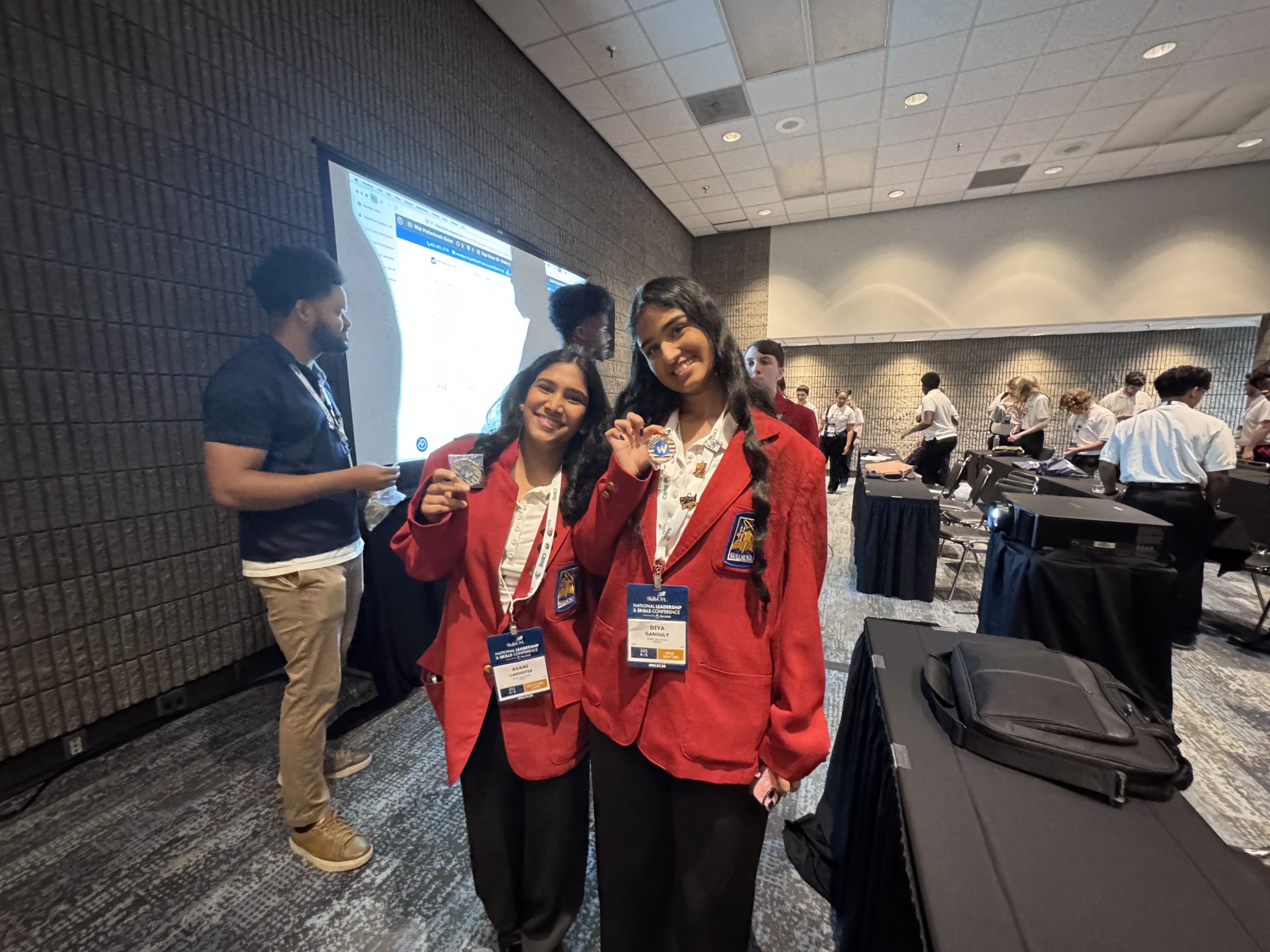
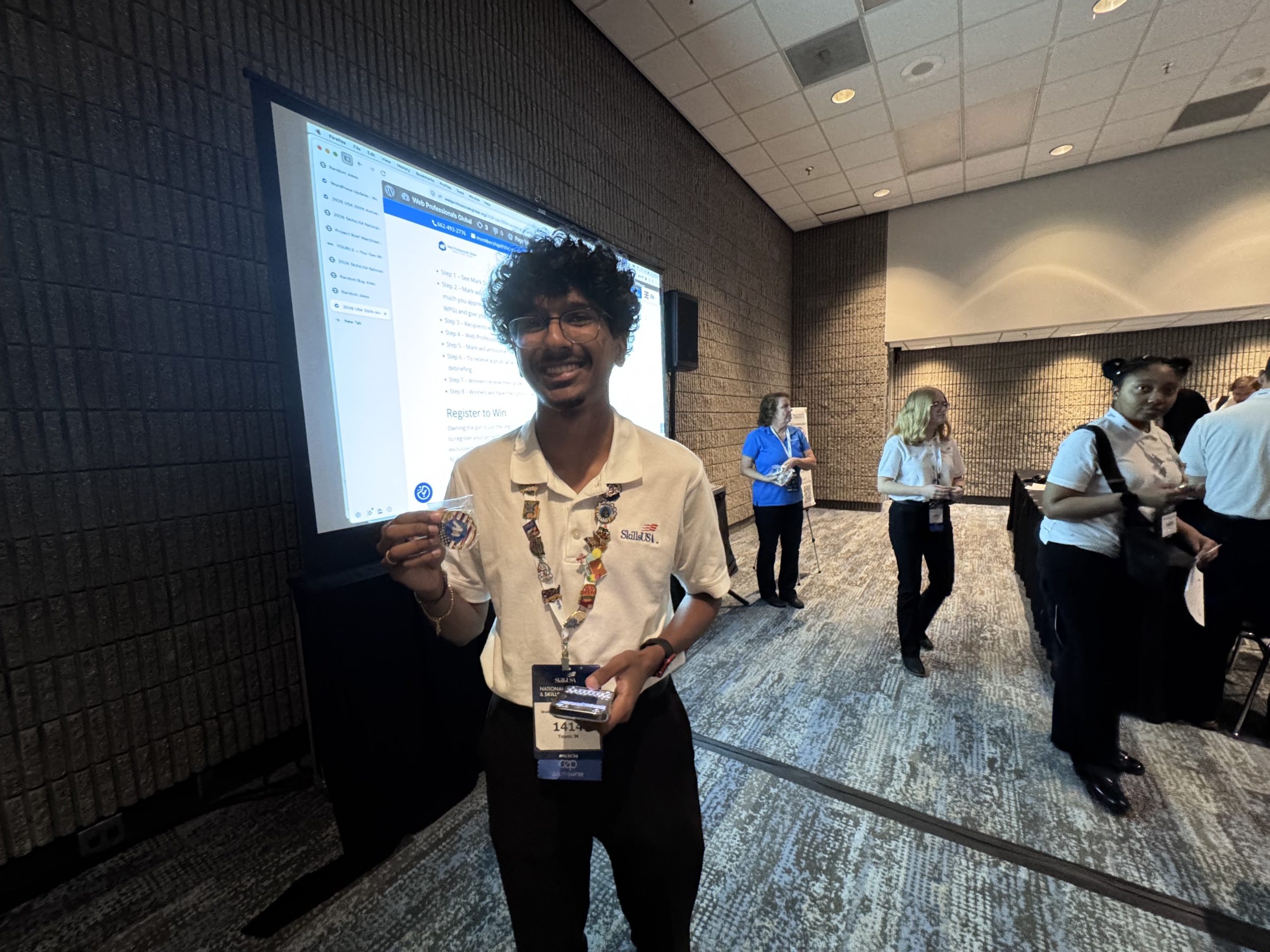
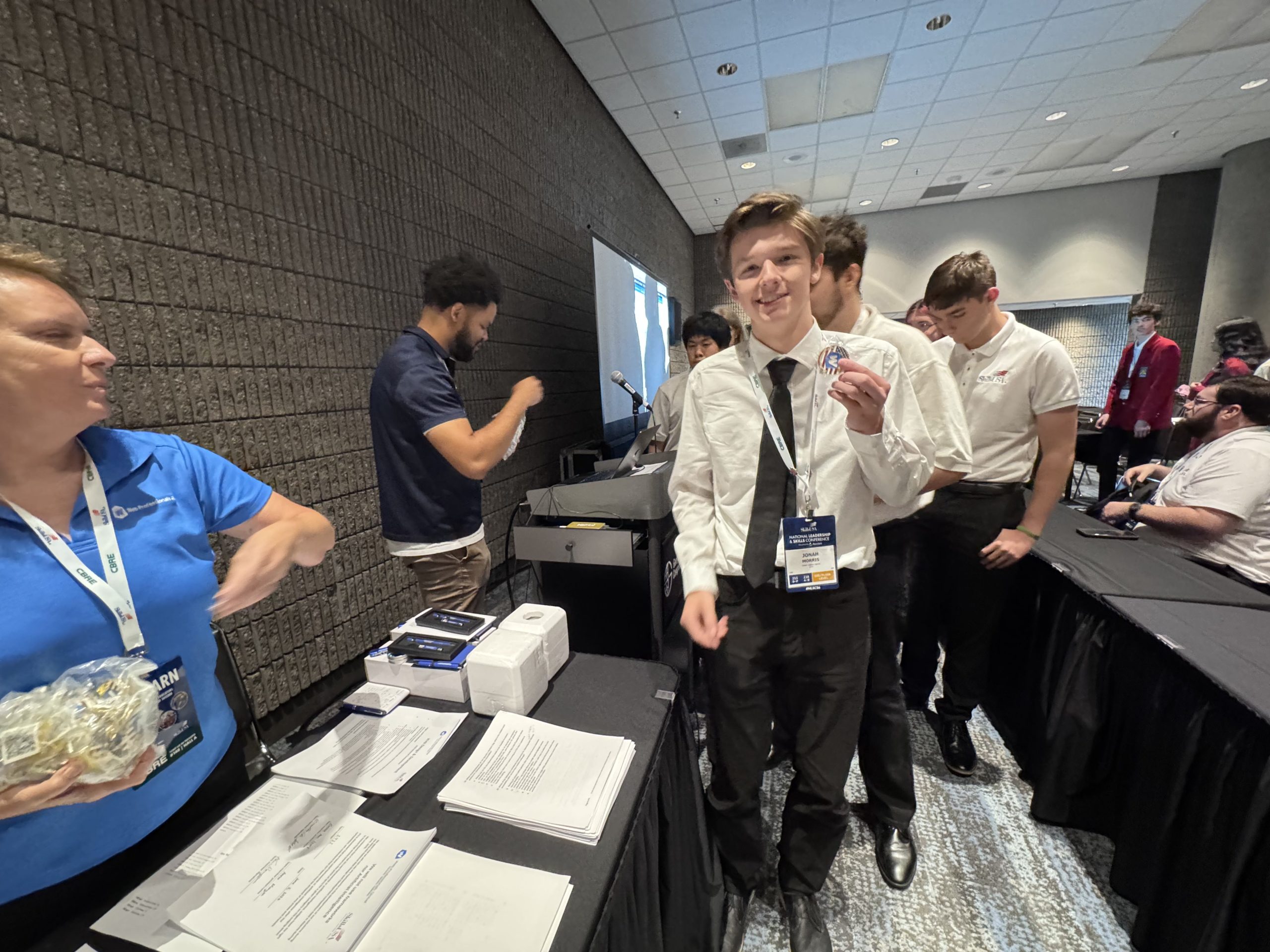
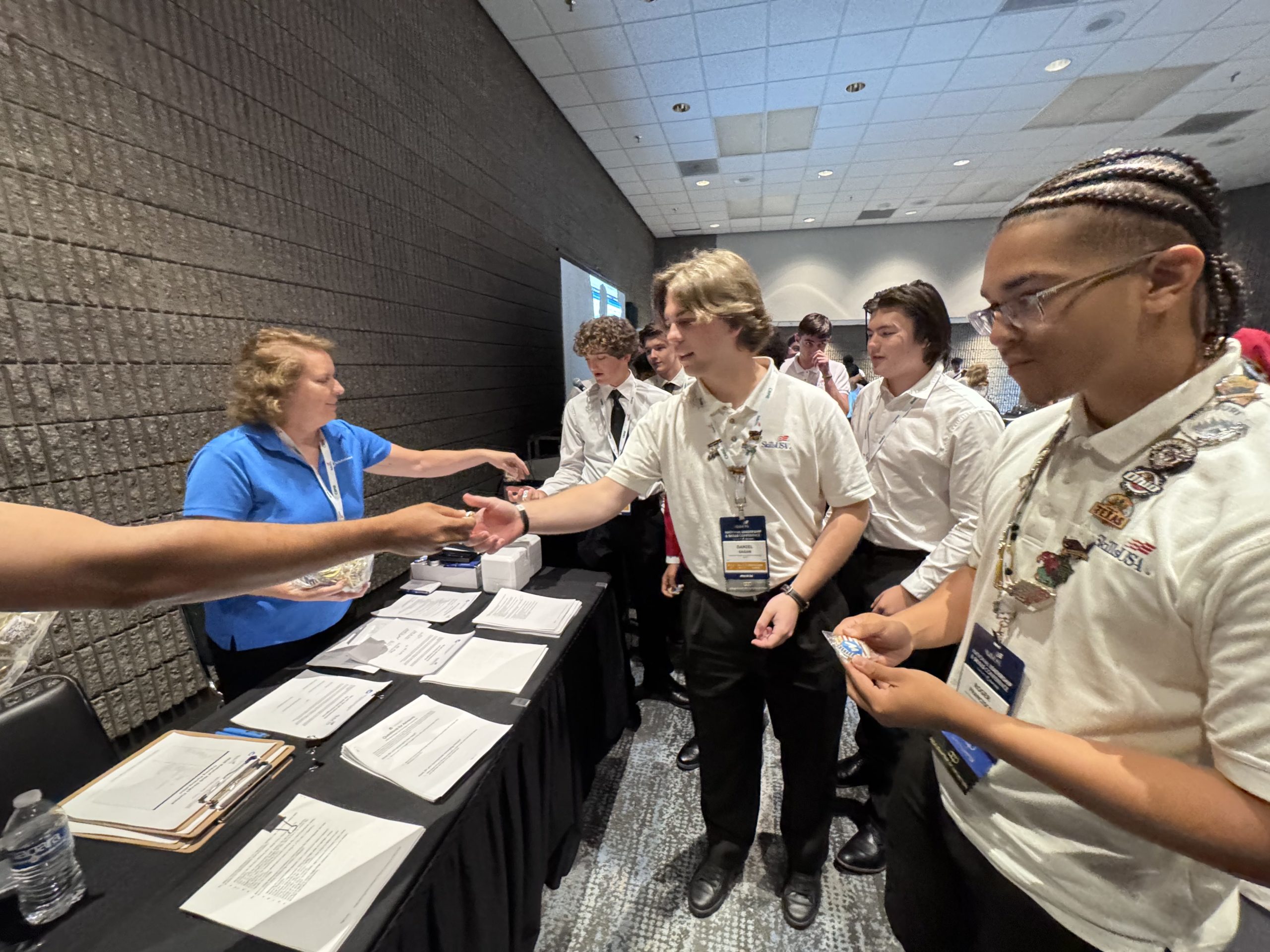
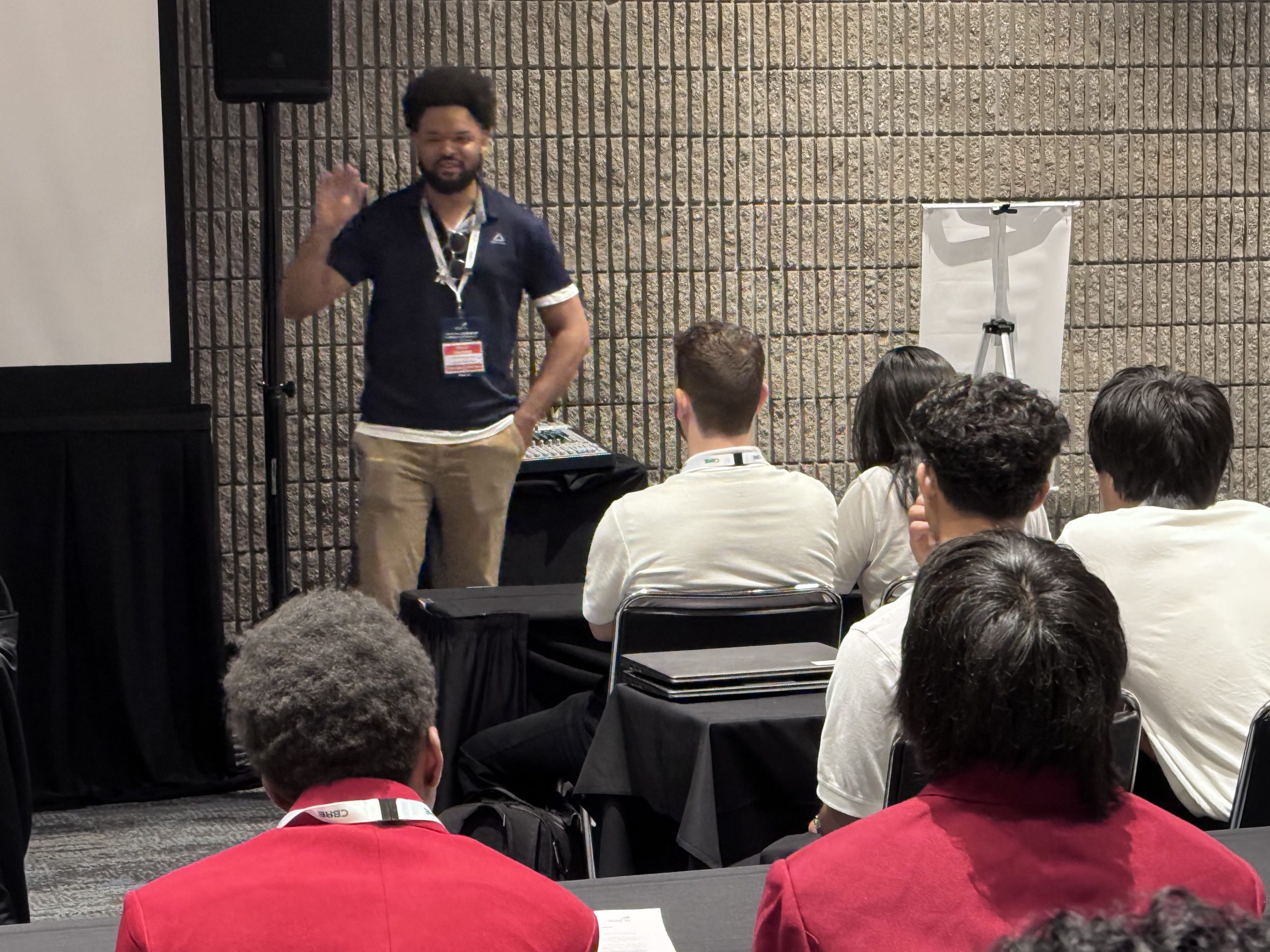
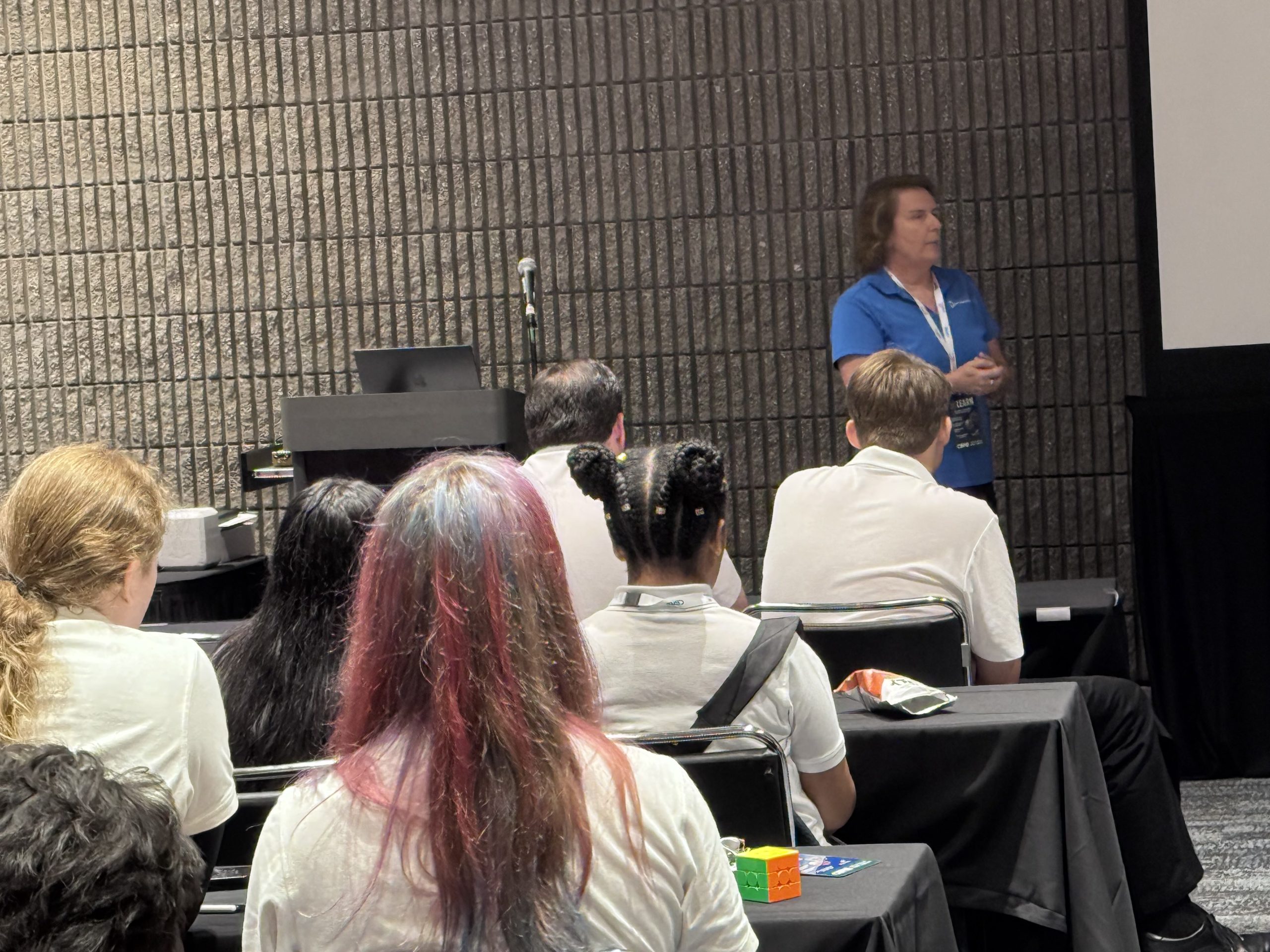
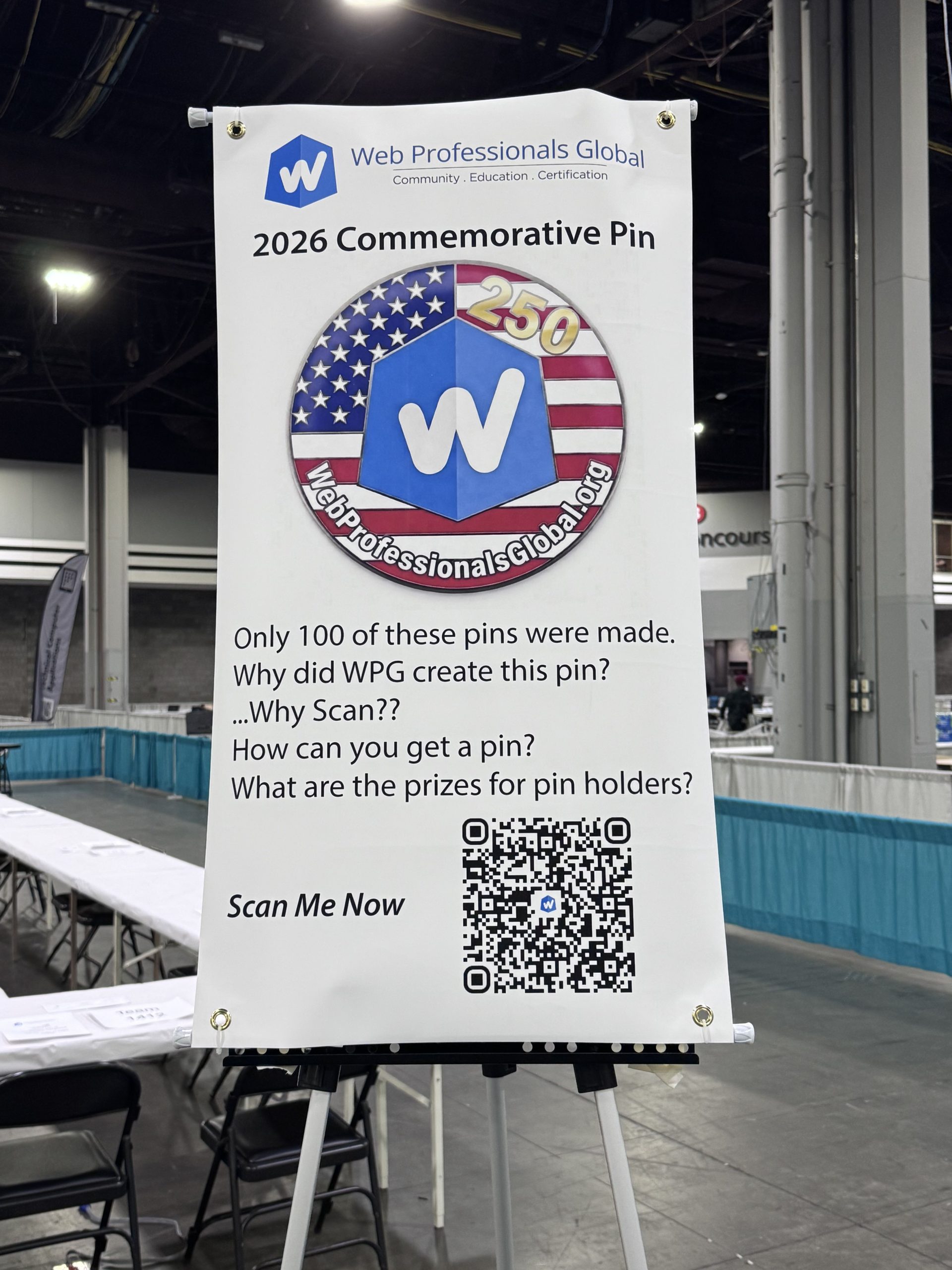
June 2 (Tuesday) – We held our mandatory exam session from noon until 2 p.m. Several teams took nearly the entire time to complete the exam. From 2 – 3:30 p.m. we discussed our coding environment, provided an overview of the competition and held a panel discussion with several web professionals addressing questions from competitors. At 3:30 p.m., Mark unveiled our 2026 commemorative pin. He also discussed the registration process for prizes and what competitors needed to do to be eligible for a prize. Competitors were most energized and excited that we offered a custom pin (and a very hefty one at that). We stayed until well after 4 handing out pins to competitors and advisors (advisors had a separate process to complete in order to obtain a pin).
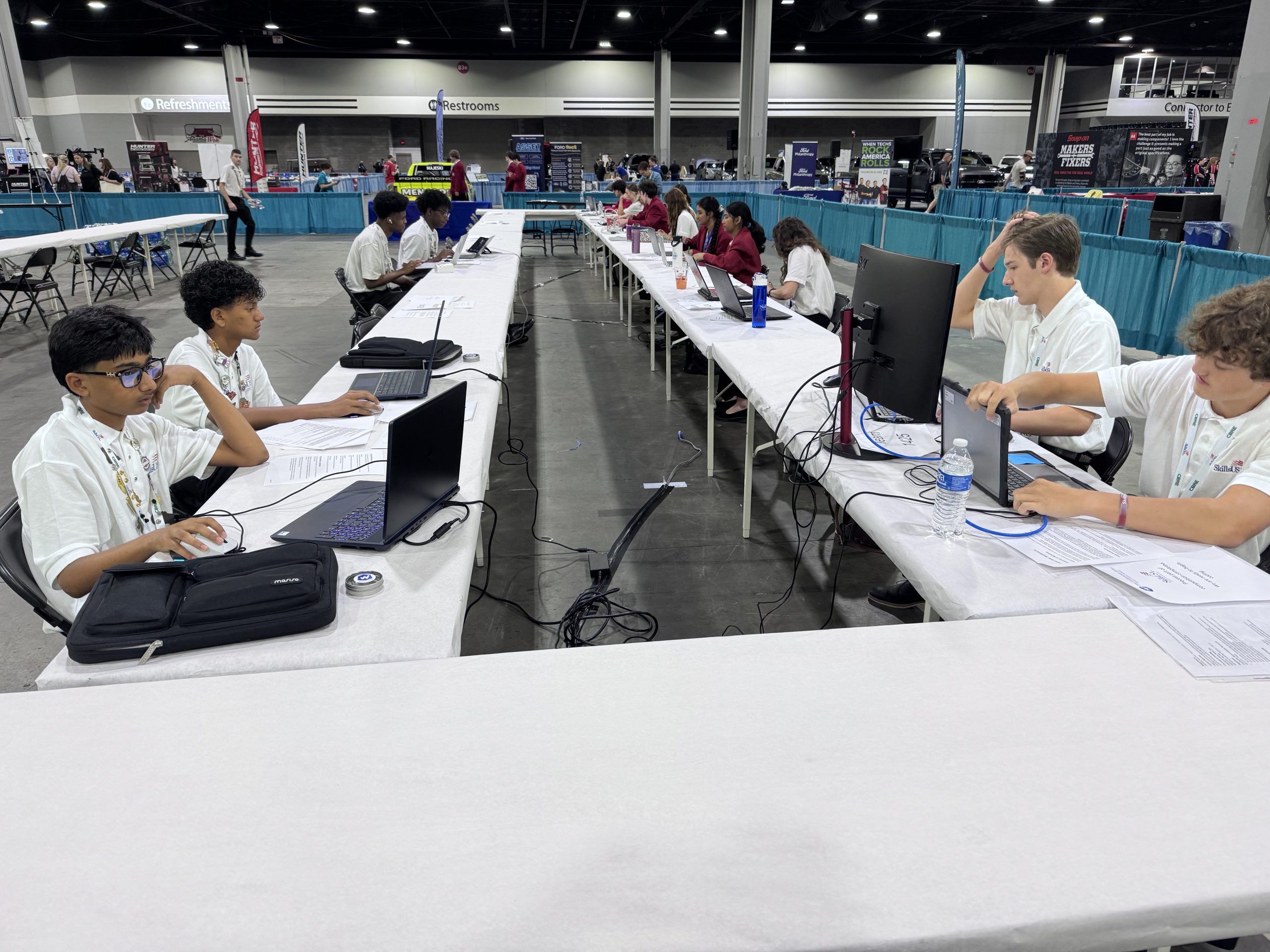
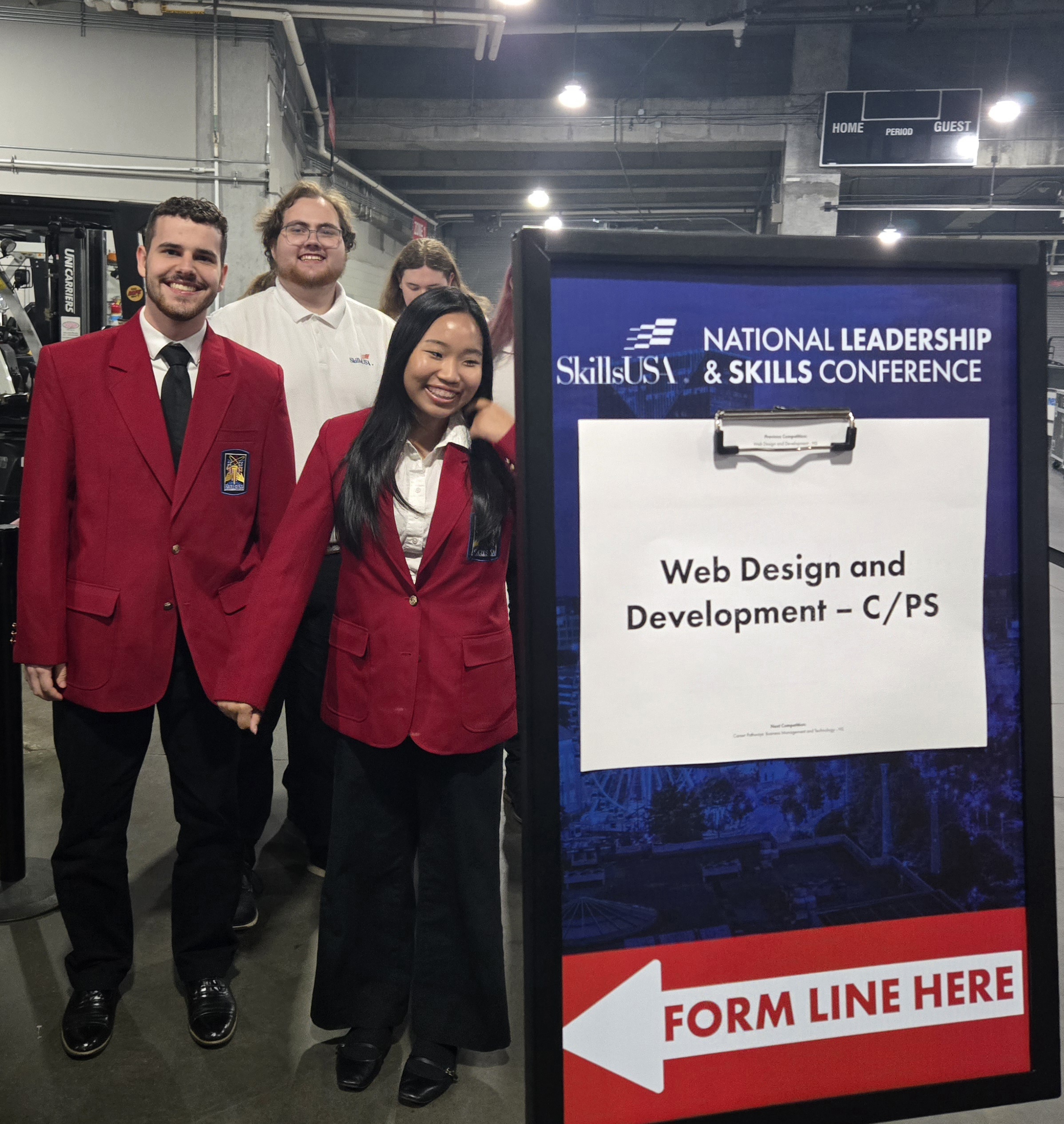
June 3 (Wednesday) – Our secondary (high school) competition began at 8 a.m. and ended at 3 p.m. David Jackson served in the role of client and addressed questions about the business while Tammy and Mark began the interview process. David decided to throw a twist into the competition after lunch. Competitors who had properly structured their code were able to rapidly pivot and address the twist. Since there were 26 teams, it took a significant amount of time to interview each team and review the process they use when developing websites. Mark brought a time app on his iPad which was used to keep everything on time. Regardless, we still had a few teams that were not interviewed until after the coding part had been completed. Materials were handed over to judges for review and we began the process of entering the scores into the scoring system used by SkillsUSA.
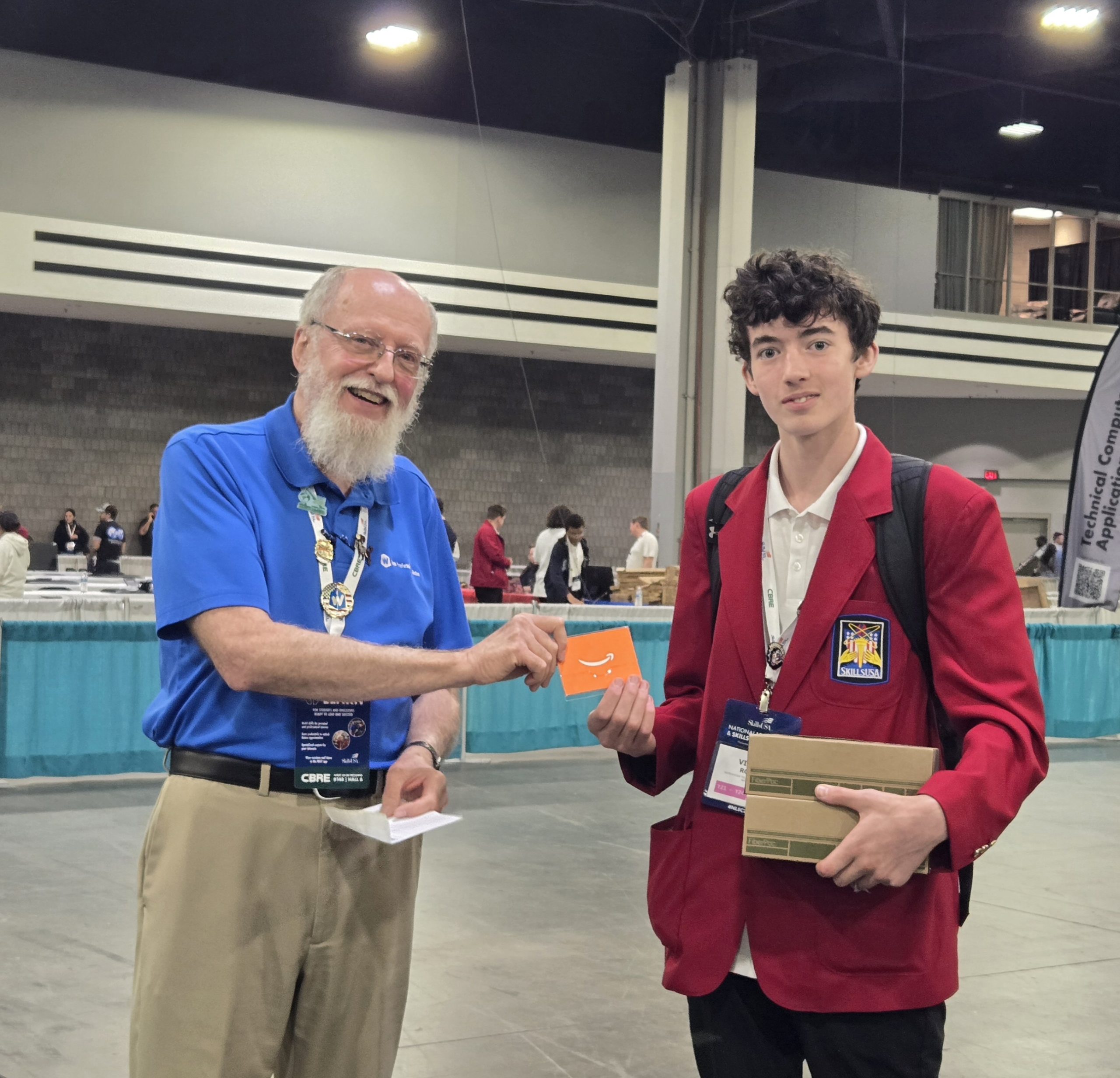
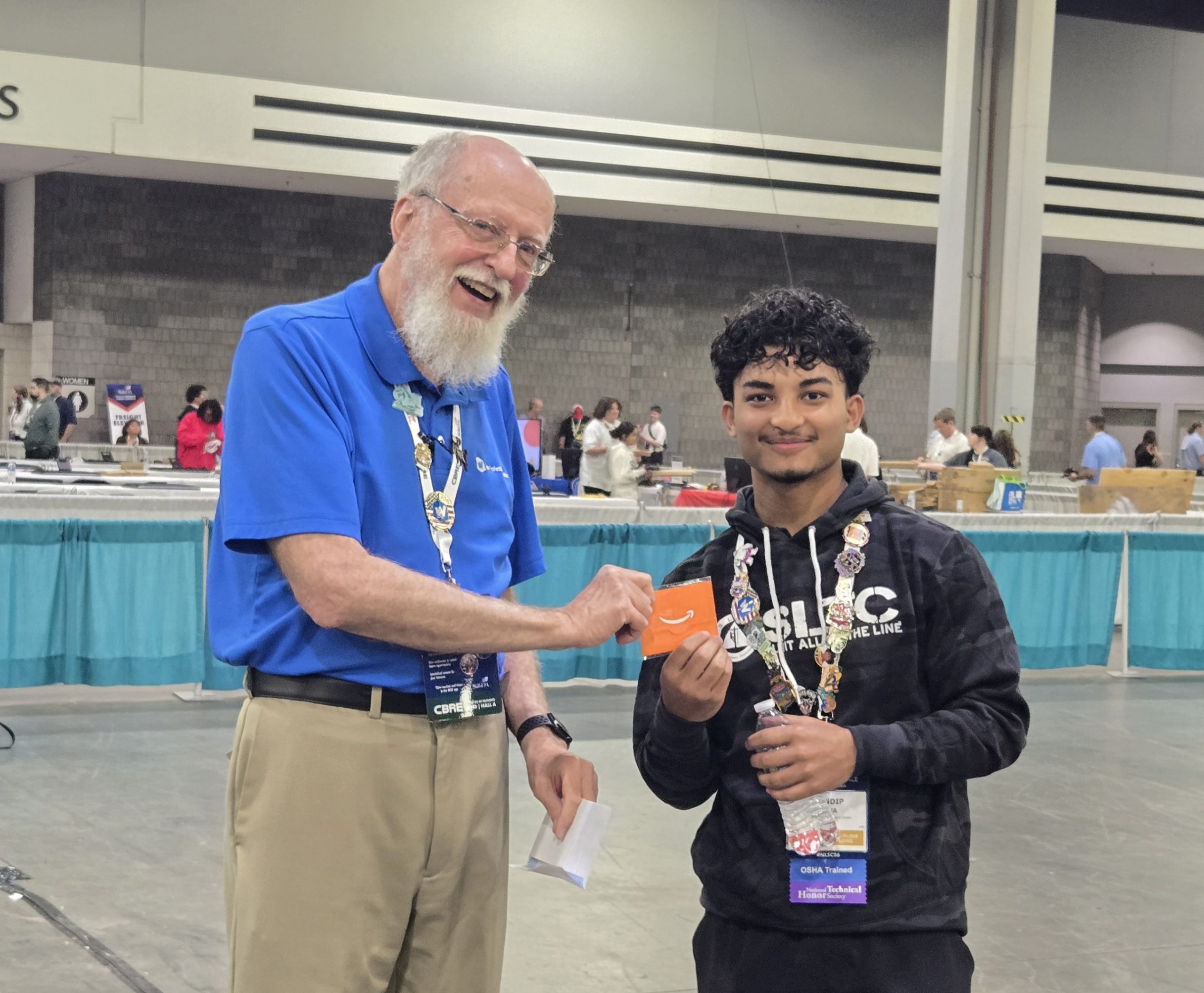
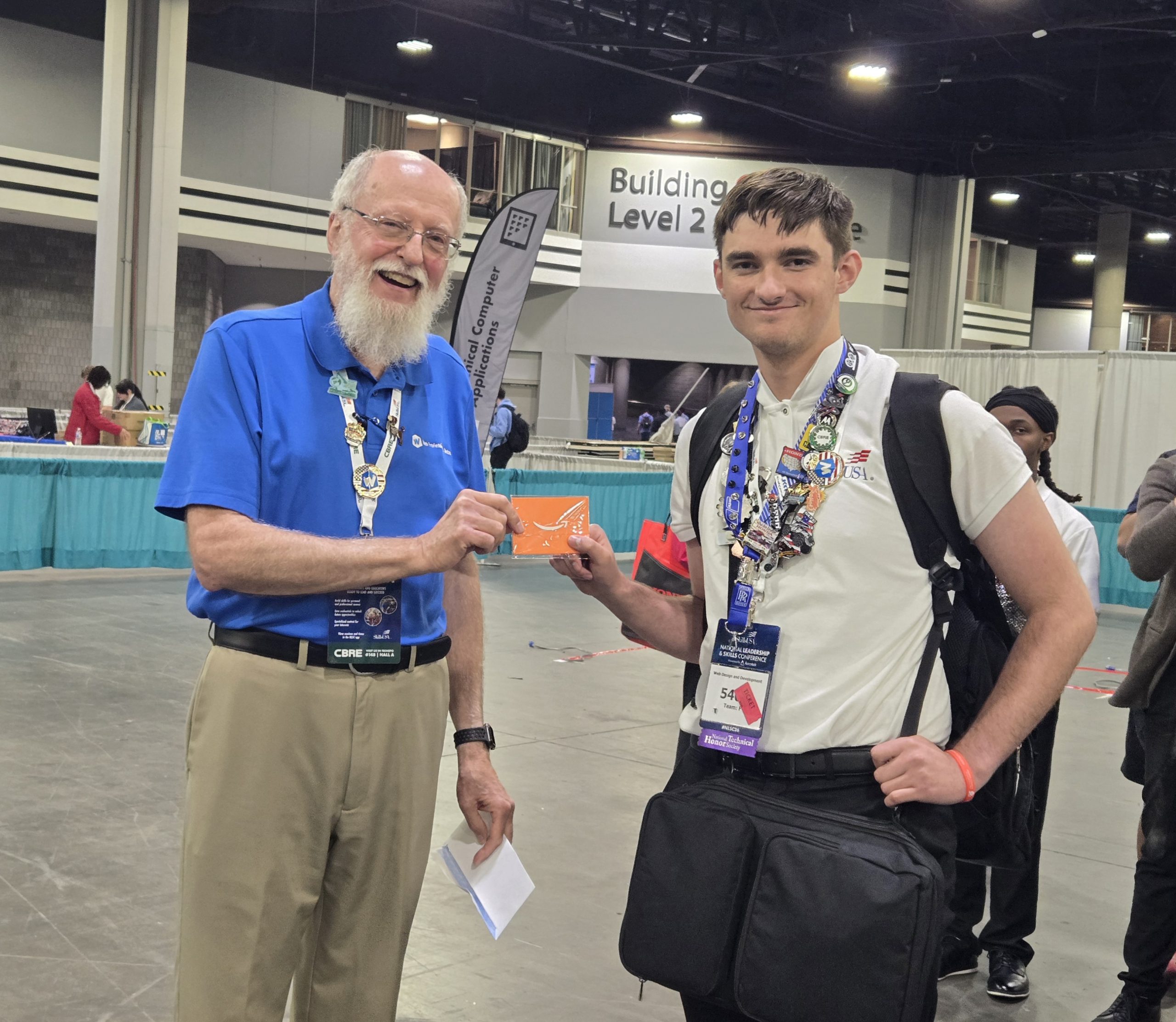
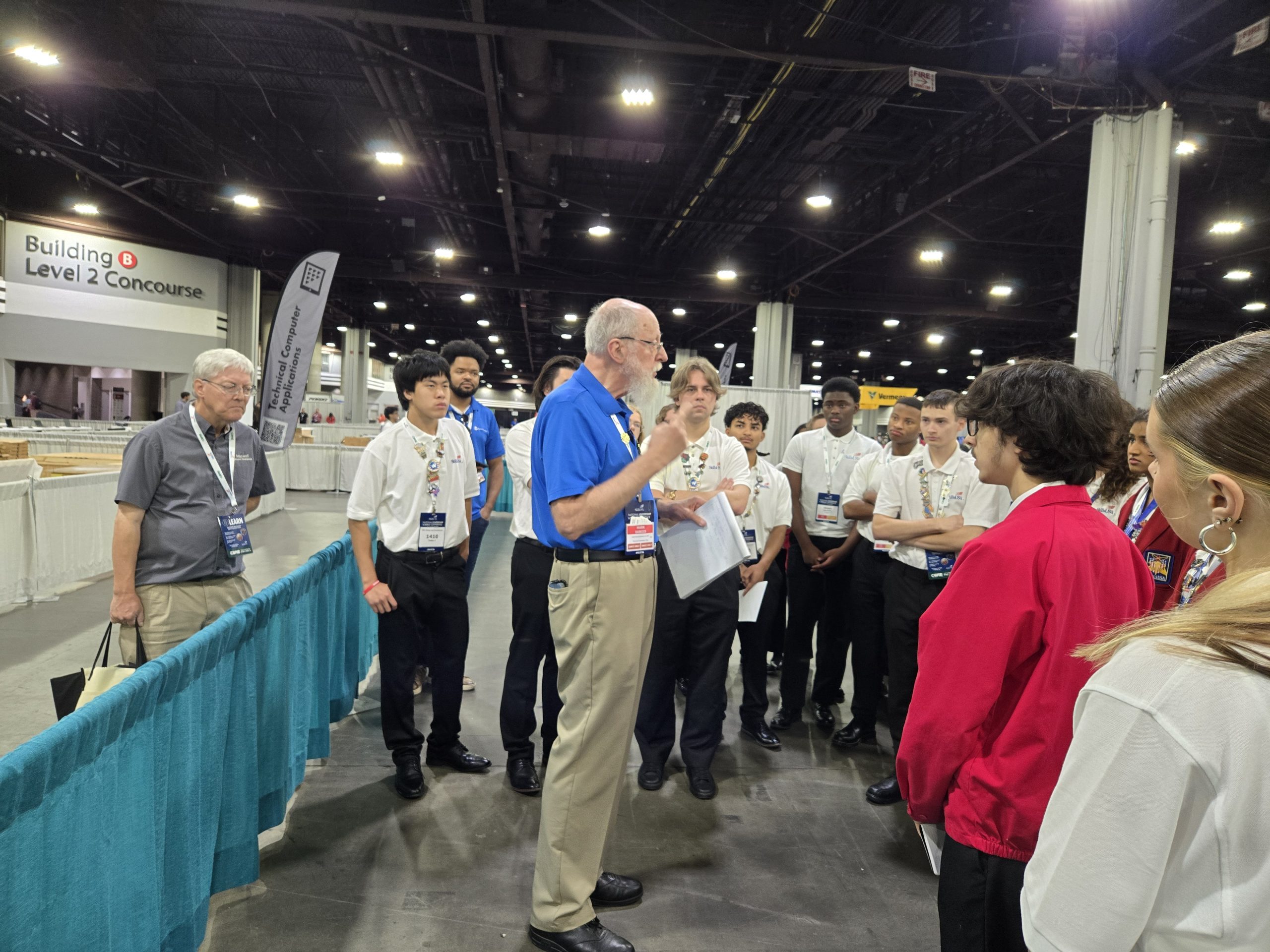
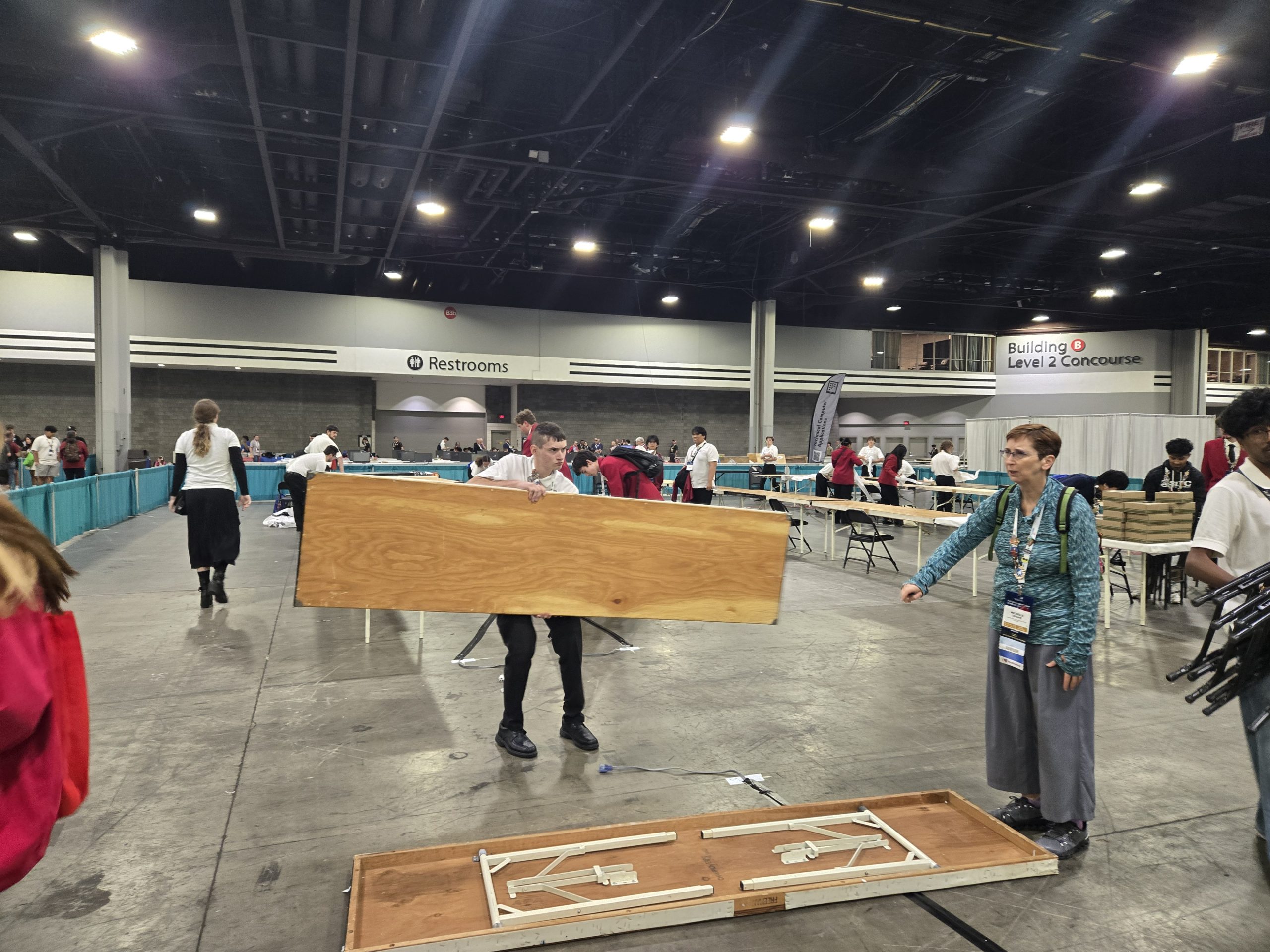
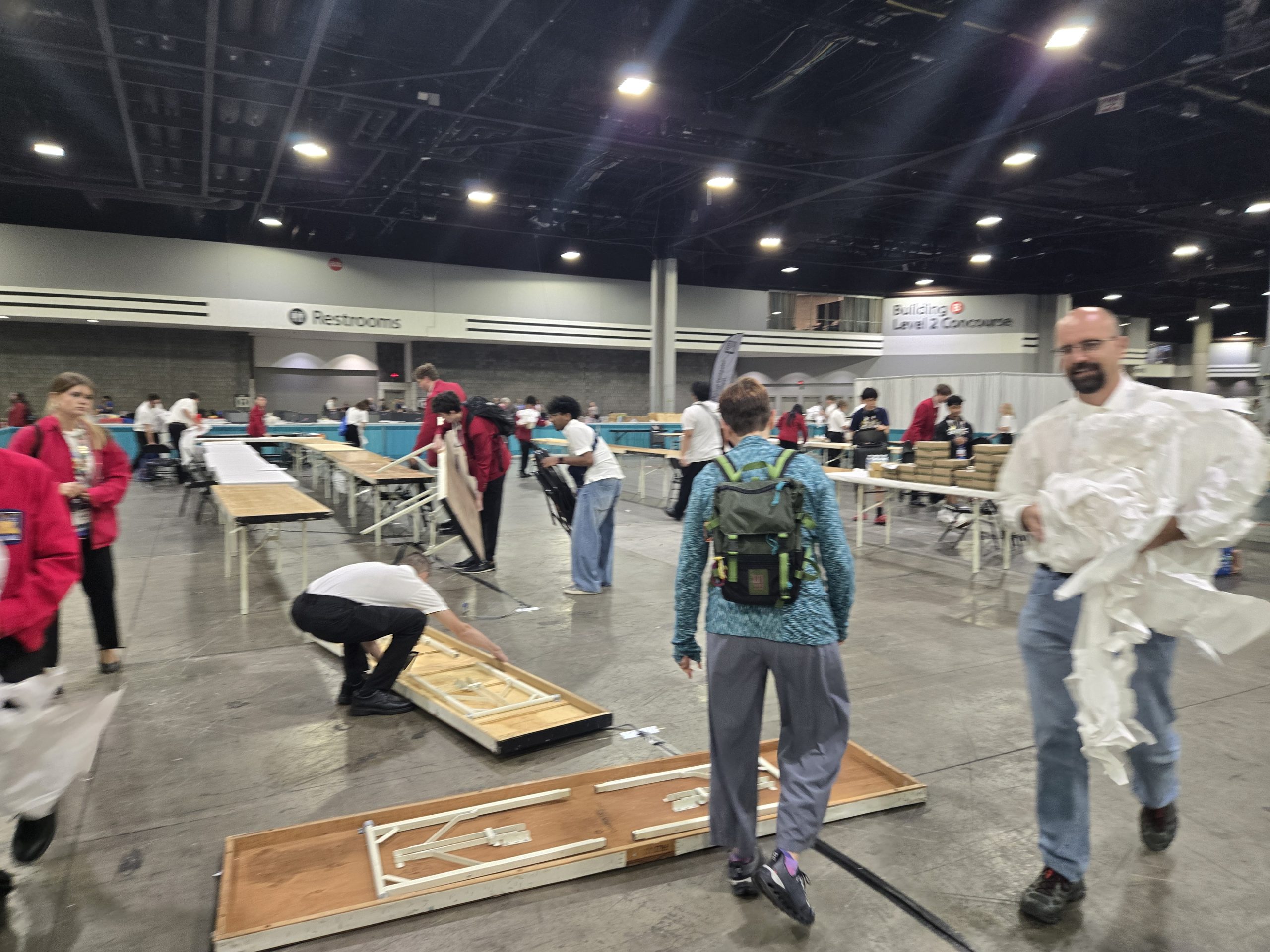
June 4 (Thursday) – Our post-secondary (college) teams competed on Thursday. Again, David served in the role of client while Tammy and Mark conducted the interviews and reviewed the process. Again, David threw a different twist to competitors after lunch. Again, those teams who had properly structured their code and used semantic markup were able to pivot and adapt. The competition ended at 3 p.m. We held a de-briefing session from 3:30 – 4:30 p.m. We shared comments provided by judges after reviewing the secondary team submissions from Wednesday. Materials for post-secondary were being reviewed as the debrief continued. We returned to the competition floor at 4:30 p.m. so competitors could help tear down and unwrap the tables and stack both tables and chairs for later pickup. Once all was completed, Mark announced the names of the winners pulled from registered pins. Photos were taken as the prizes were awarded. Everyone seemed pleased with the process and we were able to exit the competition area a little after 5 p.m. Judging continued and final scores were entered into the system. We significantly exceeded the score submission deadline (by roughly 2 hours). Many thanks to those who helped throughout the process. After 23 years, we have this mostly down to a science.
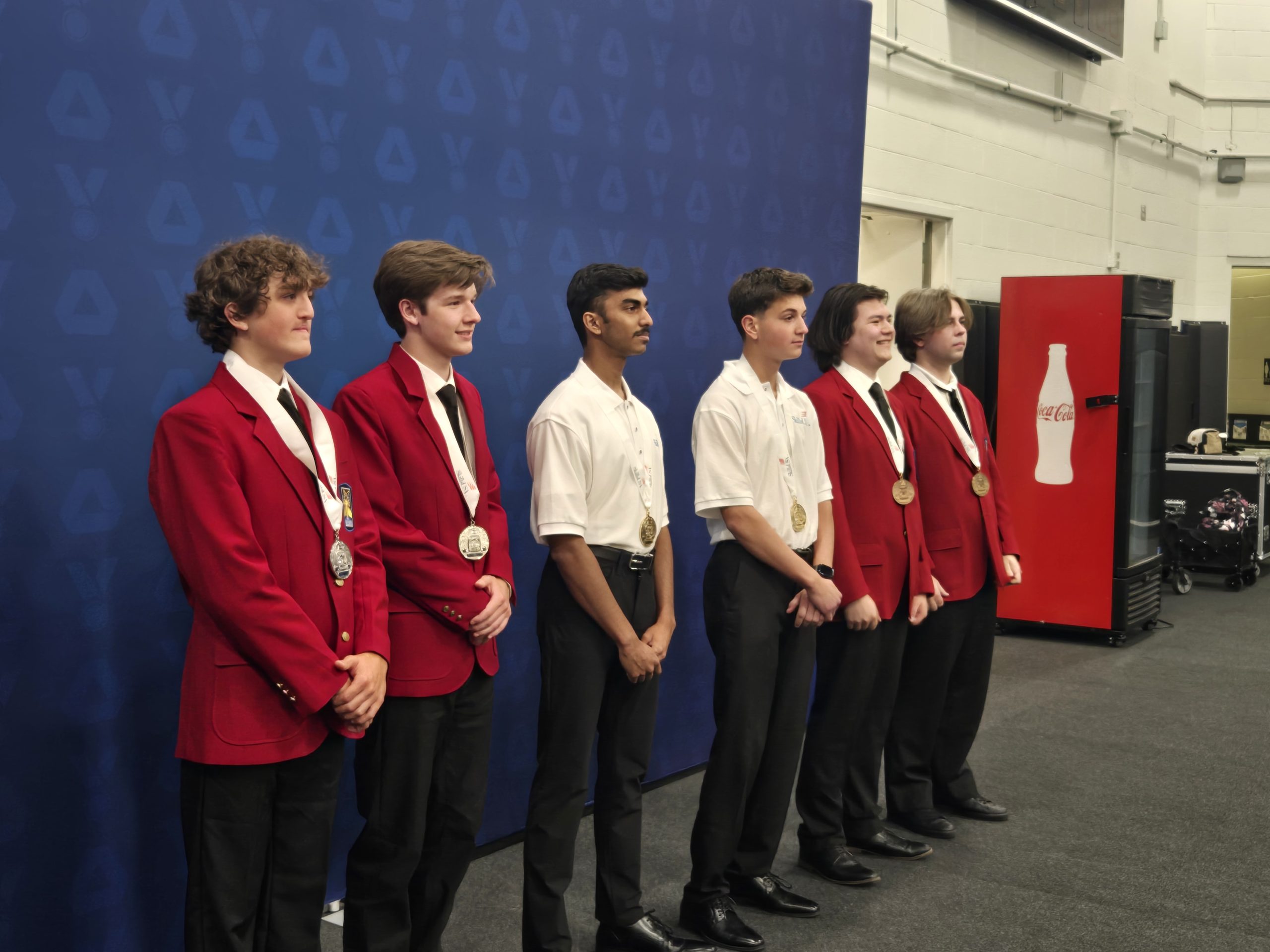
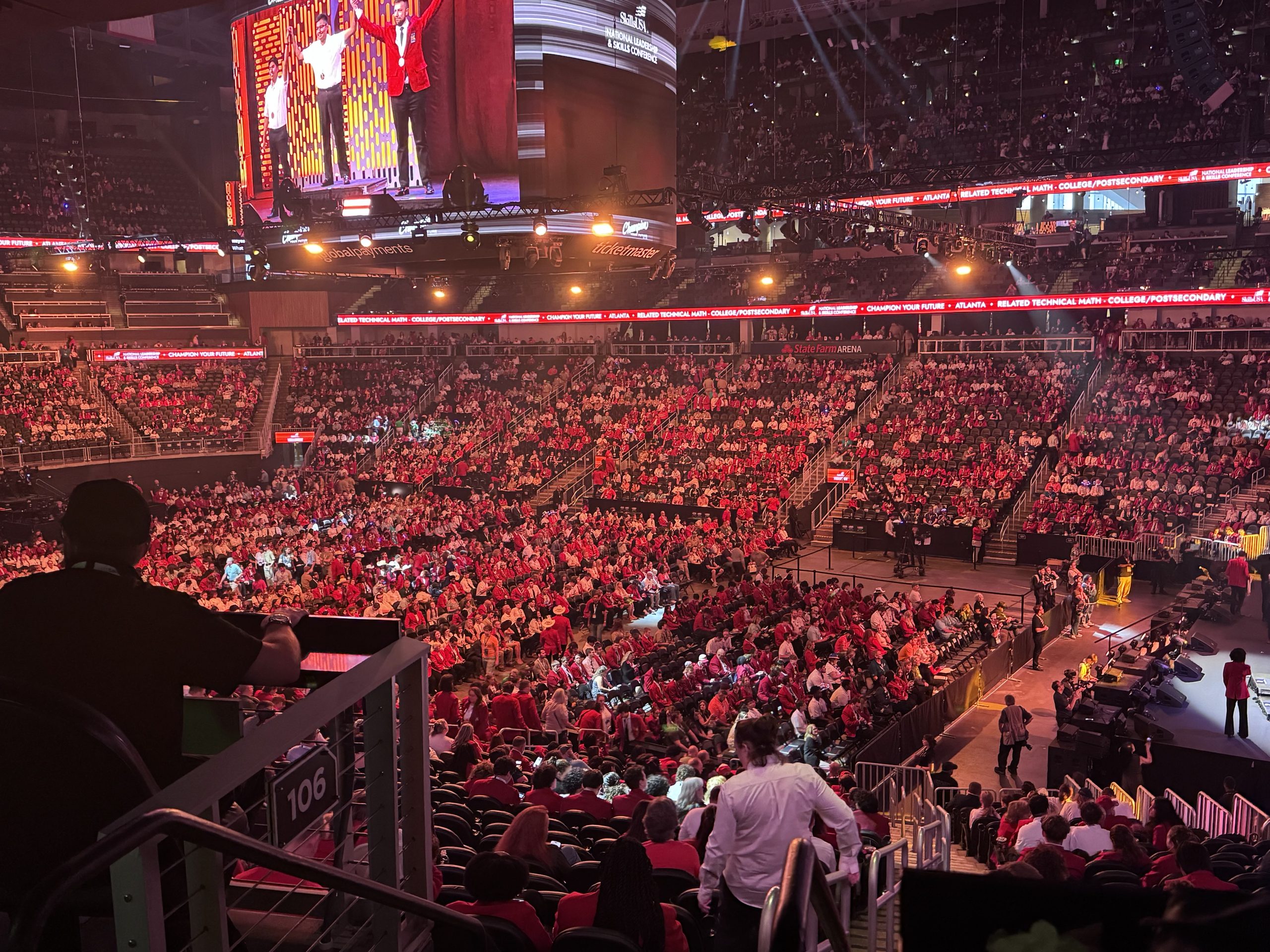
June 5 (Friday) – We had the majority of the day free. We assembled at the State Farm Arena about 6 p.m. and were escorted to the area where competitors go on stage. Tammy and David awarded the medals. Unlike many earlier years, teams did not know who won gold (first), silver (second), or bronze (third) until they were on the medal stand. SkillsUSA has this well choreographed as we were on stage at 6:42 p.m. for the secondary teams and 6:43 p.m. for the post-secondary teams. We then met backstage for photographs (which Mark will receive in about a month).
The Real-World Challenge: The Client Interview & Workflow
When the competition officially launched, the student teams stepped directly into the shoes of professional agency developers. Rather than working from a generic prompt, competitors participated in a live client briefing and interview. Acting as a real-world business owner, a designated client representative outlined their specific target audience, organizational goals, brand guidelines, and unique business challenges. Competitors were given the opportunity to ask direct questions, and the judges heavily noted the insightful, discovery-driven questions asked by the students as they sought to deeply understand the client’s brand.
Once the interview concluded, the high-pressure environment truly began. The competition was divided by division, with the Secondary (High School) teams taking the floor first, followed by the Postsecondary (College) division the next day. The technical constraints were demanding:
- Discovery and Low-Fidelity Wireframing: Teams had an hour to conceptualize their initial layouts. Using physical paper, they drafted low-fidelity wireframes, site maps, and initial mood boards to address the client’s concrete business problems.
- Adhering to Professional Standards: After presenting their conceptual wireframes, teams proceeded to develop their websites. We gave teams much more latitude this year to test their creativity and professionalism. In prior years, we handed each team the same wireframe to build form. This year, we let the teams apply their creative talents.
- No Crutches allowed: Crucially, teams were forbidden from using external front-end frameworks (such as Bootstrap, Tailwind, or React) and were completely banned from utilizing AI generation assistance. The technical committee enforces this strict rule to guarantee that competitors demonstrate an authentic mastery of core web standards, raw responsive design math, and manual web accessibility implementation.
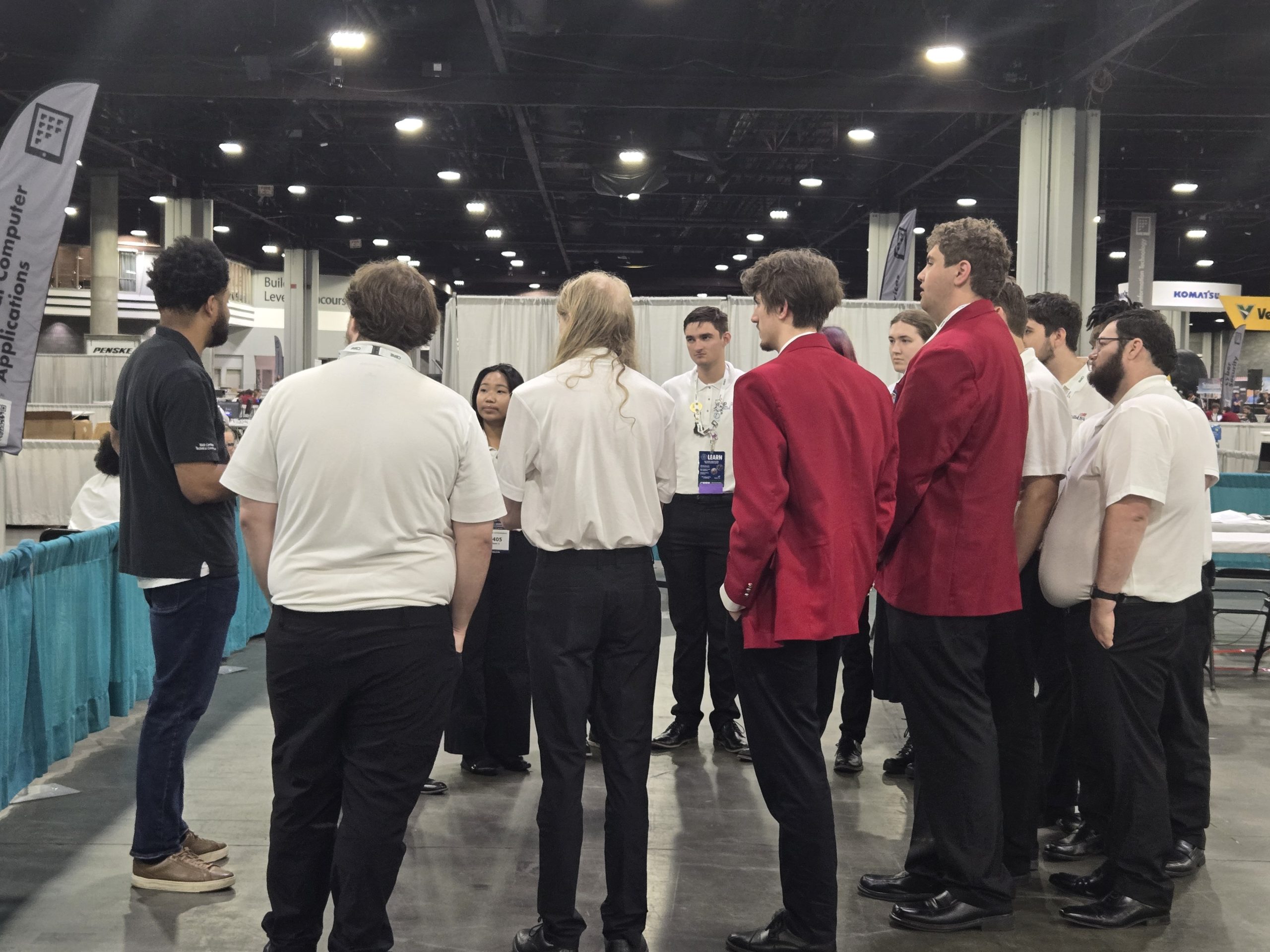
Teams worked with intensity until the deadline to complete, test, and validate their working source code inside the online coding environment. While coding, individual teams were sequentially called away for professional panel interviews. During these interviews, students defended their design decisions, reviewed their individual wireframe processes, and articulated why their agency should be chosen to represent future corporate clients.
High School and College Division Excellence
The level of technical stamina and creative problem-solving demonstrated across both the High School and College/Postsecondary divisions was incredibly impressive. Judges utilized our custom online judging portal, allowing them to effortlessly cycle through submissions, review the semantic integrity of the raw source code, execute automated validation checks, and view live renders across multiple simulated mobile and tablet viewports.
The criteria for determining the national medalists included the following:
- UX/UI Layout & Responsiveness: Beautiful, intuitive design structures that fluidly adapted across varying device dimensions.
- Semantic & Accessible Code: Strict compliance with industry accessibility standards, ensuring markup was clean, highly structured, and universally readable.
- Teamwork & Agency Professionalism: Collaborative synergy between the two partners, clear file structure organization within the IDE, and poise during the professional interview phase.
The closing debriefing session allowed students to peek behind the curtain. Our technical committee showcased the work of an independent, practicing web professional who had been secretly tasked with completing the exact same prompt under identical time and asset restrictions. Seeing a professional’s workflow inside the judge’s custom view provided the students with invaluable feedback on how to refine their skills for the future.
The week-long event culminated in an unforgettable, high-energy awards ceremony hosted inside the packed State Farm Arena alongside thousands of other SkillsUSA participants. Gold, silver, and bronze medals were proudly draped over the champion teams, celebrating their immense hard work and technical triumph.
The Pin
Beyond the intense coding and design challenges on the showroom floor, Web Professionals Global injected a massive wave of excitement into the 2026 SkillsUSA National Leadership and Skills Conference (NLSC) in Atlanta by tapping into a beloved event tradition: pin trading. To honor the nation’s semiquincentennial, the organization commissioned a highly exclusive, custom-designed USA 250th Anniversary Trading Pin. Crafted with premium quality, the substantial two-inch diameter pin featured a secure dual-post backing and was minted in an extremely limited run of only 100 total pieces. In the true spirit of competition, the organization kept the design entirely under wraps with no online previews, choosing instead to reveal the final look directly on the national championship floor on June 2nd, instantly making it the ultimate “rare find” and crown jewel of the event for lucky student collectors.
Owning this legendary piece of history served as just the beginning of the experience for those sharp enough to track it down. Web Professionals Global built an interactive layer into the giveaway by allowing the 100 fortunate pin recipients to formally register their specific pin with the organization. This registration unlocked access to exclusive prize drawings and specialized swag giveaways throughout the remainder of the national conference week. By pairing the thrill of the hunt with high-value rewards, Web Professionals Global successfully turned traditional hallway networking into a masterclass of student engagement, celebrating 250 years of American history while honoring the outstanding technical achievements of the next generation of digital professionals.
Looking Forward
Web Professionals Global extends its deep gratitude to the core committee members, the tireless volunteers, the industry judges, and the SkillsUSA Courtesy Corps who dedicated their time and expertise to make this event a success. More importantly, we salute the incredible instructors and advisors who guide these students daily.
The elite technical execution witnessed during the 2026 national event serves as proof that the future of the digital workforce is bright. These students did not just build temporary contest websites; they proved they possess the professional-grade technical competency and mental maturity required to step onto any production web team on day one and immediately contribute to industry success. We cannot wait to see how these newly minted professionals continue to shape, secure, and innovate the digital world.
Check out a selection of photos from the week: