
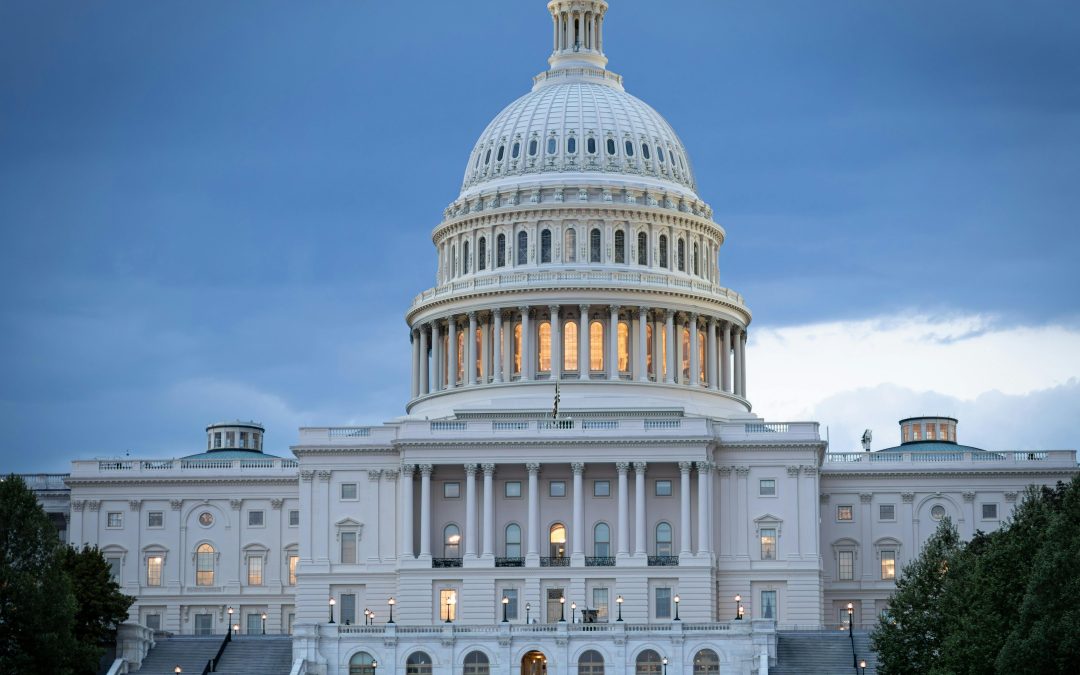
As we move through May 2026, the U.S. federal policy landscape for technology continues to evolve—though not always evenly across sectors. Since our November 2025 update, artificial intelligence has firmly taken center stage in both congressional hearings and agency-level action. However, this intense focus has also had a side effect: other critical areas of digital policy—privacy, antitrust, platform accountability, and cybersecurity—have continued progressing, often with far less public attention. For web professionals, developers, and digital leaders, the takeaway is clear: while AI may be driving the conversation, it is far from the only regulatory force shaping the future of the open web. Let’s take a look at the May 2026 U.S. Legislative Update.
Artificial Intelligence Policy: From Frameworks to Fragmentation Concerns
Artificial intelligence remains the dominant issue in federal tech policy. Since late 2025, Congress has held multiple hearings focused on AI safety, national competitiveness, and workforce disruption. Federal agencies have also begun translating earlier guidance into more concrete oversight mechanisms.
Building on the momentum of the National Institute of Standards and Technology (NIST) AI Risk Management Framework, policymakers are now debating how—or whether—to codify aspects of AI governance into law. Meanwhile, the Federal Trade Commission (FTC) has signaled increased willingness to use its existing authority to address deceptive or harmful AI-driven practices.
At the same time, lawmakers are increasingly concerned about a fragmented regulatory environment, particularly as states continue advancing their own AI rules. This tension has prompted renewed discussion around a unified federal standard, though consensus remains elusive.
Why it matters:
AI policy is moving from principles to enforcement. For web professionals, this means increased scrutiny on automated systems, transparency, and data usage practices.
Federal Data Privacy Legislation: Incremental Progress, Familiar Challenges
Federal data privacy legislation has once again resurfaced as a priority—but continues to face familiar hurdles. Since November 2025, bipartisan discussions have resumed around a comprehensive privacy framework that could preempt the growing patchwork of state laws.
Lawmakers have revisited earlier proposals, including updated drafts of the American Data Privacy and Protection Act (ADPPA), with particular attention to enforcement mechanisms and federal preemption. Key sticking points remain unchanged: the role of state attorneys general, private rights of action, and the scope of federal override.
Meanwhile, agencies like the FTC are continuing to enforce privacy standards through existing authority, particularly around data security and consumer protection.
Why it matters:
Even without a finalized federal law, enforcement risk is rising. Organizations should not assume regulatory stagnation equals inaction.
Antitrust and Big Tech Oversight: A Quieter but Persistent Push
While AI dominates public discourse, antitrust efforts targeting major technology platforms have continued steadily in the background. Since late 2025, federal regulators and lawmakers have maintained pressure on large digital platforms, particularly in areas related to market competition, advertising ecosystems, and platform neutrality.
The Department of Justice (DOJ) and the FTC remain active in pursuing cases and investigations involving dominant tech firms. At the same time, Congress has revisited elements of earlier legislative proposals aimed at curbing anti-competitive practices—though none have yet reached final passage.
Recent hearings have also explored how AI could further entrench market power, adding a new dimension to existing antitrust concerns.
Why it matters:
Structural changes to platform ecosystems remain on the table. Web professionals should continue monitoring how distribution, search visibility, and advertising models could be affected.
Cybersecurity and Critical Infrastructure: Federal Standards Gain Momentum
Cybersecurity policy has seen meaningful federal movement in recent months, particularly in response to ongoing threats targeting critical infrastructure and public institutions.
Federal agencies, including the Cybersecurity and Infrastructure Security Agency (CISA), have expanded guidance and requirements for both public and private sector organizations. New initiatives emphasize incident reporting timelines, software supply chain security, and baseline protections for essential services.
In Congress, lawmakers have continued advancing proposals aimed at strengthening national cyber resilience, with a focus on coordination between federal agencies and private industry.
Why it matters:
Expect more defined—and enforceable—security expectations. Compliance is increasingly tied to operational readiness, not just best practices.
Platform Accountability and Online Safety: Renewed Attention in 2026
Online platform accountability has re-emerged as a federal priority in 2026, particularly around issues of harmful content, youth safety, and algorithmic amplification.
Lawmakers have revisited proposals that would impose new responsibilities on platforms regarding content moderation transparency and user protections. Discussions around reforming Section 230 of the Communications Decency Act have also resurfaced, though—as in previous years—consensus remains difficult to achieve.
Recent hearings have increasingly intersected with AI, especially in the context of automated content generation and moderation systems.
Why it matters:
Changes to platform liability or moderation requirements could significantly impact how content is published, distributed, and managed online.
Digital Trade and Global Tech Policy: U.S. Positioning Takes Shape
Beyond domestic regulation, U.S. lawmakers and federal agencies are also engaging more actively in global digital policy discussions. Issues such as cross-border data flows, digital trade agreements, and international AI standards are gaining prominence.
Since late 2025, the U.S. has signaled a stronger interest in shaping global norms, particularly in response to regulatory developments in the European Union and other regions.
Federal policymakers are increasingly viewing digital policy through a geopolitical lens—balancing innovation, economic competitiveness, and national security.
Why it matters:
Global policy decisions are increasingly influencing domestic compliance expectations and platform strategies.
Looking Ahead: A Broader Regulatory Reality Beyond AI
While artificial intelligence continues to dominate headlines, the broader federal tech policy landscape tells a more nuanced story. Privacy, antitrust, cybersecurity, and platform accountability are all advancing—often incrementally, but meaningfully.
For web professionals, the key challenge in 2026 is not simply keeping up with AI regulation, but understanding how multiple policy threads are converging to shape the future of the web.
As federal agencies become more assertive and legislative efforts continue to evolve, organizations that take a proactive, cross-disciplinary approach to compliance and governance will be best positioned to adapt.
The conversation may be led by AI—but the regulatory reality is much bigger.
What You Can Do
These bills will be decided by lawmakers who may not fully understand the technical realities of web development. That’s where we come in.
Contact your representatives: a phone call or email from a constituent—especially one with professional expertise—carries real weight. Let your senators and House representative know which bills you support or oppose, and why. You can find contact information at house.gov and senate.gov.
Be specific: rather than general statements, explain how legislation would affect your work. If you’ve implemented accessibility features, share that experience when discussing H.R. 3417. If you’ve built age-gating systems, your perspective on KOSA is valuable. Real-world expertise helps lawmakers make better decisions.
Join industry advocacy: organizations like Web Professionals Global advocate for our industry’s interests. Collective voices amplify individual ones.
Stay informed: legislative landscapes shift quickly. Follow Congress.gov to track bills that matter to you, and sign up for updates from organizations monitoring tech policy.
The web industry has transformed how people work, learn, communicate, and do business. The decisions Congress makes in the coming months will shape what we can build and how we build it for years to come. Web professionals have both the expertise and the stake in these outcomes to make our voices heard. Stay tuned to the Web Professionals Global blog for regular legislative updates and contact us at hello@webprofessionalsglobal.org to learn how to join our organization.
