
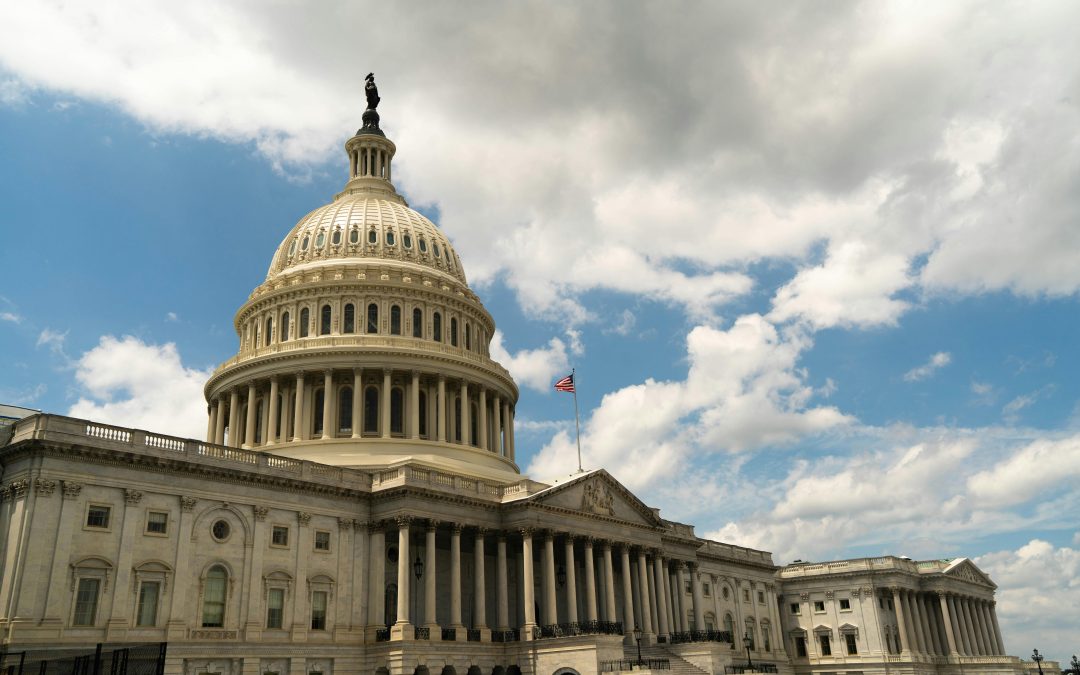
As web designers and developers, we spend most of our time thinking about code, user experience, and client deliverables. But right now, several pieces of legislation moving through Congress could fundamentally change how we build websites, who can access them, and how our industry operates. Whether you’re a freelancer, agency owner, or in-house developer, these bills will affect your work—and lawmakers need to hear from the people who actually build the web.
Here’s a breakdown of the most significant pending legislation in the U.S. federal government and what it means for our profession.
The Websites and Software Applications Accessibility Act (H.R. 3417)
Perhaps no pending legislation is more directly relevant to web professionals than H.R. 3417, introduced by Representatives Pete Sessions (R-TX) and Steny Hoyer (D-MD) in May 2025. This bipartisan bill would establish uniform federal accessibility standards for websites and software applications, finally bringing clarity to a legal landscape that has left many developers uncertain about their obligations.
For years, businesses and web professionals have navigated a patchwork of court interpretations regarding whether the Americans with Disabilities Act applies to websites. Some courts have ruled that only businesses with physical locations must make their websites accessible; others have interpreted the ADA more broadly. This inconsistency has led to a surge in accessibility lawsuits while leaving developers without clear technical standards to follow.
H.R. 3417 would change that by affirming that entities covered by the ADA must ensure their websites and applications are accessible to people with disabilities. The bill has earned support from major disability rights organizations, including the National Federation of the Blind, the American Foundation for the Blind, and the American Council of the Blind.
What makes this legislation particularly important for web professionals is that it would establish enforceable standards—likely aligned with WCAG guidelines—that we can build to with confidence. Rather than guessing at compliance, we’d have a clear federal benchmark. The bill also authorizes $35 million annually from 2026 to 2035 for implementation and provides for the creation of an advisory committee, with the majority of members being individuals with disabilities.
Why web professionals should support this bill: Clear standards benefit everyone. Developers gain certainty about what’s required, businesses can plan and budget accordingly, and most importantly, millions of Americans with disabilities gain meaningful access to the digital world. This is the kind of legislation that makes our work more straightforward while advancing digital inclusion.
The Kids Online Safety Act (KOSA) – S. 1748
The Kids Online Safety Act, reintroduced in May 2025 by Senators Marsha Blackburn (R-TN) and Richard Blumenthal (D-CT), addresses growing concerns about children’s safety on social media platforms. The bill passed the Senate last year with overwhelming bipartisan support (91-3) but stalled in the House. Now it’s back, with support from Senate Majority Leader John Thune and Minority Leader Chuck Schumer.
KOSA would require “covered platforms”—primarily large social media services—to exercise a “duty of care” for minor users. This includes providing minors with options to protect their information, disable addictive design features, and opt out of personalized algorithmic recommendations. Platforms would need to enable the strongest privacy settings for children by default and provide parents with tools to manage their children’s accounts.
The bill also mandates independent third-party audits and public transparency reports detailing foreseeable risks to minors, along with the prevention and mitigation efforts platforms have taken.
For web professionals, KOSA’s implications extend beyond the major social media giants explicitly targeted by the legislation. The “duty of care” framework and design requirements around addictive features could influence broader industry standards and client expectations. If you’re building applications that minors might use, understanding these emerging requirements is essential.
The bill has supporters and critics across the political spectrum. Health organizations like the American Academy of Pediatrics and the American Psychological Association have pushed for passage, while groups like the Electronic Frontier Foundation and ACLU have raised concerns about potential impacts on free speech and access to information for young people. Recent revisions added First Amendment protections to address some of these concerns.
Why web professionals should engage: Whether you support KOSA or have reservations, this legislation will shape how we design user experiences for younger audiences. Providing informed input to your representatives helps ensure that any regulations are technically feasible and don’t create unintended consequences for legitimate applications.
Broadband Deployment and the BEAD Program
On November 18, 2025, the House Subcommittee on Communications and Technology marked up 28 bills aimed at addressing the stalled deployment of the $42.5 billion Broadband Equity, Access, and Deployment (BEAD) program. Despite this massive federal investment in rural broadband, not a single household had received BEAD funds for actual deployment as of mid-2025.
The bottleneck? Permitting delays and regulatory barriers. Bills like the BEAD FEE Act of 2025 (H.R. 1975) would limit fees that states can charge for broadband infrastructure deployment. The Reducing Barriers for Broadband on Federal Lands Act would streamline environmental reviews for certain broadband projects. The Broadband Incentives for Communities Act (H.R. 2975) would create grants to help local governments process permits more efficiently.
Why should web professionals care about broadband deployment? Because faster, more reliable internet access expands our potential user base and enables richer web experiences. When rural communities gain high-speed access, they become viable markets for web services, e-commerce, and digital tools that previously weren’t practical. More connected Americans means more opportunities for everyone in the web industry.
The bills have generated partisan disagreement. Supporters argue that streamlined permitting will finally get federal dollars flowing to underserved communities. Critics contend that some provisions would preempt state and local authority and could weaken consumer protections.
Why web professionals should support broadband expansion: A more connected America is good for our industry. Advocacy for responsible broadband deployment—balancing speed with accountability—serves both business interests and the public good.
Section 230 Reform Efforts
Section 230 of the Communications Decency Act—often called “the 26 words that created the internet”—remains under sustained pressure from both parties in Congress. This law shields online platforms from liability for user-generated content and has been foundational to the growth of social media, user reviews, forums, and countless other interactive web services.
In 2025, reform efforts have intensified. Senators Lindsey Graham (R-SC) and Dick Durbin (D-IL) are planning to reintroduce legislation that would sunset Section 230 entirely by January 2027 unless Congress enacts a replacement framework. The strategy is designed to force stakeholders—platforms, lawmakers, and civil society—to negotiate comprehensive reform under deadline pressure.
Meanwhile, the Department of Justice has sent draft legislation to Congress proposing targeted reforms, including removing immunity for platforms that “purposely solicit and facilitate harmful criminal activity” or continue hosting known criminal content despite repeated complaints. The proposals would also carve out certain categories of civil claims from Section 230 protection, including offenses involving child sexual abuse, terrorism, and cyberstalking.
The SAFE TECH Act, reintroduced by Senator Mark Warner (D-VA) and colleagues, would narrow Section 230’s scope by removing immunity for paid speech (like advertising), civil rights violations, cyberstalking, and human rights abuses.
For web professionals, Section 230 reform isn’t just about Big Tech. The law protects any website that hosts user-generated content—from comment sections to customer reviews to community forums. Changes to Section 230 could dramatically alter the legal risks of building interactive features into websites and applications.
Why web professionals must pay attention: If you build anything that allows users to post content, Section 230 affects you. The difference between current protections and proposed reforms could determine whether small businesses and independent developers can afford to offer interactive features—or whether only large platforms with armies of lawyers can take that risk.
Career and Technical Education Funding and Reform
For web professionals who teach, train, or mentor the next generation, developments in career and technical education (CTE) legislation deserve close attention. The Carl D. Perkins Career and Technical Education Act (Perkins V) is the primary federal law supporting CTE programs, allocating approximately $1.4 billion annually for programs that prepare students for careers in fields including technology and web development.
The current authorization for Perkins V technically expired at the end of fiscal year 2024, and Congress is now set to begin work on reauthorizing the legislation. This reauthorization process presents both an opportunity and a risk. On the opportunity side, lawmakers and CTE advocates are pushing for increased funding—current levels haven’t kept pace with inflation, constraining states’ ability to provide high-quality programs. On the risk side, programs without active authorization can become targets for budget cuts.
A significant concern emerged in 2025 when the Departments of Education and Labor began implementing an Interagency Agreement to transfer administration of Perkins funding from the Department of Education to the Department of Labor. The Association for Career and Technical Education (ACTE) and other organizations have strongly opposed this move, arguing it would create administrative confusion, risk funding delays, and weaken the crucial link between CTE and the broader education system. They’re urging Congress to consider any such transfer through the legislative process rather than executive action.
On the positive side, the FY26 House Labor-HHS-Education Appropriations proposal advanced in September 2025 includes a modest funding increase for CTE. However, the same bill proposes significant cuts to related education and workforce development programs, which has drawn concern from CTE advocates who note that CTE programs don’t operate in isolation—they depend on the broader educational ecosystem.
The bipartisan Skills Investment Act of 2025 (H.R. 464), introduced by Representatives Glenn “GT” Thompson (R-PA) and Suzanne Bonamici (D-OR), co-chairs of the Congressional CTE Caucus, would expand Coverdell Education Savings Accounts into “Coverdell Lifelong Learning Accounts.” This would allow individuals aged 16 and older to use these tax-advantaged accounts for workforce training, technical education, certification testing, and related expenses—not just traditional college costs. For web professionals seeking to fund their own continuing education or help employees develop new skills, this legislation could provide meaningful tax benefits.
Why web professionals should engage: The web industry depends on a pipeline of trained talent. CTE programs introduce students to web development, design, and related fields—often providing the first exposure that leads to careers in our industry. Advocating for robust CTE funding ensures that future web professionals have pathways into the field, while the Skills Investment Act could directly benefit your own professional development or your employees’ training.
Federal Data Privacy Legislation
The United States remains one of the few developed nations without comprehensive federal data privacy legislation. Instead, we have a patchwork of state laws—led by California’s CCPA and CPRA—that create compliance headaches for web professionals working across state lines.
The American Data Privacy and Protection Act (ADPPA) came closest to passing, clearing the House Energy and Commerce Committee in 2022 with a 53-2 vote before stalling. While the ADPPA hasn’t been reintroduced in its original form, congressional leaders continue to list data privacy as a priority.
The challenge remains preemption: whether federal law should override state laws like California’s, which offer stronger protections in some areas. Progressive states worry about weakening existing protections, while businesses seek the simplicity of a single national standard.
For web professionals, federal data privacy legislation would mean establishing consistent practices for data collection, storage, and user consent across all projects rather than navigating varying state requirements. It would also likely require privacy officers for larger organizations and mandate privacy impact assessments—creating new responsibilities and potentially new job categories in our field.
Why web professionals should advocate for clarity: Whether you prefer stronger or more business-friendly privacy rules, a clear federal framework would make compliance more manageable than the current state-by-state approach. Engaging with lawmakers helps ensure that whatever emerges is technically practical.
What You Can Do
These bills will be decided by lawmakers who may not fully understand the technical realities of web development. That’s where we come in.
Contact your representatives: a phone call or email from a constituent—especially one with professional expertise—carries real weight. Let your senators and House representative know which bills you support or oppose, and why. You can find contact information at house.gov and senate.gov.
Be specific: rather than general statements, explain how legislation would affect your work. If you’ve implemented accessibility features, share that experience when discussing H.R. 3417. If you’ve built age-gating systems, your perspective on KOSA is valuable. Real-world expertise helps lawmakers make better decisions.
Join industry advocacy: organizations like Web Professionals Global advocate for our industry’s interests. Collective voices amplify individual ones.
Stay informed: legislative landscapes shift quickly. Follow Congress.gov to track bills that matter to you, and sign up for updates from organizations monitoring tech policy.
The web industry has transformed how people work, learn, communicate, and do business. The decisions Congress makes in the coming months will shape what we can build and how we build it for years to come. Web professionals have both the expertise and the stake in these outcomes to make our voices heard. Stay tuned to the Web Professionals Global blog for regular legislative updates.
