
by Mark | Jun 18, 2026 | Industry News, Web Professional Trends
As we enter the final month of the second quarter of 2026, the digital realm continues to challenge traditional notions of development, interface design, and architectural scalability. While May highlighted the arrival of multimodal features and CSS anchor positioning, June is proving to be a month defined by the realities of deploying next-generation applications. From fundamental modifications to real-time data streaming to shifting industry standards in cloud orchestration, web professionals are moving past the initial excitement of novelty to tackle structural integration. Let’s take a look at the June 2026 web trends.
Edge-Native Hydration and the Death of Cold Starts
The debate between Server-Side Rendering (SSR) and Static Site Generation (SSG) has been fundamentally rewritten by the widespread implementation of edge-native execution. Historically, dynamic, personalized web experiences suffered from localized latency or server “cold starts”—the brief delay when a server spin-up occurs to handle a request.
In June 2026, the baseline has shifted toward partial hydration frameworks executing directly on distributed global CDNs. Developers are now utilizing frameworks that treat the edge not just as a caching layer, but as the main computation engine. This architectural shift ensures that localized applications deliver instantaneous First Contentful Paint (FCP) metrics globally, transforming how enterprise-level e-commerce and media platforms handle high-traffic personalization.
Explore the deep dive on edge architectures: Vercel Edge Network Documentation
Container Queries Reach Global Design Maturity
While responsive design has historically relied on the viewport width (via Media Queries), the complex, modular layouts of 2026 demand a more atomic approach. CSS Container Queries have officially reached full production stability across all major rendering engines, radically modifying how modern component libraries are engineered.
Instead of writing custom layout overrides based on whether a user is on a mobile screen or a wide monitor, developers are writing styles that react directly to the parent container’s structural boundaries. This means a single dashboard widget can seamlessly transition from a multi-column layout to a compact vertical stack purely based on where it is dragged or embedded on a page, greatly reducing total layout shift issues.
Review the full syntax guidelines: MDN Web Docs: CSS Container Queries
The Evolution of Real-Time Web: HTTP/3 and WebTransport
The reliance on traditional WebSockets for real-time bidirectional communication is rapidly giving way to the WebTransport API, running natively over HTTP/3 (QUIC). For web professionals managing real-time collaboration engines, multiplayer browser spaces, or live interactive data streams, WebSockets’ historical vulnerability to head-of-line blocking has been a long-standing performance bottleneck.
WebTransport addresses this by allowing multiple streams of data to pass over a single connection simultaneously. If a single packet of information is delayed or dropped, it no longer freezes the rest of the application data flow. This protocol upgrade is quietly revolutionizing browser-based tools, allowing complex web interfaces to mirror the low-latency stability previously restricted to native software packages. Interop 2026 focus initiatives have driven major browser vendors to establish universal cross-engine alignment for this API, making it fully ready for production.
Examine the engineering specifications: W3C WebTransport Working Draft
Legal Repercussions of Digital Accessibility Mandates
The era of viewing accessibility as an optional design enhancement or a secondary checklist item has officially ended. In the United States, federal updates enforcing strict compliance deadlines have fundamentally altered the landscape for state and local government entities, educational systems, and associated vendor pipelines. Organizations are legally required to align with Web Content Accessibility Guidelines (WCAG) 2.1 Level AA, establishing an absolute floor for public-sector and enterprise-level web architectures.
This shift forces development teams to re-evaluate core interface conventions. Subtle, low-contrast focus outlines that match a minimal design aesthetic are no longer acceptable; keyboard navigation paths must remain completely unblocked by fixed structural overlays or floating headers. Additionally, interactive buttons and tap targets must scale to prevent accidental activations on mobile breakpoints. Simultaneously, the W3C is aggressively mapping out the foundational and supplemental frameworks for WCAG 3.0, introducing long-term requirements centered on transparent plain-language guidelines and cognitive accessibility testing.
Review the global enforcement details: Best Best & Krieger LLP: New Digital Accessibility Requirements
Automated Consent Signaling and the Sec-GPC Standard
Privacy compliance in the middle of 2026 has progressed past the era of relying exclusively on complex, intentionally frustrating cookie banners. Regulatory updates across North America and Europe are systematically penalizing “dark patterns” designed to manipulate user data sharing preferences. Modern web applications must treat automated, browser-level signals as primary, legally binding consumer choices.
At the center of this movement is the Sec-GPC header, representing the Global Privacy Control standard. When a visitor’s user agent broadcasts this header signal, application backends must immediately and automatically opt that session out of any tracking or profile data aggregation without serving a secondary, obstructive prompt. This requires engineering teams to integrate middleware layers capable of sniffing the header, updating session permissions dynamically, and altering client-side code execution before marketing pixels or telemetry engines can fire.
Examine modern compliance protocols: W3C Privacy Guidelines and Global Consent Protocols
Enhancing SVG Security in the Component Era
As vector graphics continue to dominate high-DPI modern layouts, their underlying nature as executable XML document structures presents an ongoing security liability. Malicious code injection concealed inside poorly sanitized SVGs has emerged as a primary attack vector for cross-site scripting (XSS) in modern content management pipelines.
Web developers this month are adopting much stricter sanitization standards. Relying on basic automated system filters is no longer considered sufficient. True operational security now demands rendering incoming SVGs through specialized modern isolation tools or treating raw icons as strict inline components rather than reference files, preserving asset flexibility without exposing client databases to background manipulation.
Check the open-source implementation standards: DOMPurify Sanitization Library on GitHub
The Proliferation of Native Web Components in Design Systems
As development ecosystems continue to seek ways to minimize bloated JavaScript bundles, June has seen a significant surge in the architectural adoption of native Web Components. For years, massive front-end frameworks required developers to bundle hundreds of kilobytes of runtime logic just to render standardized interactive UI elements across distinct micro-frontends.
By leveraging Custom Elements, Shadow DOM, and HTML Templates, modern enterprise platforms are now building completely framework-agnostic design systems. These native elements encapsulate scoping styles perfectly, eliminating the risk of accidental global style leakage without the overhead of CSS-in-JS libraries. This shift allows distinct engineering teams within the same organization to leverage identical component states, ensuring visual and behavioral consistency across varied stack combinations.
Learn the core implementation patterns: MDN Web Docs: Web Components Fundamentals
Automated Font Subsetting and Variable Typography Optimization
With Core Web Vitals continuously impacting organic search visibility, typography performance optimization has emerged as a crucial engineering priority this quarter. Custom variable web fonts provide exceptional design versatility, but their all-inclusive files frequently contain vast character sets, glyph variations, and localized accents that a specific web interface may never actually render.
To combat this unnecessary data transfer, automated post-build toolchains are utilizing programmatic font subsetting during deployment pipelines. By scanning application code and structural content arrays, these utilities extract only the specific unicode ranges required for the target language. The resulting optimized variable font files are reduced significantly in size, ensuring that typography renders flawlessly without causing layout shifts or blocking critical rendering paths.
Review advanced type optimization strategies: Google Fonts Web Performance Optimization Guide
Conclusion
The recurring theme of June 2026 is execution maturity. Whether optimizing a script to compile fractions of a second faster at a network edge, protecting client pipelines from compromised vector file paths, or rewriting layouts to satisfy automated privacy headers, web mastery remains rooted in a precise blend of user empathy, technical adaptability, and structural rigor.
What tools or workflow adjustments have you integrated into your desktop setup this month? Email us at hello@webprofessionalsglobal.org or let us know in the comments below!
by Mark | Jun 17, 2026 | Web Competitions
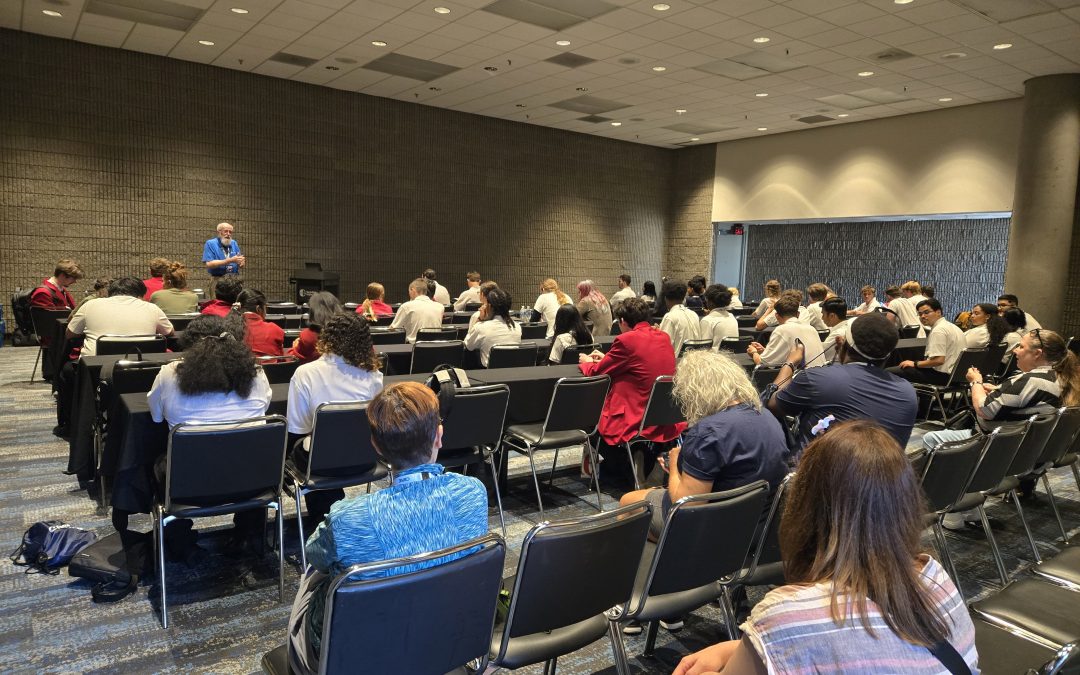
The 2026 SkillsUSA National Leadership & Skills Conference (NLSC) returned to Atlanta, Georgia, from June 1-5, 2026, gathering thousands of the nation’s most talented career and technical education students, dedicated instructors, and forward-thinking industry leaders. For over two decades, Web Professionals Global has proudly organized and run the National Web Design and Development Competition, and the 2026 event set an entirely new benchmark for innovation, technical discipline, and real-world problem-solving.
To earn a spot on the national stage, these elite competitors first had to prove their capabilities at the local level. They navigated local, regional, and grueling state-wide events, utilizing the standardized “competition in a box” toolkit developed by our organization to align state standards with national expectations. To discover how these student teams persevered through their local events, you can read our comprehensive 2026 SkillsUSA State Competitions Recap.
The Evolution of the Competition: Preparation and Training
The road to a national medal began well before the official clock started ticking. Upon arriving in Atlanta, high school and college/postsecondary teams of two participated in an intensive orientation and training sequence. Competitors were first required to take a rigorous one-hour online examination designed to verify their core foundational knowledge of modern web technologies. This exam assessed everything from basic syntax to advanced concepts in semantic HTML, responsive CSS layouts, and programmatic logic in JavaScript.
Following the examination, Web Professionals Global hosted a mandatory technical training session, hosted by our Executive Director, Mark DuBois. This session introduced the student teams to our custom, cloud-based Integrated Development Environment (IDE). Our organization provided a fully standardized, web-accessible development environment, ensuring a completely level playing field regardless of whether a team brought a high-end laptop, a Mac, a PC, or a Chromebook. During this orientation, our technical committee also hosted a dynamic industry panel discussion. Industry mentors and practicing web professionals discussed the present and future landscape of the digital economy, exploring workflow optimizations and the evolving role of artificial intelligence in production environments. Continue reading for Mark’s recap of the week.
Week Recap
June 1 (Monday) – Mark DuBois and Tammy Finch arrived at the GWCC and worked with SkillsUSA Courtesy Corps to insure the empty environment was set up with tables and chairs for competitors and the rest of the team (which arrived on Tuesday). Mark also participated in the technical chairs meeting Monday afternoon where various procedures and emergency protocols were discussed in detail.
June 2 (Tuesday) – We held our mandatory exam session from noon until 2 p.m. Several teams took nearly the entire time to complete the exam. From 2 – 3:30 p.m. we discussed our coding environment, provided an overview of the competition and held a panel discussion with several web professionals addressing questions from competitors. At 3:30 p.m., Mark unveiled our 2026 commemorative pin. He also discussed the registration process for prizes and what competitors needed to do to be eligible for a prize. Competitors were most energized and excited that we offered a custom pin (and a very hefty one at that). We stayed until well after 4 handing out pins to competitors and advisors (advisors had a separate process to complete in order to obtain a pin).
June 3 (Wednesday) – Our secondary (high school) competition began at 8 a.m. and ended at 3 p.m. David Jackson served in the role of client and addressed questions about the business while Tammy and Mark began the interview process. David decided to throw a twist into the competition after lunch. Competitors who had properly structured their code were able to rapidly pivot and address the twist. Since there were 26 teams, it took a significant amount of time to interview each team and review the process they use when developing websites. Mark brought a time app on his iPad which was used to keep everything on time. Regardless, we still had a few teams that were not interviewed until after the coding part had been completed. Materials were handed over to judges for review and we began the process of entering the scores into the scoring system used by SkillsUSA.
June 4 (Thursday) – Our post-secondary (college) teams competed on Thursday. Again, David served in the role of client while Tammy and Mark conducted the interviews and reviewed the process. Again, David threw a different twist to competitors after lunch. Again, those teams who had properly structured their code and used semantic markup were able to pivot and adapt. The competition ended at 3 p.m. We held a de-briefing session from 3:30 – 4:30 p.m. We shared comments provided by judges after reviewing the secondary team submissions from Wednesday. Materials for post-secondary were being reviewed as the debrief continued. We returned to the competition floor at 4:30 p.m. so competitors could help tear down and unwrap the tables and stack both tables and chairs for later pickup. Once all was completed, Mark announced the names of the winners pulled from registered pins. Photos were taken as the prizes were awarded. Everyone seemed pleased with the process and we were able to exit the competition area a little after 5 p.m. Judging continued and final scores were entered into the system. We significantly exceeded the score submission deadline (by roughly 2 hours). Many thanks to those who helped throughout the process. After 23 years, we have this mostly down to a science.
June 5 (Friday) – We had the majority of the day free. We assembled at the State Farm Arena about 6 p.m. and were escorted to the area where competitors go on stage. Tammy and David awarded the medals. Unlike many earlier years, teams did not know who won gold (first), silver (second), or bronze (third) until they were on the medal stand. SkillsUSA has this well choreographed as we were on stage at 6:42 p.m. for the secondary teams and 6:43 p.m. for the post-secondary teams. We then met backstage for photographs (which Mark will receive in about a month).
The Real-World Challenge: The Client Interview & Workflow
When the competition officially launched, the student teams stepped directly into the shoes of professional agency developers. Rather than working from a generic prompt, competitors participated in a live client briefing and interview. Acting as a real-world business owner, a designated client representative outlined their specific target audience, organizational goals, brand guidelines, and unique business challenges. Competitors were given the opportunity to ask direct questions, and the judges heavily noted the insightful, discovery-driven questions asked by the students as they sought to deeply understand the client’s brand.
Once the interview concluded, the high-pressure environment truly began. The competition was divided by division, with the Secondary (High School) teams taking the floor first, followed by the Postsecondary (College) division the next day. The technical constraints were demanding:
- Discovery and Low-Fidelity Wireframing: Teams had an hour to conceptualize their initial layouts. Using physical paper, they drafted low-fidelity wireframes, site maps, and initial mood boards to address the client’s concrete business problems.
- Adhering to Professional Standards: After presenting their conceptual wireframes, teams proceeded to develop their websites. We gave teams much more latitude this year to test their creativity and professionalism. In prior years, we handed each team the same wireframe to build form. This year, we let the teams apply their creative talents.
- No Crutches allowed: Crucially, teams were forbidden from using external front-end frameworks (such as Bootstrap, Tailwind, or React) and were completely banned from utilizing AI generation assistance. The technical committee enforces this strict rule to guarantee that competitors demonstrate an authentic mastery of core web standards, raw responsive design math, and manual web accessibility implementation.
Teams worked with intensity until the deadline to complete, test, and validate their working source code inside the online coding environment. While coding, individual teams were sequentially called away for professional panel interviews. During these interviews, students defended their design decisions, reviewed their individual wireframe processes, and articulated why their agency should be chosen to represent future corporate clients.
High School and College Division Excellence
The level of technical stamina and creative problem-solving demonstrated across both the High School and College/Postsecondary divisions was incredibly impressive. Judges utilized our custom online judging portal, allowing them to effortlessly cycle through submissions, review the semantic integrity of the raw source code, execute automated validation checks, and view live renders across multiple simulated mobile and tablet viewports.
The criteria for determining the national medalists included the following:
- UX/UI Layout & Responsiveness: Beautiful, intuitive design structures that fluidly adapted across varying device dimensions.
- Semantic & Accessible Code: Strict compliance with industry accessibility standards, ensuring markup was clean, highly structured, and universally readable.
- Teamwork & Agency Professionalism: Collaborative synergy between the two partners, clear file structure organization within the IDE, and poise during the professional interview phase.
The closing debriefing session allowed students to peek behind the curtain. Our technical committee showcased the work of an independent, practicing web professional who had been secretly tasked with completing the exact same prompt under identical time and asset restrictions. Seeing a professional’s workflow inside the judge’s custom view provided the students with invaluable feedback on how to refine their skills for the future.
The week-long event culminated in an unforgettable, high-energy awards ceremony hosted inside the packed State Farm Arena alongside thousands of other SkillsUSA participants. Gold, silver, and bronze medals were proudly draped over the champion teams, celebrating their immense hard work and technical triumph.
The Pin
Beyond the intense coding and design challenges on the showroom floor, Web Professionals Global injected a massive wave of excitement into the 2026 SkillsUSA National Leadership and Skills Conference (NLSC) in Atlanta by tapping into a beloved event tradition: pin trading. To honor the nation’s semiquincentennial, the organization commissioned a highly exclusive, custom-designed USA 250th Anniversary Trading Pin. Crafted with premium quality, the substantial two-inch diameter pin featured a secure dual-post backing and was minted in an extremely limited run of only 100 total pieces. In the true spirit of competition, the organization kept the design entirely under wraps with no online previews, choosing instead to reveal the final look directly on the national championship floor on June 2nd, instantly making it the ultimate “rare find” and crown jewel of the event for lucky student collectors.
Owning this legendary piece of history served as just the beginning of the experience for those sharp enough to track it down. Web Professionals Global built an interactive layer into the giveaway by allowing the 100 fortunate pin recipients to formally register their specific pin with the organization. This registration unlocked access to exclusive prize drawings and specialized swag giveaways throughout the remainder of the national conference week. By pairing the thrill of the hunt with high-value rewards, Web Professionals Global successfully turned traditional hallway networking into a masterclass of student engagement, celebrating 250 years of American history while honoring the outstanding technical achievements of the next generation of digital professionals.
Looking Forward
Web Professionals Global extends its deep gratitude to the core committee members, the tireless volunteers, the industry judges, and the SkillsUSA Courtesy Corps who dedicated their time and expertise to make this event a success. More importantly, we salute the incredible instructors and advisors who guide these students daily.
The elite technical execution witnessed during the 2026 national event serves as proof that the future of the digital workforce is bright. These students did not just build temporary contest websites; they proved they possess the professional-grade technical competency and mental maturity required to step onto any production web team on day one and immediately contribute to industry success. We cannot wait to see how these newly minted professionals continue to shape, secure, and innovate the digital world.
Check out a selection of photos from the week:
by Mark | May 15, 2026 | Employment Issues
In the rapidly evolving landscape of technology, staying ahead of the curve is more than a competitive advantage—it is an absolute necessity. For educators, workforce development boards, students, and professionals, understanding exactly what it takes to succeed in modern technology professions requires access to accurate, real-world data. For more than ten years, Web Professionals Global has been at the forefront of this mission, ensuring that the web and digital professionals of tomorrow are recognized, properly defined, and aligned with industry needs. A foundational piece of this long-term effort has been our enduring partnership with the United States Department of Labor (DOL) through the O*NET Data Collection Program. We are incredibly proud to celebrate over a decade of working with O*NET and now being recognized as an O*NET Ally. This status represents a shared commitment to keeping national occupational standards accurate, comprehensive, and reflective of the modern workplace. Let’s take a deeper look.
Understanding O*NET: The Backbone of the American Workforce
To understand the value of this decade-long collaboration, it is essential to understand what O*NET is and why its work matters so much to the global economy. The Occupational Information Network (O*NET) is the nation’s primary source of occupational information. Developed and maintained under the sponsorship of the U.S. Department of Labor’s Employment and Training Administration (ETA), O*NET is an invaluable, free online database that contains hundreds of occupational definitions to help students, job seekers, businesses, and workforce development professionals understand the modern world of work.
At its core, O*NET acts as a standardized language for the American workforce. It breaks down hundreds of individual careers into granular, highly detailed profiles. Each profile outlines the specific tasks performed, the technological skills and tools required, the necessary knowledge base, typical work activities, and the educational or credentialing requirements needed to enter and succeed in that field.
For the technology and web sectors—industries notorious for rapid changes, shifting titles, and emerging sub-disciplines—O*NET serves as an anchor. It ensures that when a government agency, a public school district, or a major corporation references a role like “Web Developer,” “Digital Designer,” or “Information Technology Specialist,” everyone is operating from the same accurate, validated baseline.
The Power of Data Collection
O*NET does not generate these occupational profiles in a vacuum. The strength, validity, and accuracy of the database rely entirely on continuous, real-world research through the O*NET Data Collection Program. This program looks directly to active professionals and industry experts to understand how jobs are changing in real time.
By surveying workers across the nation, the Department of Labor can track how new software, shifting methodologies, and emerging technologies alter day-to-day workplace responsibilities. Without this constant influx of empirical data, national workforce standards would quickly become obsolete, leaving educational institutions teaching outdated curricula and businesses struggling to find candidates with the correct, modern skill sets.
This is where Web Professionals Global has stepped in for over ten years. As a trusted international organization dedicated to supporting web professionals, mentors, and educators, we have consistently leveraged our extensive network to support the DOL’s data collection efforts. Our members—ranging from freelance web designers and enterprise cloud architects to dedicated high school and collegiate CTE instructors—have generously shared their expertise, ensuring that national standards truly reflect the practical realities of the digital workplace. Check out the full list of participants here (Web Professionals Global is listed as World Organization of Webmasters).
Recognized as an Official O*NET Ally
Our sustained contributions to this critical initiative have earned Web Professionals Global the formal designation of an official O*NET Ally by the U.S. Department of Labor. In a recent communication, the DOL expressed its appreciation for our organization’s enduring participation: “The U.S. Department of Labor (DOL) appreciates the Web Professionals Global’s participation in the O*NET Data Collection Program and welcomes you as an O*NET Ally!”
Web Professionals Global will soon be featured prominently in the Sources of Additional Information on O*NET OnLine and with an O*NET Ally tag listed next to our organization’s name. Web Professionals Global was also added to the O*NET Ally listing, which is published in a special section of the O*NET Resource Center.
This prominent recognition on O*NET OnLine and within the quarterly updated O*NET Resource Center is a testament to the collective voice of our community. Moving forward, visitors to the official O*NET platforms will see the official O*NET Ally Badge associated with Web Professionals Global, a symbol celebrating our organization’s active role in shaping national labor data.
Bridging Education, Certification, and Industry
For Web Professionals Global, being an O*NET partner for over a decade is directly woven into our broader mission: preparing the next generation of digital professionals. The data collected by O*NET heavily influences Career and Technical Education (CTE) programs, Perkins V funding allocations, and state-level education standards across the United States.
When our community helps O*NET accurately define a web professional’s role, we are directly ensuring that a high school or community college curriculum aligned with O*NET standards is teaching relevant, hireable skills. Furthermore, it validates our own industry-based certifications, ensuring that when a student earns a credential through Web Professionals Global, it carries true weight and matches the exact competency levels demanded by employers nationwide. For more information, check out the full list of O*NET Ally Participants here.
Looking to the Future
As we look toward the next decade, the pace of technological innovation shows no signs of slowing down. With the rise of advanced artificial intelligence, cloud-native platforms, and novel web frameworks, the definition of a web professional will continue to transform.
Web Professionals Global remains steadfastly committed to our alliance with the U.S. Department of Labor. We will continue to advocate for accurate industry standards, champion the needs of web educators, and provide the critical data necessary to keep the American workforce moving forward. We extend our deepest gratitude to our members, volunteers, and partners who have contributed to the O*NET Data Collection Program over the last ten years—your expertise continues to shape the future of our industry.
Join the Movement: Shape the Future of Our Profession
Our decade-long alliance with the U.S. Department of Labor is only possible because of web professionals and educators like you. As technologies like advanced AI and new web frameworks continue to reshape our industry, your real-world insights are more critical than ever.
Whether you are an active developer, a digital designer, or a dedicated CTE instructor, we want to hear from you. Help us ensure that national standards, certifications, and educational curricula stay perfectly aligned with the actual demands of the workplace.
Get involved today: To learn more about how you can contribute to future data collection efforts, share your industry expertise, or bring industry-validated certifications to your classroom, reach out to our team directly at hello@webprofessionalsglobal.org.

by Mark | May 12, 2026 | Legislative Updates
As we move through May 2026, the U.S. federal policy landscape for technology continues to evolve—though not always evenly across sectors. Since our November 2025 update, artificial intelligence has firmly taken center stage in both congressional hearings and agency-level action. However, this intense focus has also had a side effect: other critical areas of digital policy—privacy, antitrust, platform accountability, and cybersecurity—have continued progressing, often with far less public attention. For web professionals, developers, and digital leaders, the takeaway is clear: while AI may be driving the conversation, it is far from the only regulatory force shaping the future of the open web. Let’s take a look at the May 2026 U.S. Legislative Update.
Artificial Intelligence Policy: From Frameworks to Fragmentation Concerns
Artificial intelligence remains the dominant issue in federal tech policy. Since late 2025, Congress has held multiple hearings focused on AI safety, national competitiveness, and workforce disruption. Federal agencies have also begun translating earlier guidance into more concrete oversight mechanisms.
Building on the momentum of the National Institute of Standards and Technology (NIST) AI Risk Management Framework, policymakers are now debating how—or whether—to codify aspects of AI governance into law. Meanwhile, the Federal Trade Commission (FTC) has signaled increased willingness to use its existing authority to address deceptive or harmful AI-driven practices.
At the same time, lawmakers are increasingly concerned about a fragmented regulatory environment, particularly as states continue advancing their own AI rules. This tension has prompted renewed discussion around a unified federal standard, though consensus remains elusive.
Why it matters:
AI policy is moving from principles to enforcement. For web professionals, this means increased scrutiny on automated systems, transparency, and data usage practices.
Federal Data Privacy Legislation: Incremental Progress, Familiar Challenges
Federal data privacy legislation has once again resurfaced as a priority—but continues to face familiar hurdles. Since November 2025, bipartisan discussions have resumed around a comprehensive privacy framework that could preempt the growing patchwork of state laws.
Lawmakers have revisited earlier proposals, including updated drafts of the American Data Privacy and Protection Act (ADPPA), with particular attention to enforcement mechanisms and federal preemption. Key sticking points remain unchanged: the role of state attorneys general, private rights of action, and the scope of federal override.
Meanwhile, agencies like the FTC are continuing to enforce privacy standards through existing authority, particularly around data security and consumer protection.
Why it matters:
Even without a finalized federal law, enforcement risk is rising. Organizations should not assume regulatory stagnation equals inaction.
Antitrust and Big Tech Oversight: A Quieter but Persistent Push
While AI dominates public discourse, antitrust efforts targeting major technology platforms have continued steadily in the background. Since late 2025, federal regulators and lawmakers have maintained pressure on large digital platforms, particularly in areas related to market competition, advertising ecosystems, and platform neutrality.
The Department of Justice (DOJ) and the FTC remain active in pursuing cases and investigations involving dominant tech firms. At the same time, Congress has revisited elements of earlier legislative proposals aimed at curbing anti-competitive practices—though none have yet reached final passage.
Recent hearings have also explored how AI could further entrench market power, adding a new dimension to existing antitrust concerns.
Why it matters:
Structural changes to platform ecosystems remain on the table. Web professionals should continue monitoring how distribution, search visibility, and advertising models could be affected.
Cybersecurity and Critical Infrastructure: Federal Standards Gain Momentum
Cybersecurity policy has seen meaningful federal movement in recent months, particularly in response to ongoing threats targeting critical infrastructure and public institutions.
Federal agencies, including the Cybersecurity and Infrastructure Security Agency (CISA), have expanded guidance and requirements for both public and private sector organizations. New initiatives emphasize incident reporting timelines, software supply chain security, and baseline protections for essential services.
In Congress, lawmakers have continued advancing proposals aimed at strengthening national cyber resilience, with a focus on coordination between federal agencies and private industry.
Why it matters:
Expect more defined—and enforceable—security expectations. Compliance is increasingly tied to operational readiness, not just best practices.
Platform Accountability and Online Safety: Renewed Attention in 2026
Online platform accountability has re-emerged as a federal priority in 2026, particularly around issues of harmful content, youth safety, and algorithmic amplification.
Lawmakers have revisited proposals that would impose new responsibilities on platforms regarding content moderation transparency and user protections. Discussions around reforming Section 230 of the Communications Decency Act have also resurfaced, though—as in previous years—consensus remains difficult to achieve.
Recent hearings have increasingly intersected with AI, especially in the context of automated content generation and moderation systems.
Why it matters:
Changes to platform liability or moderation requirements could significantly impact how content is published, distributed, and managed online.
Digital Trade and Global Tech Policy: U.S. Positioning Takes Shape
Beyond domestic regulation, U.S. lawmakers and federal agencies are also engaging more actively in global digital policy discussions. Issues such as cross-border data flows, digital trade agreements, and international AI standards are gaining prominence.
Since late 2025, the U.S. has signaled a stronger interest in shaping global norms, particularly in response to regulatory developments in the European Union and other regions.
Federal policymakers are increasingly viewing digital policy through a geopolitical lens—balancing innovation, economic competitiveness, and national security.
Why it matters:
Global policy decisions are increasingly influencing domestic compliance expectations and platform strategies.
Looking Ahead: A Broader Regulatory Reality Beyond AI
While artificial intelligence continues to dominate headlines, the broader federal tech policy landscape tells a more nuanced story. Privacy, antitrust, cybersecurity, and platform accountability are all advancing—often incrementally, but meaningfully.
For web professionals, the key challenge in 2026 is not simply keeping up with AI regulation, but understanding how multiple policy threads are converging to shape the future of the web.
As federal agencies become more assertive and legislative efforts continue to evolve, organizations that take a proactive, cross-disciplinary approach to compliance and governance will be best positioned to adapt.
The conversation may be led by AI—but the regulatory reality is much bigger.
What You Can Do
These bills will be decided by lawmakers who may not fully understand the technical realities of web development. That’s where we come in.
Contact your representatives: a phone call or email from a constituent—especially one with professional expertise—carries real weight. Let your senators and House representative know which bills you support or oppose, and why. You can find contact information at house.gov and senate.gov.
Be specific: rather than general statements, explain how legislation would affect your work. If you’ve implemented accessibility features, share that experience when discussing H.R. 3417. If you’ve built age-gating systems, your perspective on KOSA is valuable. Real-world expertise helps lawmakers make better decisions.
Join industry advocacy: organizations like Web Professionals Global advocate for our industry’s interests. Collective voices amplify individual ones.
Stay informed: legislative landscapes shift quickly. Follow Congress.gov to track bills that matter to you, and sign up for updates from organizations monitoring tech policy.
The web industry has transformed how people work, learn, communicate, and do business. The decisions Congress makes in the coming months will shape what we can build and how we build it for years to come. Web professionals have both the expertise and the stake in these outcomes to make our voices heard. Stay tuned to the Web Professionals Global blog for regular legislative updates and contact us at hello@webprofessionalsglobal.org to learn how to join our organization.

by Mark | May 6, 2026 | Industry News, Web Professional Trends
As we settle into the heart of the second quarter of 2026, the web profession continues its relentless evolution—and May is proving to be a month defined by convergence. The walls between disciplines are falling. Developers are thinking like designers, designers are thinking like ethicists, and everyone is being asked to think like a systems architect. If April was the month that forced us to reckon with how we measure user behavior in a privacy-first world, May is the month where the questions become bigger. Let’s take a look at some of the web trends for May.
The Multimodal Interface Has Arrived
For years, voice on the web was treated as an accessibility add-on—a consideration for the edge case rather than a design priority. That framing is now obsolete. In May 2026, the Web Speech API has matured to a point where browser-native voice interaction is not just possible, but expected. Major browsers have shipped stable implementations of real-time transcription and synthesis that require zero third-party dependencies. Paired with the growing deployment of on-device vision models that allow cameras to interpret user intent and context, we are entering an era of truly multimodal interfaces. Clients are now asking for experiences that users can speak to, look at, and gesture through—particularly in healthcare, retail, and public service, where reducing friction is a genuine business priority. If you have not yet explored the emerging Shape Detection API, now is the time to start.
WebAssembly 3.0 and the Performance Frontier
What was once a niche tool for porting C++ game engines to the browser is now a foundational component of enterprise-grade web applications. In May, the W3C’s WebAssembly Working Group published the WebAssembly 3.0 specification, introducing garbage collection, exception handling, and a threads model that brings Wasm squarely into the territory of native application performance. We are seeing WebAssembly used in production for everything from browser-based video editors to real-time language translation. The JavaScript-only web is giving way to a polyglot web, where Rust, Go, and C++ components run alongside TypeScript in the same application. Web professionals who understand how to architect and optimize Wasm modules are commanding significant premiums in the marketplace, and the Bytecode Alliance has published excellent resources to help you get started.
AI-Generated Content Disclosure: A New Professional Standard
One of the most consequential debates of May 2026 is not a technical one—it is an ethical one. As AI-assisted content becomes the norm across marketing, journalism, and e-commerce, the question of disclosure has moved from the philosophy classroom to the legal framework. The European Union’s AI Act, now in full enforcement, requires that content generated or substantially modified by AI systems be labeled in a machine-readable and user-visible format. In the United States, the FTC has published guidance on AI disclosure that is already being used as the standard in enforcement actions. We are seeing a surge in demand for content provenance systems, and the Coalition for Content Provenance and Authenticity (C2PA) has emerged as the leading standards body in this space. Building fluency with C2PA’s manifest architecture is quickly becoming a core professional competency.
The Rise of Local-First Web Applications
Perhaps the most quietly revolutionary trend of May 2026 is the accelerating adoption of local-first architecture. For decades, the dominant model of the web application has been server-centric: your data lives in a cloud database, is fetched on demand, and ceases to be fully accessible the moment your connection drops. Local-first applications invert that model entirely—the user’s device is the primary source of truth, and the server becomes a synchronization layer rather than the authoritative store. Tools like ElectricSQL and Replicache are making it dramatically simpler to build applications that work fully offline and sync seamlessly when connectivity is restored. For web professionals, local-first architecture is not just a new set of libraries to learn—it is a fundamentally new mental model for thinking about state, conflict resolution, and user data ownership.
CSS Anchor Positioning Reaches Full Browser Support
On the front-end side of things, May has delivered a genuine reason to celebrate. The CSS Anchor Positioning specification has now reached broad browser support, and the developer community’s enthusiasm is well-founded. Anchor positioning allows elements to be positioned relative to any other element in the DOM—without a single line of JavaScript. Tooltips, popovers, dropdown menus, floating labels, and complex overlay systems that previously required hundreds of lines of script and a third-party library can now be expressed in a handful of CSS declarations. This is a meaningful quality-of-life improvement, but it is also an accessibility win. JavaScript-driven positioning has historically been a source of focus management bugs and scroll-boundary failures that disproportionately affect assistive technology users. Moving this logic into the browser’s native rendering pipeline gives us better performance, better accessibility, and dramatically more maintainable code simultaneously.
Edge Computing and the Shrinking Distance to the User
The final trend worth watching in May is the continued maturation of edge computing as a standard deployment target for web applications. Platforms like Cloudflare Workers and Vercel Edge Functions have made it routine to run application logic within milliseconds of any user on the planet, and the industry is now grappling with what that actually means for architecture. We are seeing teams move authentication, personalization, A/B testing, and even lightweight AI inference entirely to the edge—eliminating the round trip to a central origin server for the interactions that matter most to perceived performance. For web professionals, this shift requires a new literacy around stateless execution environments, cold start optimization, and the constraints of running code outside of a traditional Node.js context. The WinterCG, the Web-interoperable Runtimes Community Group, is doing important standards work in this space and is well worth following.
Wrap Up
May 2026 is asking web professionals to grow in every direction at once: deeper into the technical stack with WebAssembly and edge computing, broader into design thinking with multimodal interfaces, and taller in ethical responsibility with AI disclosure standards. It is a demanding moment, and it is also an exciting one. Are you experimenting with any of these trends on current projects? We would love to hear from you. If you are ready to lead in this new era, we are here to support you with world-class education, community advocacy, and the industry-recognized certifications you need to thrive.
We invite you to join the conversation. Contact us today at hello@webprofessionalsglobal.org to learn how you can stay at the forefront of the profession and join a community dedicated to the highest standards of web excellence.
Check out our April 2026 Desktop View here.

by Mark | Apr 16, 2026 | Web Professional Trends
In the early days of the World Wide Web—a time characterized by dial-up modems, “Under Construction” GIFs, and the birth of the 1.0 ecosystem—there was a single, mythic figure who kept the digital lights on: The Webmaster.
If you owned a website in 1996, you didn’t have a “DevOps Team” or a “Social Media Manager.” You had a Webmaster. They were the architects, the plumbers, the writers, and the security guards of the internet. But as the web matured from a collection of static pages into a multi-trillion-dollar global economy, the role of the Webmaster didn’t just change—it exploded into a dozen specialized professions.
Understanding the evolution of the Webmaster is more than a history lesson; it is a roadmap for how we train the next generation of digital professionals.
The Era of the Generalist: What Was a Webmaster?
Originally, the term “Webmaster” was literal. They were the “masters” of the entire web presence. In the mid-to-late 90s, the job description was a dizzying list of diverse skills. A typical day for a 1998 Webmaster might include:
- Server Administration: Physically maintaining the “box” that hosted the site.
- HTML/CSS Coding: Writing every line of code by hand in Notepad or SimpleText.
- Graphic Design: Creating buttons and banners in early versions of Photoshop.
- Content Creation: Writing the copy and updates for the homepage.
- Marketing: Manually submitting the site URL to nascent search engines like AltaVista or Yahoo!.
The Webmaster was the ultimate generalist. They possessed a “Full-Stack” knowledge before the term even existed. However, as web technologies became more complex—moving from basic HTML to dynamic databases, JavaScript frameworks, and cloud computing—the weight of “mastering” it all became too heavy for one person to carry.
The Great Decoupling: Where Did the Webmasters Go?
As the internet became central to business, the “Webmaster” role began to splinter. Complexity demanded specialization. Today, the tasks once handled by a single person are distributed across entire departments. If you were a Webmaster twenty years ago, today your business card would likely read one of the following:
1. The Infrastructure Specialist (The Web Architect)
Formerly responsible for the physical server, this role has evolved into Cloud Architects and DevOps Engineers. Instead of plugging in cables, they manage virtualized environments on AWS or Azure. They ensure that the site doesn’t just “work,” but that it scales to millions of users instantly.
2. The Visual Specialist (UI/UX Designer)
Webmasters used to settle for “functional” design. Today, User Interface (UI) and User Experience (UX) Designers focus exclusively on the psychology of the user. They ensure that a website isn’t just a collection of information, but an intuitive, accessible journey.
3. The Functional Specialist (Full-Stack Developer)
The coding aspect of the Webmaster role has split into Front-End (what you see) and Back-End (the data and logic) development. Modern developers must master complex libraries and frameworks that make the hand-coded HTML of the 90s look like child’s play.
4. The Growth Specialist (SEO & Digital Marketer)
“Submitting to search engines” has evolved into the multi-billion dollar Search Engine Optimization (SEO) and Content Marketing industry. Today’s professionals use data analytics and algorithmic insights to ensure a brand stays visible in a crowded digital marketplace.
5. The Safety Specialist (Cybersecurity Analyst)
For the original Webmaster, security meant changing a password. For today’s Cybersecurity Analyst, it means defending against sophisticated global threats, managing encryption, and ensuring data privacy compliance like GDPR or CCPA.
Why the “Webmaster Spirit” Still Matters
While the job title “Webmaster” has largely faded from corporate directories, the Webmaster Mindset is more valuable than ever.
In a world of hyper-specialization, there is a growing “silo” problem. Developers don’t understand designers; designers don’t understand marketers; and no one understands the server. This is where the spirit of the Webmaster returns. We now call these people Digital Strategists or Product Managers—professionals who may specialize in one area but have a functional, “broad-spectrum” understanding of how all the pieces fit together.
This “T-Shaped” professional—deep expertise in one area, broad understanding across others—is exactly what the modern economy demands.
Training the Next Generation: The CTeLearning Partnership
How do we take a middle or high school student and prepare them for this complex landscape? We cannot simply teach them a single coding language and hope for the best. We must teach them the holistic view that the original Webmasters possessed, updated for the 2026 technical environment.
This is where the partnership between Web Professionals Global and CTeLearning becomes vital.
Bridging the Gap in Middle and High Schools
CTeLearning serves as a premier curriculum partner, bringing industry-validated pathways directly into the classroom. By focusing on Career and Technical Education (CTE), CTeLearning ensures that students aren’t just “learning about computers”—they are gaining the actual skills required by the professionals we’ve described above. CTeLearning courses are fully integrated with our certifications, equipping students with real-world credentials.
- For Middle Schools: The curriculum focuses on sparking interest. It introduces the fundamental “Webmaster” concepts: how the web works, basic design principles, and digital citizenship. It’s about building a foundation of digital literacy that feels like play but functions like professional training.
- For High Schools: The pathways become more rigorous and specialized. Students dive into Web Design, Animation, and AI, earning Industry-Recognized Credentials (IRC) through Web Professionals Global.
Why the CTeLearning Model Works
Most schools struggle to find teachers who are experts in every new tech shift. CTeLearning solves this by providing a “curriculum-in-a-box” that is:
- Teacher-Supported: Existing educators can facilitate high-level tech courses without being master coders themselves.
- Standards-Aligned: Every course is mapped to national standards and Perkins V requirements.
- Accessibility-First: In line with modern federal mandates, the curriculum is WCAG 2.1 AA compliant, teaching students the essential skill of inclusive design from day one.
Conclusion: Mastering the Future
The “Webmaster” isn’t dead; they’ve simply leveled up.
In the 1990s, being a Webmaster was about knowing how to build a website. In 2026, being a digital professional is about knowing why we build, who we are building for, and how to ensure our digital world is secure, accessible, and efficient.
Whether a student eventually becomes a UX Designer, a Cybersecurity Analyst, or a Cloud Architect, their journey begins with a broad understanding of the digital ecosystem. Through the collaborative efforts of Web Professionals Global and CTeLearning, we are ensuring that the “masters” of tomorrow’s web have the tools, the credentials, and the vision to succeed.
This is part of the reason we never formally changed our business name (it remains the World Organization of Webmasters). In many ways, especially with the advent of AI, the term is gaining more and more traction. One needs to fully understand the business and how to employ web technologies to meet critical business needs.
Reach out to us today for more information on Web Professionals Global and our mission of Community, Education, Certification.
Read more: Check out our article on Our Commitment to Accessibility.
by Mark | Apr 10, 2026 | Web Accessibility
We recently published a deep dive into pending web and mobile accessibility mandates, highlighting the importance of establishing these standards for our industry. While we believe in Universal Design, the idea that the digital world should be usable by everyone, the reality is that many students in CTE programs in high schools and middle schools still face digital barriers. Inaccessible curriculum and platforms have kept the “universal door” partially closed for too many aspiring professionals.
At Web Professionals Global, we believe that a student’s career path should be determined by their talent and ambition—not by the limitations of a software interface. That is why we are proud to highlight our deep integration with our curriculum partner, CTeLearning. Together, we are ensuring that every course and every industry-recognized credential we offer meets the most rigorous accessibility standards in the world.
Certification Beyond the Screen: Meeting 508 and WCAG 2.1 AA
For a certification to be truly industry-validated, it must be accessible to the entire industry. Our partnership with CTeLearning ensures that our pathway offerings in Web Design, Web and Mobile Game Design, Web Animation, AI in the Workplace and more are now officially compliant with Section 508 and WCAG 2.1 AA standards.
For the educators and district leaders we serve, these aren’t just technical benchmarks—they are the gold standard of digital equity:
- Section 508: Ensures that all students, including those with disabilities, have equal access to the electronic and information technology used in federally funded programs.
- WCAG 2.1 AA (POUR): This international standard ensures our content is Perceivable, Operable, Understandable, and Robust.
Whether a student is using a screen reader to navigate a lesson on AI ethics or using keyboard-only commands to build their first web animation, our partnership ensures the platform stays out of the way so the learning can take center stage.
The Industry Advantage: Accessibility as a Professional Skill
We look at accessibility from two sides: the learner’s experience and the professional’s responsibility. When students use CTeLearning’s accessible curriculum to earn our certifications, they aren’t just benefiting from an inclusive platform—they are learning what professional accessibility looks like in practice.
- Modeling Professional Excellence: By interacting with a 508-compliant platform, students see firsthand how high-quality alt-text, consistent heading structures, and ARIA labels work. They carry these inclusive design habits into their future careers.
- Reduced Cognitive Load for All: Accessible design is better design. By prioritizing clean, logical layouts and clear navigation, we help all students—including those who are neurodivergent or dealing with learning processing challenges—focus on mastering the technical competencies required for 2027’s workforce.
- Performance on the Edge: In a world of aging school hardware, lean code is an accessibility feature. CTeLearning’s lightweight, browser-based architecture ensures that assistive technologies can run alongside the curriculum without crashing the device. This performance equity is vital for districts stretching their hardware refresh cycles.
Validation You Can Trust: The VPAT Advantage
We know that for school IT Directors and CTE Coordinators, compliance requires documentation, not just promises. That is why Web Professionals Global and CTeLearning provide a Voluntary Product Accessibility Template (VPAT) for our courses and certification pathways.
This technical document provides your district’s Section 504 Coordinator or IT department with a detailed breakdown of exactly how we meet every accessibility requirement. This transparency is a key part of our commitment to being a vetted and trusted partner for school districts across the country.
Aligning with Perkins V and the Future of Work
Under Perkins V, districts are tasked with demonstrating measurable success for Special Populations. By deploying our industry-recognized credentials through CTeLearning’s accessible platform, your district provides documented proof of inclusive, equitable practices.
The workforce of 2027 will be the most diverse in history. From the Spatial Web to AI-driven development, the next generation of web professionals must be equipped to build for everyone. By choosing a curriculum and certification partner that prioritizes accessibility today, you are ensuring your students are ready to lead that inclusive future.
Advocacy in Action: Staying Ahead of Federal Mandates
Our commitment to accessibility is not just about local compliance; it is about staying at the forefront of a shifting national legal landscape. Web Professionals Global is currently actively advocating in Washington, D.C., to ensure that digital accessibility remains a prioritized civil right. This advocacy follows the Department of Justice’s (DOJ) latest rulings regarding Title II of the Americans with Disabilities Act (ADA), which sets a hard deadline for state and local government entities—including many public school districts—to meet WCAG 2.1 Level AA standards by April 2026 or 2027. By working with CTeLearning to establish these standards into courses and certifications today, we are protecting our partner districts from the “April 2026 Countdown” and ensuring that your programs are already aligned with the federal rules currently under consideration.
Ready to bring accessibility to your district? Explore our Summer 2026 accessible pathways and see how we are turning Digital Inclusion into a career reality. Contact us at hello@webprofessionals.org for more information.
Read More: From Code to Congress: How We Are Advocating for a More Accessible Web

by Mark | Apr 7, 2026 | Industry News, Web Professional Trends
As we cross the threshold into the second quarter of 2026, the digital landscape is undergoing a transformation that is less about the tools we use and more about the intent behind them. The digital industry is moving past the initial AI hype phase and into a period of deep structural refinement. April is the month where we see the physical and virtual worlds merge through the spatial web and the critical need for algorithmic accountability. For the modern web professional, the focus has shifted from merely creating content to architected trustworthy, sustainable, and multi-dimensional digital experiences. Let’s explore the April web trends shaping our industry.
The Spatial Web: Moving Beyond the Flat Screen
For decades, we have viewed the internet through 2D windows—rectangles of glass and pixels. In April 2026, we are seeing the definitive arrival of the Spatial Web. Web professionals are now utilizing WebGPU and advanced WebAssembly (Wasm) modules to create 3D environments that load as fast as a standard text page. For example, e-commerce sites are transitioning from grid-based product galleries to spatial showrooms where users can manipulate products in 3D space directly within the browser. Much of this innovation is being standardized by the W3C Immersive Web Working Group, ensuring that these experiences remain accessible and interoperable across all devices, from high-end headsets to budget smartphones.
The challenge for designers this month is responsive spatiality. Just as we once learned to design for mobile vs. desktop, we must now design for flat vs. immersive views. A professional site in 2026 must be able to gracefully degrade from a full AR-enabled 3D environment to a high-performance 2D interface without losing the core user intent. This requires a deep understanding of Z-index logic that goes far beyond simple layering; it requires an understanding of how humans perceive depth and distance in a digital vacuum.
Algorithmic Accountability and the Glass Box Approach
As generative engines continue to curate the majority of the user’s web experience, April has brought a surge in demand for algorithmic transparency. Users are no longer satisfied with Black Box AI that suggests products or news without explanation. They want to know why a certain result appeared at the top of their feed and what data was used to put it there.
We are seeing the rise of Explainable UI (XUI). Web professionals are being tasked with building interfaces that provide provenance markers for AI-generated or AI-sorted content. This includes source citations that link back to training data, confidence scores that indicate the reliability of a generated answer, and bias toggles that allow users to adjust the weighting of algorithms. This shift is part of a broader global conversation on AI accountability and ethics, as the industry seeks to balance automated efficiency with human-centric oversight.
The Post-Cookie Analytics Revolution: Synthetic Users
With the final death of the third-party cookie and the tightening of global privacy laws, the way we measure success has fundamentally changed. In April 2026, Privacy-Preserving Analytics has evolved into the use of Synthetic User Groups.
Instead of tracking an individual’s movement across the web—which creates massive security liabilities and privacy concerns—developers are using edge-computed differential privacy. This allows us to understand user behavior through mathematical models that represent groups of users without ever identifying a single person. Organizations like the IAPP are leading the charge in privacy engineering and synthetic data trends, providing the framework for analytics that respect the user while still providing actionable insights for the business.
Sustainable Micro-Services: The Rise of Jit-Code
Sustainability is no longer a nice-to-have feature; it is a measurable technical requirement. This month, several major cloud providers have expanded carbon-based billing, where the cost of hosting is directly tied to the CPU cycles and data transfer weight of the application. High-energy code is now more expensive code.
The sustainability mandates we discussed last month have birthed a new technical methodology: Just-in-Time (JIT) Code Delivery. Historically, even lean sites would send large bundles of JavaScript to the browser just in case a user clicked a specific button. In April 2026, the Clean Code Audit has moved toward extreme modularization. Using Server-Side Components and Streaming SSR, web professionals are delivering only the bytes required for the immediate view.
This aligns with new carbon-aware web standards aimed at reducing the energy consumption of our digital infrastructure. By delivering code only when it is needed, we are significantly reducing the thermal load of mobile devices and lowering the carbon costs of data centers. We are seeing a resurgence of Islands Architecture where static content is served instantly, and interactive islands are only hydrated when they enter the user’s viewport. In 2026, the greenest website is the one that sends the fewest bytes over the wire.
Cognitive Accessibility: Designing for Neurodiversity
As we approach the mid-year accessibility milestones, the industry is moving beyond physical markers (like screen readers and keyboard navigation) into the realm of Neuro-Inclusion. April has seen the release of new frameworks specifically designed for users with sensory sensitivities, autism, and ADHD.
We are seeing a move toward Variable Interfaces. A modern 2026 site should allow a user to toggle a Low Sensory Mode that automatically reduces animations, switches to high-legibility fonts, and simplifies the navigation to a distraction-free layout. Following the latest W3C WAI cognitive accessibility guidance, professional certification is now focusing heavily on these cognitive patterns.
The Return of Craft: The Hand-Coded Premium
In an interesting counter-trend to the automation of 2026, we are seeing a resurgence in the value of Hand-Coded and Bespoke web design. Just as the industrial revolution eventually led to a premium on hand-crafted goods, the AI content explosion has led to a premium on human-crafted digital experiences.
The industry is seeing a renewed discussion on the future of web craftsmanship, where the value of a project is measured by its emotional resonance, intentionality, and high-performance engineering rather than how quickly it was generated. Clients are beginning to ask for Human-First certifications. They want to know that their brand’s digital flagship wasn’t just hallucinated by a prompt, but was architected by a professional who understands the nuances of brand voice and human connection. This is creating a High-End market for web professionals who can blend advanced AI tools with irreplaceable human creativity.
Conclusion
April 2026 is a reminder that the web is not a static medium. It is a living, breathing ecosystem that reflects our values as much as our technical capabilities. At Web Professionals Global, we are committed to ensuring you don’t just keep up with these changes, but that you lead them. Through our community, our advocacy, and our industry-leading certifications, we provide the roadmap for your professional journey. Whether you are a veteran developer or just entering the field, the requirement for constant growth is the only constant we have.
We invite you to join the conversation. Contact us today at hello@webprofessionalsglobal.org to learn how you can stay at the forefront of the profession and join a community dedicated to the highest standards of web excellence.
Check out our March 2026 Desktop View here.

by Mark | Mar 31, 2026 | Legislative Updates
The digital landscape is currently undergoing its most significant shift since the move to mobile-first indexing. For years, web accessibility—the practice of ensuring that websites, tools, and technologies are designed and developed so that people with disabilities can use them—has been discussed primarily as a “best practice” or a moral imperative. However, as we move past 2024 and look toward the critical deadlines of 2026, the conversation has fundamentally changed. Accessibility is no longer a “nice-to-have” feature or a secondary optimization goal; it is now a core requirement of professional web craft and a legal necessity under United States law.
At Web Professionals Global, our mission has always been to champion the individuals who design, develop, and manage the world’s digital infrastructure. We believe that a web professional’s value is defined by their ability to create experiences that are robust, secure, and—above all—universal. It is with this commitment to the community that we address the rising tide of digital accessibility legislation and the Department of Justice’s (DOJ) latest mandates regarding WCAG 2.1 Level AA compliance.
A Professional Responsibility
Web Professionals Global stands in support of the recent legislative movements and DOJ rulings that codify accessibility standards. We believe that clear, enforceable standards provide the “rules of the road” that our industry has lacked for too long. For years, developers and designers have operated in a gray area, often struggling to convince stakeholders to invest in accessibility.
The current legislation, particularly the finalized rules regarding Title II of the Americans with Disabilities Act (ADA), sets a high but necessary bar. By requiring state and local government entities—and by extension, the vendors and professionals who serve them—to meet WCAG 2.1 Level AA standards by April 2026 or April 2027 (depending on the size of the entity), the government is acknowledging a fundamental truth: in the modern era, digital access is a civil right. Whether it is a student accessing a CTE curriculum, a veteran seeking benefits, or a citizen paying a utility bill, the digital interface must not be a barrier.
Leadership in Action: A Message from our Executive Director
Our commitment to this issue goes beyond educational resources and certification standards. We are actively engaging with the legislative process to ensure that the voice of the web professional is heard in the halls of power.
Mark DuBois, Executive Director of Web Professionals Global, is spearheading an advocacy campaign to highlight the importance of these standards. In the coming weeks, Mark will be sending formal correspondence to key Congressional committees overseeing the accessibility issue. These letters will emphasize that standardized accessibility is not merely a compliance burden but a catalyst for innovation and professional excellence.
“Accessibility is the hallmark of a true professional,” says Mark. “When we build for the margins, we make the web better for everyone. A site that is navigable by a screen reader is a site that is better indexed by search engines. A video with clear captions is a video that can be consumed in a noisy office or a quiet library. By supporting these standards, we aren’t just following the law; we are elevating the entire profession. Web Professionals Global is proud to stand with the advocates and legislators who recognize that an inclusive web is a stronger web.”
The 2026 Countdown: What You Need to Know
For the working web professional, the “April 2026” deadline represents a significant project management milestone. The DOJ’s ruling specifically targets public entities, but the ripple effect will be felt across the entire private sector. Here is why:
- Supply Chain Compliance: Public entities (schools, municipalities, state agencies) will now require all third-party vendors to prove their digital products are WCAG 2.1 AA compliant before signing or renewing contracts.
- The Legal Precedent: While Title III (private businesses) has not yet seen the same specific “technical standard” ruling as Title II, the courts almost exclusively use WCAG 2.1 AA as the benchmark for settlement in private ADA lawsuits.
- The End of Overlays: The industry is seeing a sharp rejection of “accessibility overlays”—those one-line JavaScript widgets that claim to “fix” a site instantly. Courts and advocates have noted that these tools often interfere with assistive technology. The 2026 mandate reinforces that compliance must be “baked into” the source code through semantic HTML and thoughtful design.
Why Web Professionals Global Supports the Legislation
Some in the tech industry have argued that strict legislation stifles creativity or imposes undue costs. At Web Professionals Global, we view these regulations as a vital framework for professionalizing our field.
Standardization leads to better tools, clearer training pathways, and a more predictable business environment. When every professional knows exactly what the standard is (WCAG 2.1 AA), we can stop guessing and start building. This legislation protects the user, but it also protects the professional by providing a clear defense against “cutting corners” that leads to long-term technical debt and legal liability.
Call to Action: Your Voice Matters
While Web Professionals Global is advocating at the organizational level, the most powerful tool in the democratic process is the voice of the individual constituent. We are calling on our members—the designers, developers, educators, and administrators who build the web every day—to contact their representatives and senators.
We need our leaders to know that the web professional community supports high accessibility standards. We need them to understand that providing the resources for accessibility training and implementation is an investment in our digital economy and our social fabric.
How to Contact Your Legislators:
It takes less than five minutes to make your voice heard. Use the links below to find your specific representatives and send a brief note or make a quick call expressing your support for the Department of Justice’s focus on digital accessibility and the importance of maintaining WCAG 2.1 AA as the national standard.
Suggested Message:
“As a web professional and a constituent, I am writing to express my strong support for the recent DOJ rulings regarding digital accessibility standards (WCAG 2.1 AA). Ensuring that our digital infrastructure is accessible to all citizens, including those with disabilities, is a critical priority for our industry. I urge you to support legislation and funding that promotes these standards and provides for the training of the next generation of web professionals in inclusive design.”
Closing Thoughts
The road to April 2026 will require hard work, continuous learning, and a shift in how we approach the digital lifecycle. But it is a journey worth taking. By embracing accessibility, we aren’t just avoiding a lawsuit; we are fulfilling the original promise of the World Wide Web: a decentralized, open system where information is available to all, regardless of their physical or cognitive abilities.
Interested in learning more about Web Professionals Global? Check out our certification offerings and email us at hello@webprofessionalsglobal.org for more information.
by Mark | Mar 23, 2026 | Web Competitions
If you do not yet have a pin, read on to find out how you can join.
USA Historic Collectible: The 2026 Commemorative Pin
The clock is officially ticking–the 2026 SkillsUSA National Leadership and Skills Conference is here, and the Web Design and Development Competition is officially underway!
If you are reading this right now, chances are you just scanned the QR code on our banner right beside the competition floor. Welcome! You have found the ultimate digital hub for this week’s web design action. If you are a competitor, advisor, or a fellow pin-trading enthusiast looking to track down one of our exclusive, highly coveted commemorative pins, you are exactly where you need to be.
Readers of this blog know that Web Professionals Global has been running the Web Design and Development National Competitive Event for over 20 years. Our Executive Director, Mark DuBois, also serves as the leader of the competition’s event team. While our main focus is ensuring a world-class competition for the students, we also wanted to contribute to the unique, rare and exciting pin-trading tradition.
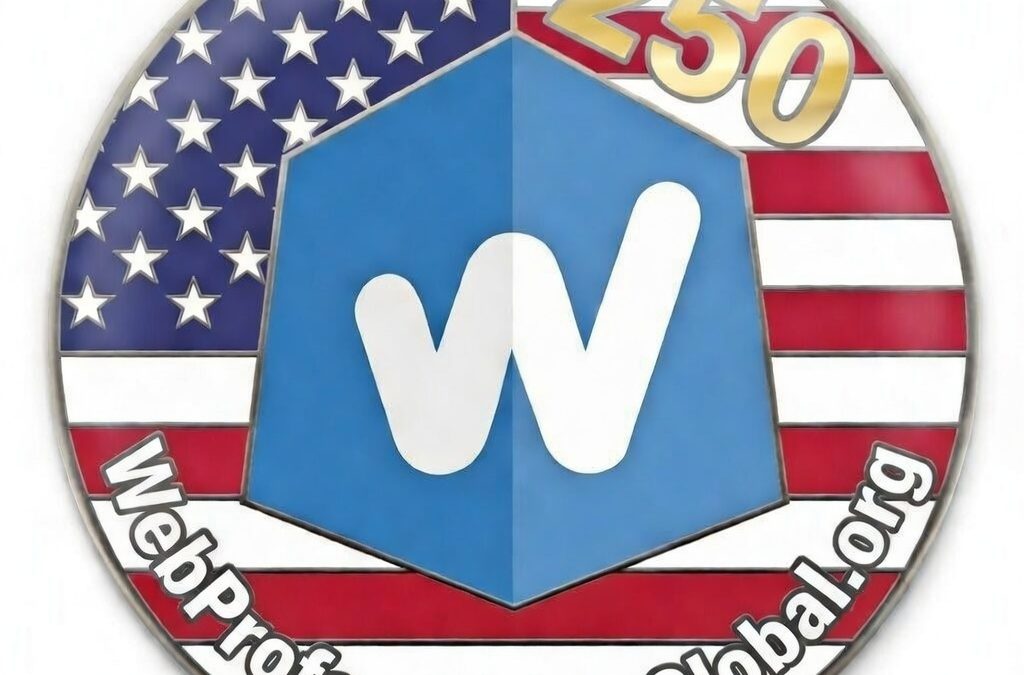
Pin trading is a massive part of the SkillsUSA culture, but this year’s web design pin is an absolute must-have. We designed this custom, 2-inch, dual-post pin to honor a monumental milestone: the 250th anniversary of America’s founding. It beautifully connects the spirit of American ingenuity and craftsmanship with the cutting-edge digital infrastructure our students are building today.
Because this is a historic landmark year, we wanted to make this collectible incredibly special. Only 100 of these pins have been minted. Once they are gone, they will not be reproduced. Furthermore, scanning the banner and claiming your pin opens up exclusive registration opportunities for special prizes throughout the week.
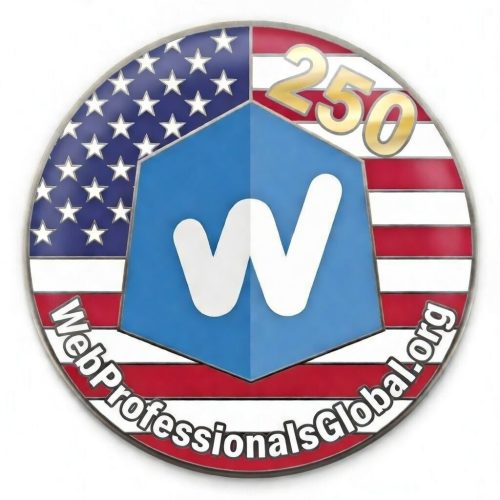
The Details
We didn’t cut corners on the quality. This isn’t your average flimsy souvenir:
- The Size: A substantial 2″ in diameter.
- The Build: Dual-post backing to ensure it stays secure on your lanyard or jacket.
- The Rarity: Only 100 available for the entire national conference.
How to Claim Yours Before They’re Gone
With a limited quantity available for the entire national conference, competition for these collectibles is just as fierce as the action at the workstations. Here is exactly how you can get your hands on one:
- Step 1 – See Mark DuBois, Executive Director of Web Professionals Global, and ask for a pin.
- Step 2 – Mark will ask you to make a social media post about Web Professionals Global and how much you appreciate the efforts to make this competition a reality (or why you are a fan of WPG) and give you a pin.
- Step 3 – Recipients will register their pin to enter possible prize eligibility.
- Step 4 – Web Professionals Global will randomly select registered pin recipients for prizes.
- Step 5 – Mark will announce the winners at the debriefing.
- Step 6 – To receive a prize, all winners must show their pin and their social media post at the debriefing.
- Step 7 – Winners receive their prize.
- Step 8 – Winners will have their photos taken while holding their pin and prize.
Register to Win
Owning the pin is just the beginning. If you’re lucky enough to snag one of the 100, you will be able to register your pin with us by scanning the QR code. Registration enters you for a chance to win exclusive prizes and swag throughout the week. It’s our way of adding a little extra victory to your NLSC experience.
If you do get your hands on a pin, remember you must be in possession of the pin to receive any prizes. So it is up to you if you decide to swap your pin, but keep in mind you may be allowing someone else to win your potential prize! We will request some information from you to confirm you still have your pin.
Why Pin Trading Matters
For SkillsUSA members, pins are more than just metal and enamel. They are icebreakers. They are the reason a student from Alaska starts a conversation with a student from Florida. They represent the school spirit and the professional networking skills you’re there to build.
We will be updating the blog throughout the week with competition highlights, live photos straight from the floor, and deeper insights into the web design certifications that help elevate these talented students into elite professional developers.
Get out there, network on the floor, try to get your hands on a historic pin, and let’s make the 2026 SkillsUSA National Leadership and Skills Conference the best yet!
Update: Now that the conference is over, check out our recap article!