by Steve Waddell | Jul 11, 2022 | Web Accessibility, Web Conference, Web Design, Web Development, web standards, WOW News
Our organization was proud to help facilitate the web design contest at the national SkillsUSA competition in Atlanta, GA from June 19-24, 2022. Our team arrived on Sunday, set up Monday and Tuesday, and ran the high school competition on Wednesday and post-secondary competition on Thursday. We also organized a Thursday evening debrief and meet and greet with industry professionals and participated in the overall awards ceremony on Friday evening. We would like to thank all our team members for using their vacation time to support SkillsUSA and the web design contest.
This year, the web design contest teams were greeted with messages in Spanish, German, Chinese, French and Arabic from our international members. One of the benefits of our organization is that our community is made up of members from all over the world, and our international experience and membership helps to craft the real-world challenges that our competition delivers. We are about helping to create and support whole professionals ready to work both domestically and internationally—especially in this age of remote work.
The Contest
The competition was held at the Georgia World Congress Center, and the competitors were teams of two from different states in the country. The teams were tasked with creating websites for clients, all while completing specific tasks in the process to demonstrate web design proficiency.
We were able to utilize the online technologies we developed in 2020 and 2021 when we ran the contest fully online due to COVID-19. This design allowed all competitors on-site to participate—whether they had a laptop, PC, Mac, or Chromebook. All tools were available online and were the same for each of the teams. This meant the teams could focus on listening to and meeting the client’s needs, fundamentals and creativity to win the day. Our new system allowed us to judge all the competitors’ work online, which improved the efficiency of judging the final products that the teams designed.
It should be pointed out that this competition is far more than just a competitive challenge. We at Web Professionals Global, which started the competition in 2004, brought our mission of “Community, Education and Certification” to the competition. Our community of professionals developed the competition challenges and judged the work of each team. We also provided training before the event to help give the competitors the chance to learn about trends in the industry and more about what it takes to be competitive in this in-demand and high-paying career pathway.
Just like in the real-world, each team met with the client whom they were building the website for. This provided the competitors with a real-world environment to get a taste of what it is like to work as a web design professional. After the event, we held a Q&A event with the web design professionals who had been part of the judging team. This was an opportunity for the teams to hear from professional web designers about personal experiences, how to get started, the ups and downs of the career pathway, day-to-day experiences on the job, and how to set themselves apart and on the path of success.
To learn more about Web Professionals Global or the SkillsUSA competition, contact us today. We would love to chat with you.
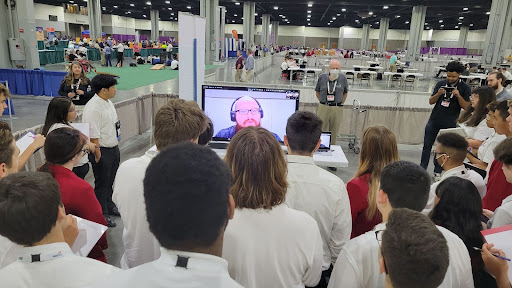
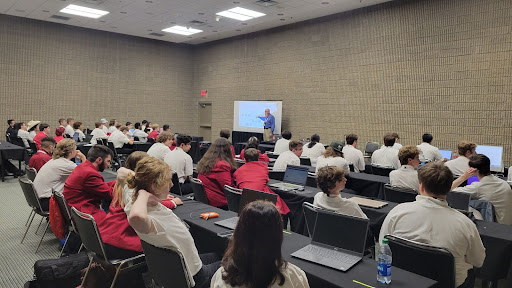
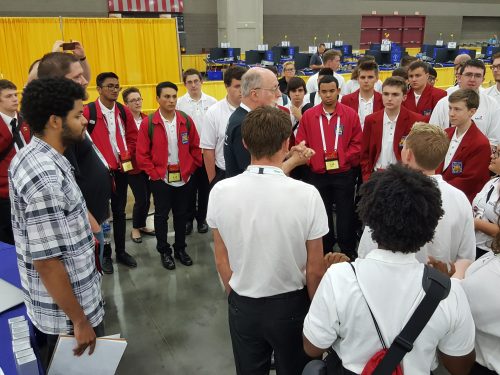
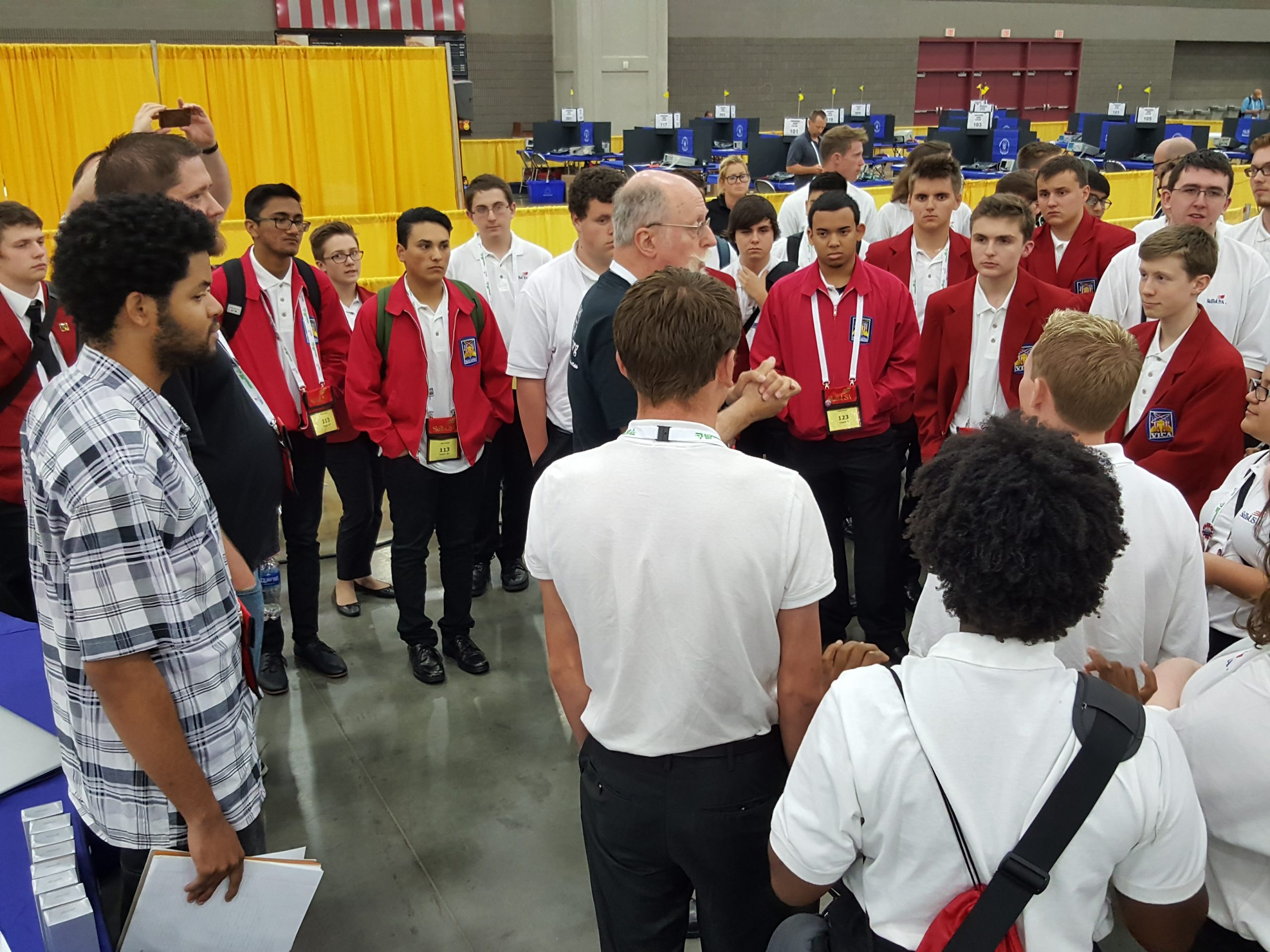
Jonathan, the client, holding a meeting with all of the competitors Wednesday morning at the beginning of the event.
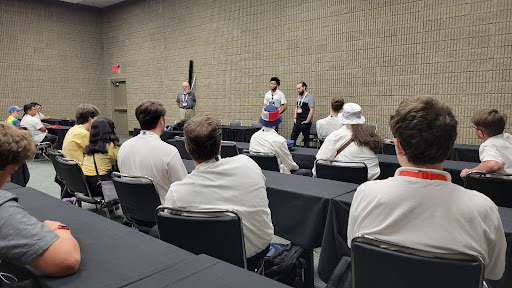
David Jackson and Bryce Hickson, web designers and lead judges, speaking to the high school and post-secondary competitors in the competition debrief on Thursday.

The competitors chatting with David and Bryce after the debrief.

Mark DuBois, Executive Director, Web Professionals Global, handing out awards at the ceremony on Friday night.
by Steve Waddell | Apr 5, 2022 | Web Conference, Web Design
Over the past 25 years, we have been working hand in hand with education as we push forward our mission to support web professionals with education, community, and certification. Over the years, funding requirements for career and technical education have shifted. We know that we need to do what we can to help administrators meet the funding requirements so they can continue to provide the tools teachers need to upskill students, open up career pathways, and ensure students’ career readiness for high-skill, high-wage, in-demand occupations.
As part of our mission to engage the next generation of professionals, we partnered with SkillsUSA in 2004 and started the National Web Design and Development Competitive Event. Our event team has run this competition ever since, and did not even skip a beat during COVID-19. We have learned so much over these years about how to blend industry expectations with secondary and post-secondary learners.
Our industry team that runs the SkillsUSA event also has experience developing and running international competitions in artificial intelligence, robotics and game development. It is this wealth of experience that brings us to where we are today and our announcement for a new competition.
In this article we will discuss:
- Our history of successfully running web competitions
- The creation of a new competition model
- The three competition variations
- The career pathway trinity of curriculum, certification, and competition
- How the competitions will develop the next generation of students/future web professionals
Background
We have had teachers asking us to run more competitions for years. While we have always been willing, we knew we had to do it in a way that could scale easily and enable students anywhere in the world to not only compete but also to learn. Otherwise, we would not be meeting our core mission.
Behind the scenes, we have been testing a new virtual competition model. This model will allow us to provide an international industry competition for secondary education students. All our testing has shown us that we have a viable competition system ready to go. Creating this virtual competition also allows us to push forward the message of how people with disabilities or specific conditions that might make other careers difficult are not a limitation in the broad and welcoming world of web professional careers.
During the first year of the COVID-19 pandemic, we were one of only two competitive teams who ran their SkillsUSA National Competition. We were not going to let COVID break our perfect record of running our part of the SkillsUSA competitive events. Admittedly, we were not allowed to run the event as an official SkillsUSA competition. We had already taken steps to simulate a web environment at Skills, so we simply took some of that experience and ran our web design competition virtually in 2020 for SkillsUSA programs who wanted to take part in the web design event in an unofficial capacity.
One teacher who recently ran a competition had this to say about the experience: “If they want a great experience, they should use this program for running the competition. Anyone who is even remotely knowledgeable in using a computer can get the students on and running in the event. Most of it is hands-off for the advisor and the students do the bulk of the work. The user experience was great from a student’s perspective. I was very happy to find out that we were getting to have a professional experience in the web design category that was going to challenge my students and provide all of the necessary online materials for the competition. Thank you for making this event possible first and foremost. Without Web Professionals Org and their team, we wouldn’t have had a web design event in Mississippi.”
It is through this experience we realized that many schools have situations where it is not feasible to compete in a standard career and technical student organization (CTSO) event, yet they need to compete in a national event to meet some of their funding requirements. As the international professional industry organization we have the real-world experience and technical expertise to deliver competitions that are equitable, accessible and simple for educators to implement. We see the need and we can fill the need.
Overview of the New Competition
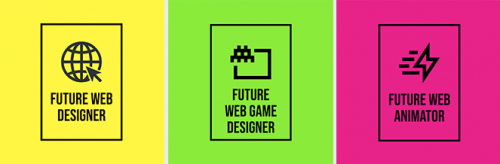
We are proud to announce that the Web Professionals Organization will be running the following Future Web Professionals competitions virtually beginning in the 22/23 school year for the benefit of US-based and international career and technical education partner programs.
The motto of the Future Web Professionals competition is “Success Favors the Prepared.” We feel this fits with what we want our educators as well as future and current professional members to always remember. Lifelong learners are always striving to be prepared. Let’s face it—industry leaders are always better prepared. We see this as the next stage in supporting creating the next generation of industry professionals.
In talking to our secondary educators, we found that many of them see a group of three areas that their learners are most attracted to.
- Web design is a first obvious pick as it is the in-demand and high-paying career most people think of when they hear the words “web professional.” And they are right—as the U.S. Department of Labor cites the profession as one of the most high-demand, high-skill and high-paying.
- Web animation is a bit more subtle of a choice and may not be as obvious. As companies look to market and brand themselves, they are always seeking to visually engage their target audiences with new innovative messaging on websites and social media. Web animation is one of the most important tools web professionals can use to help their clients propel their stories with or without dialogue. This career path has a ton of opportunities in web marketing, media and entertainment industries.
- Web game design is another pathway that attracts audiences and enables them to experience a company’s brand and story. Web games can attract new audiences to a website and allow new markets to discover brands organically through social media platforms. The game design pathway also teaches the value of interactivity in engagement. Today, 50% of all video gaming revenue comes from games played on mobile devices and 30% of mobile gamers are over 45 years old. Web game development is all about combining story, graphics, and choice into playable experiences. We also find that experience in developing web-based games helps strengthen a designer’s overall skill set.
We will issue awards to top-performing future designers as well as acknowledge schools nationally for their work in preparing future professionals. The competitions will run so that both fall and spring semester learners can participate.
Preparation—Curriculum, Certification, and Competition
We are a non-profit industry organization with a 25-year history of working not only with industry, but also with education and workforce. We have seen what it takes to prepare individuals for high-skill, high-wage, in-demand occupations. A competition alone is not the way. We know it takes a village to raise a child, and it takes a similar approach to raise a professional.
Each of these competitions is part of what we see as the career pathway trinity or what we refer to internally as the 3Cs: Curriculum, Certification, and Competition.
- Curriculum: We create the foundation for your students to learn through a media-rich, real-world and project-based approach. This is not about simply learning coding skills, but engaging in the concepts, hard and soft skills that we know are important as professionals. This creates the whole learner who becomes a whole professional.
- Certification: The curriculum prepares the students to earn international industry-recognized certifications. However, our model of certification represents far more than passing an exam—our certification represents the whole learner. The whole future professional. Students are acknowledged for completing a career readiness body of work. They express their development through their college and career-ready portfolios with real-world examples of their creativity, problem-solving, and soft and technical skills. The capstone in each learner’s portfolio is the student’s ethics in the workplace micro-credential and their international industry-recognized certification. Their portfolio is portable and becomes a testament to career preparation success and a confidence-boosting career-affirming expression of each future professional.
- Competition: Finally, we offer the learners the opportunity to compete and test their skills on an international stage. As a professional organization, we are naturally global in scope. We are US-based, and we work to support professionals domestic and international. The international context of the competition reminds learners that they are part of a global community. In the future, they may work for international companies or have international team members—and they are always in competition on a global scale. Regardless of how well students do in the competition, they learn valuable skills in meeting project expectations and having their work stand with the work of those around the U.S. and the rest of the globe.
Helping you meet Carl Perkins funding requirements
For years we have heard from administrators, department chairs, and countless educators about the struggles they have trying to balance the needs of their learners and the demands of Carl Perkins funding. For larger districts with more administrative support this may not be a pressing issue—however, this can be a daunting task for rural, urban and small districts. We believe we are making it easier for all educators to get their funding by taking advantage of our curriculum, certification, and competition approach. If you want to talk with us, reach out to us at Steve@4WebPro.org.
We are excited to offer this opportunity to CTE educators. We know that by adding this component to a CTE program we can help schools fulfill their Carl Perkins funding requirements more easily. We understand the frustration administrators feel and are doing what we can to make it a bit easier. We also see this as an opportunity for us to meet our mission and help welcome the future generation of web professionals, some of whom will eventually take our places here at their Web Professionals Organization and do their part for the future.
One more note
As of the 22/23 school year, we will only offer this competition for our secondary partners. However, our post-secondary partners are already asking when it will be available to them. We promise that we are serious about bringing the competition to post-secondary and our workforce partners, but for now we ask them to remain patient. Please reach out to us today with any questions about this exciting new model.
by Steve Waddell | Jan 20, 2022 | Web Conference, Web Design, Web Pro Education, WOW News
The Web Professionals Organization is proud to announce a new and streamlined model for states to deploy SkillsUSA Web Design and Development competitions in 2022.
Building on over 20 years of experience running competitions, including the last two years of competitions run 100% virtually due to the COVID-19 pandemic, the Web Professionals
Organization has improved the process for administering competitions at the state level. This refreshed competition model is the most accessible it has ever been, enabling students to focus on creating innovative projects and equipping facilitators to run the competition seamlessly. Students only need a PC, Mac or Chromebook and an internet connection to participate in the competitions—giving those in rural, urban and suburban areas equal access.
Competitions can be run entirely online, which levels the playing field for students across the country in the age of COVID-19. This new competition model is future-proof and will be able to be implemented for years to come, no matter what the pandemic looks like in coming years. Competitions are run for free, and the model makes the judging process more standardized and easier than ever before. States can run competitions whenever they want throughout 2022.
Not only does our new approach make it easier for any state to run their own web design and development competition, but it also ensures that every state is conducting their own competition that models the expectations the competitors will need to meet at the national competition. This gives every state—from small to large—the same turnkey resources to ensure a successful competition. This model is intended to only be used for the current cycle of SkillsUSA competitions.
Highlights of this new model include:
- Competition project with all graphic and textual assets that are similar in scope and style to what the competitors will experience at the national competition.
- Competitor coding validator (a simple app) that will automatically check a team’s project and give your judging team a report outlining the quality of coding. This tool does in just minutes what would take a person one hour, dramatically cutting down on judging time.
- Easy-to-apply rubrics help both new and veteran judges quickly evaluate team projects for creativity, design and best practices.
- Web-based coding editor and folder system allows judges to easily review any state competitor submissions. Judges can review work with just an internet connection, allowing states to have judges join virtually from anywhere.
- Web-based editor and site storage means your events committee does not have to worry that any competitor’s work can be lost or misplaced—all of it remains safe on the web.
- Judging preparation materials and training videos are included to make it easy for new judges to quickly get up to speed and be able to deliver consistent judging.
- Optional competition kickoff and welcome video delivers a consistent message to all competitors as well as some helpful hints about the competition project.
- Technical back up and support provided by the Web Professionals Organization.
- Fast and easy sign-up for state SkillsUSA leadership teams to reserve their free competition kit and web-based tools suite.
Because of these new systems the Web Professionals Organization is implementing for this year, any state can run a turnkey competition and give students an opportunity to build
meaningful projects in an engaging online environment. All of this is provided free of charge to any state wishing to have an organized and impactful state-level web design and development competition to prepare their students well for the national competition.

by Steve Waddell | Apr 15, 2021 | Job and Resume Tips from the Pros, User Experience, Web Design, Web Development
People often think that web development and web design is an industry that is only for young people. Many start-ups and tech companies are run by people in their 20s and 30s, so this is a common belief. However, there will always be a need for web developers and designers by companies across a wide variety of industries. If you have the skills and determination, companies will give you a serious look—no matter how old you are. Companies often don’t care about what you have done in the past, so you can learn web development and show companies that you can help them meet their goals—even if you are switching from a completely different industry. If you are in your 40s, 50s or older and thinking about taking the plunge in learning web development or design, here are some tips to keep in mind during the process:
Identify Your “Why”
If you can identify why you want to learn web development or design skills, and have a goal in mind, you will be much more likely to be successful. Perhaps you are a lifelong learner and want to dive into a completely new field. Maybe you feel like learning web development or design will help you perform your current job better. Maybe your company has open positions for web developers and designers, and you feel like you would be a good fit if you had the skills. Or maybe you would like to begin freelancing for companies for side income and have realized that these are an in-demand skill companies are always seeking.
Get Started
A web developer works on the structure of websites and is responsible for coding more of the back-end (server side) of the site. A web designer works more on the front-end (client side), creating the look and feel of the site and taking the client’s product or service to the web. Web developers are engineers and mechanics, while web designers are architects and storytellers.
Find a program that teaches the programming languages you are interested in. If you are new to coding, then starting with the front-end of web development like HTML5, CSS3 and JavaScript is the perfect way to ease yourself into the industry. Both web developers and designers need to know these languages first and foremost. This makes front-end development the best place to start, as you can see on the screen in real-time how your coding is performing. After mastering the front-end, you can explore the back-end of development too.
There are a ton of resources available online for those interested in learning web development skills. Some online coding classes allow you to learn at your own pace, while others allow you to learn with an instructor alongside other students in a “bootcamp” model. If you learn better in an in-person setting, your local community college may offer courses either as part of a credit degree program or through their continuing education departments.
Some programs of study may encourage you to quit your current job to be able to attend the program. If this is the case, you may elect to take an online program that will give you more flexibility to learn at your own pace, anytime and anywhere.
When selecting a program, make sure you will earn an industry-recognized certification at the end of it. A simple course certificate doesn’t hold much weight, but a certification that is backed by industry professionals will be much more credible to companies seeking to hire developers and designers. And be careful of expensive bootcamps—some are worth it, while others are not. Put simply, you need to want to put in the work to become a developer or designer. If you just go through the motions of learning, you will not come across as skilled and confident when interviewing with companies. Accomplished developers and designers have a passion for coding and continuing to learn and hone their skills over their careers.
Find Help When Needed
If you enroll in a web development or design bootcamp or local community college class, you will have built-in support with a teacher and your colleagues. However, learning web development individually at your own pace can be difficult. Try to find people around you or online whom you can bounce questions off of and seek guidance from. This could be a family member or friend who is a software engineer, or it could be someone else who has completed the course you are enrolled in. Having a mentor can make the learning process much easier and spur you to continue on for the times when you are feeling defeated.
Ways to Stand Out
When you start as a web designer (and later think about web development), it is important to remember there are many who are also aspiring. How do you stand out in the field? One approach is to learn more about web accessibility (making web pages accessible for those who use assistive devices). Another area you could consider is learning how to make web pages more easily found and indexed by search engines. Perhaps you want to check out schools and curricula which focus on these topics?
You may also be asked to show a portfolio of your work. Obviously, you will have examples from the classes you take. However, you may also want to offer your help to not-for-profit organizations. While you may not be paid for your help, you will gain significant experience in working with actual clients. Also, you can always ask the organization for a letter of reference (once you have successfully completed your project). We encourage you to think about ways to differentiate yourself from others. What can you do better than most? Leverage that as you learn web design and development.
Have Fun
The world of web development and design is an exciting one. Developers and designers work to make the apps, websites and games we rely on every day function as they should. They often get to work on cool projects that are at the cutting-edge of how we work and play on the internet, and you can be a part of that.
There’s a reason web developers and designers get paid well—it isn’t always easy to learn and do well. However, with a willingness to learn, determination and support system, it’s never too late to dive in. Whatever path you take, developer or designer, our Web Professionals organization looks forward to welcoming you to our community.

by Steve Waddell | Aug 20, 2020 | Web Design, Web Development
Steve Waddell
Director of Education and Training
You may have heard the term “brutalism” before—most likely referring to the architectural style that emerged in the 1950’s following the end of World War II. A recent trend has emerged in web design and development that takes inspiration from this architectural style, pictured on the right, that features simple geometric designs. Let’s take a look at what brutalism means in web design and development.
Think about the websites you enjoy visiting. They may feature bright colors, pictures and videos that draw you in and keep you engaged. Although fancy websites are popular, the brutalist style of no-frills websites has made a comeback. Brutalist websites are a throwback to the early days of the internet when websites were very basic in style. With a raw and bare-bones look, brutalist websites are functional and easy to navigate. You most likely have already visited brutalist websites and just didn’t know it. For example, let’s look at the Craigslist homepage:

Notice how there are no pictures, videos, or distracting colors. Everything is laid out very simply, making it easy to get the information you are looking for and navigate to the page you want.

The Wikipedia homepage features another brutalist design:
Notice the similarities between the two. Both websites feature black text and blue hyperlinks on top of white backgrounds. They are very easy to navigate—you aren’t likely to get lost and you won’t be distracted by any pictures or videos. Brutalist websites aren’t the most technically challenging websites to design, but they deliver a very effective user experience. Other popular and successful brutalist websites include the news site Bloomberg and nonprofit network Freecycle.
With the rise of WordPress, the brutalist trend may have hitched a ride—just think about how stark the early standard templates are for WordPress sites. The popularity of blogs also may have contributed to some of the brutalist appeal. See an example of a WordPress site below.

The next time you are designing or developing a website, consider paying respect to the early days of the internet by creating a brutalist-themed website. It’s a good way to stand out from the “same-ness” of the loud and complicated websites that we see today. It can grab the attention of your visitors and make as much of a statement as you would with a more elegant website design, making sure they remember your website as different from others.
Read more about brutalist web design and development
by Steve Waddell | Aug 6, 2020 | Industry News, SEO, Web Design, Web Development, Web Marketing, Web Security
Steve Waddell, Director of Education
2020 has been an unprecedented year for businesses in all industries. Societal and economic shifts have made web professionals like you more important than ever, so it’s critical to remain at the forefront of industry trends that will shape the rest of the year leading into 2021. As a web professional, connecting with your target audience while continuing to meet the needs of your customers or clients requires spending time strategizing how your web presence will propel your business forward. Let’s take a look at 5 of the trends that are driving web design and development.
Augmented Reality (AR) and Virtual Reality (VR)
AR and VR have been growing for some time, and that will certainly continue in the coming years. People today consume web content on a variety of devices, including tablets and mobile phones. Utilizing AR and VR to show customers how products work, no matter what device they are on, puts businesses a step ahead of the competition. AR and VR tools include videos and images, with many of them available in 360 degree viewing experiences. Some of the most influential tech companies like Google and Facebook have invested in AR and VR as a technology that will drive business in the future.
Check out more on AR here
Cybersecurity and Artificial Intelligence (AI)
Maximizing the possibilities of cybersecurity and AI will continue to be important for business heading into 2021 and beyond. Web professionals need to be aware of the latest cybersecurity tools and how to best protect customer information from hacks and data breaches. AI plays a big role in cybersecurity, with AI networks and machine learning helping web and security professionals learn about the latest tools hackers are using to disrupt websites. Stay up-to-date with the latest news on cybersecurity to ensure you are doing everything you can to keep the data of your customers safe and give them peace of mind in doing business with you.
If you missed this article you might want to catch up here:
Chabots
Companies are finding that highly sophisticated chatbots can replace humans in meeting various customer service needs. Customers love chatbots for their ease of use and instant answers to questions—eliminating the need to send an email or call you and wait for an answer. In addition to all of the technical aspects that web professionals must worry about, it’s important to not forget about keeping customer service on point so that you retain existing customers while attracting new ones. Chatbots are exploding in popularity so rapidly that Gartner estimates that by the end of 2020 85% of customer interactions will be held without a human customer support representative. Additionally, chatbots are projected to be the biggest consumer application for AI in the next 5 years.
Voice Search
Digital voice assistants like Amazon’s Alexa and Apple’s Siri have had a huge impact on the web in a relatively short period of time. Driven by AI, which we have touched on, these are more than just tools. They are an example of machine learning, as they can learn about user habits and utilize it to improve performance. Voice search is a real example of how AI impacts our daily lives—including checking the weather, playing music, ordering groceries and staying in touch with friends and family. In fact, Alexa can perform over 70,000 skills. With people increasingly using voice search rather than typing keywords into Google, it is important for web professionals to understand how voice search will impact consumer behavior.
Here is an article we did a while back you might enjoy
SEO-Driven Content
Let’s face it: it can be difficult getting your business to stand out from the crowd. One of the best ways to maximize online exposure, and do so at minimal cost, is to focus on search engine optimization (SEO). Doing so will help improve your content in search results and put you above the competition. The higher up you are for keywords related to your business, the more traffic you will generate to your site. SEO can be achieved through optimizing your web pages and creating content frequently, such as blog posts about news in your industry.
Dig a little deeper into SEO here
Conclusion
As you seek to develop and maintain user-friendly websites, keep these trends in mind. Consider how they are impacting and will continue to impact customer behavior. Staying informed about these trends will improve your company’s web presence and keep you a step ahead of the competition.